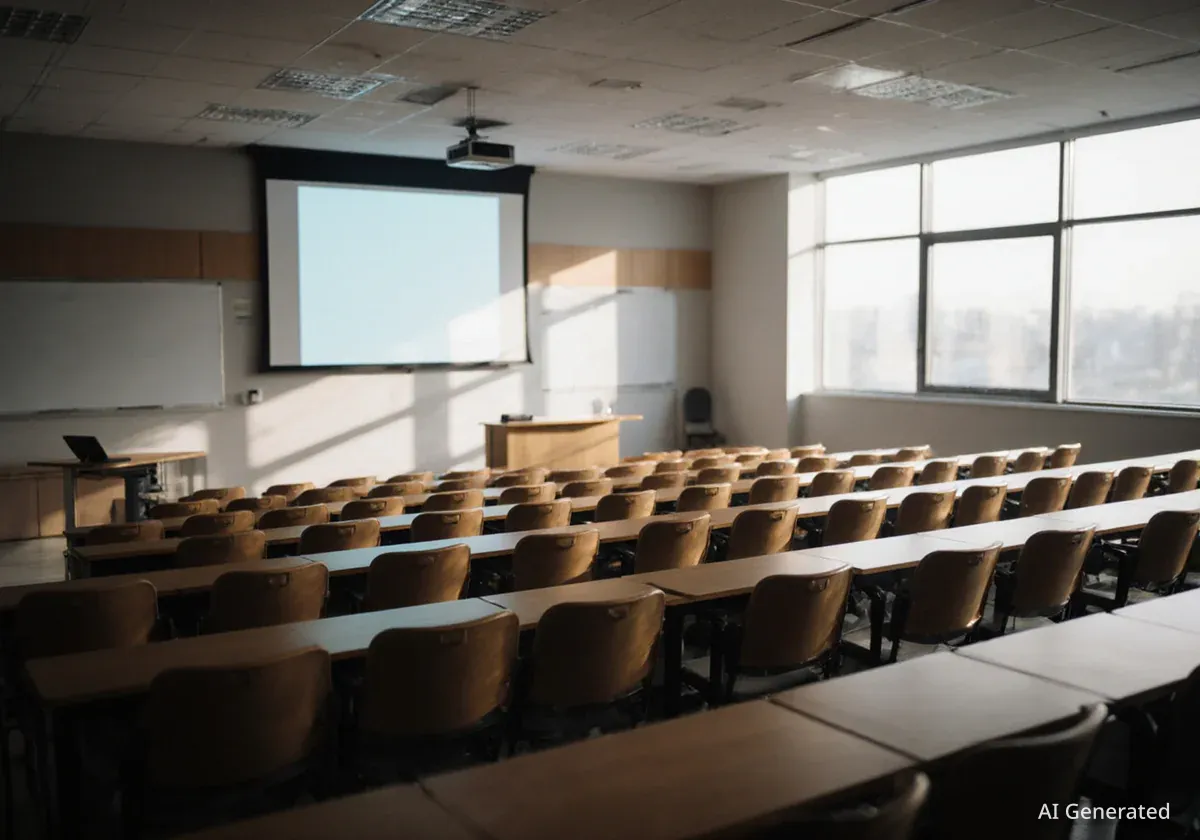

School districts across Northwest Arkansas and the River Valley have canceled classes for a fourth consecutive day, keeping students at home on Thursday, January 28, 2026. The decision, affecting major districts including Fayetteville, Springdale, Rogers, and Bentonville, comes as officials remain concerned about hazardous road conditions caused by persistent winter weather.
Key Takeaways
- Multiple school districts in Northwest Arkansas and the River Valley are closed for the fourth straight day.
- The primary reason for the closures is the danger of refreezing on secondary and rural roads, making travel unsafe.
- Superintendents are balancing student and staff safety against the disruption to education and student services like meals.
- Districts like Rogers have built-in snow days, but continued closures may require making up lost time later in the year.
Widespread Closures Affect Region
The wave of cancellations began on Monday and has continued through the week. Along with the largest districts, schools in Fort Smith, Siloam Springs, Eureka Springs, Charleston, and Waldon have also announced they will not hold classes on Thursday.
The prolonged break disrupts the routine for thousands of families across the region. School officials have stated they are continuously monitoring the situation and will notify parents and guardians of any future decisions regarding school schedules.
A Multi-Day Disruption
The closures on Monday, Tuesday, and Wednesday were prompted by the same winter weather system. While some melting occurred during the day, overnight temperatures have consistently dropped below freezing, creating a persistent risk of black ice, especially on less-traveled routes.
Safety on the Roads Remains Top Concern
The core issue facing school administrators is the safety of students and staff during their commute. While main roads may appear clear, many secondary and rural roads remain treacherous.
Dr. John Mulford, Superintendent of Fayetteville Public Schools, explained that the decision extends beyond just bus routes. "It's, you know, our ability to get staff here," he said. "A lot of our staff don't live right here in town, and they have to commute. So, what does the larger area look like outside of the district?"
His teams focus on inspecting problem areas known for being hazardous. "We try to hit all the different parts," Mulford noted. "Especially, troubled parts that are hilly or that tend to be shaded. Just to kind of see what they look like and then from that, make a decision."
The Challenge of Vast Bus Routes
For larger districts, the scale of transportation is immense. Rogers Public Schools Superintendent Jeff Perry highlighted the logistical challenge his district faces.
The bus fleet for Rogers Public Schools covers more than 4,000 miles every single school day, navigating a mix of city streets, paved country roads, and unpaved rural routes.
"When you travel those 4,000 miles, it's not all on the main streets of Rogers. It's not all on roads that are paved. It's not all on roads that have would have sunlight."
The Complex Calculus of a Snow Day
Deciding to cancel school is a complex process with far-reaching consequences. Administrators must weigh safety against the loss of instructional time and essential services for students.
Superintendent Perry acknowledged the difficult trade-offs. He noted that for some children, a snow day means missing crucial meals. "A lot of those students may not have a breakfast or a lunch during that day," Perry said, underscoring the social impact of the closures.
To manage the academic calendar, many districts build potential snow days into their schedules. Perry explained that Rogers had planned for five such days this year. "So, we will have 2 more days before we have to make up any time," he stated. The district also uses slightly longer school days to create a buffer for state testing preparation.
A Committee-Based Approach in Fort Smith
To get a more accurate picture of conditions across its wide geographic area, Fort Smith Public Schools has implemented a new strategy this year: a weather committee.
The group consists of about two dozen people, including district leaders, teachers, and parents who live throughout the River Valley. Kimberly Mundell, the district's executive director of communications and engagement, explained the benefit.
"We live throughout the area," Mundell said. "Whether it's Alma, Fort Smith, Lavaca, Greenwood — any of the area. And so, we're pretty well represented." This diverse representation provides the superintendent with real-time reports from various locations, leading to a more informed final decision.
This approach also helps provide timely notifications to staff who have early morning commutes, such as bus drivers. "We want to make sure that we're making the decisions about school in enough notice so that those early staff members have plenty of time to know what they're going to need to do," Mundell added.
As the week concludes, parents and staff across the region will be watching for updates from their respective districts, hoping for a safe return to classrooms soon.