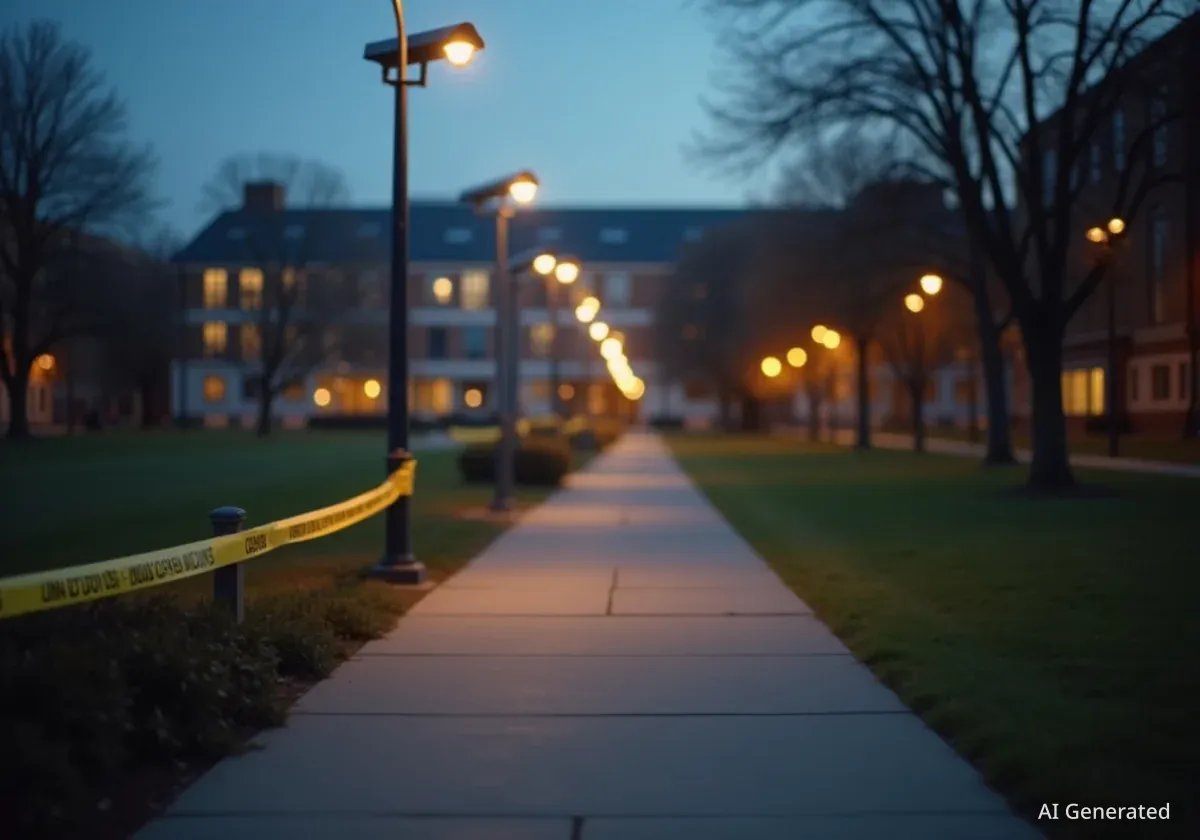

In the aftermath of a recent campus shooting that left two people dead and nine others injured at Brown University, administrators and safety experts across the country are once again grappling with the persistent challenge of securing open academic environments. The incident has triggered a familiar cycle of debate, grief, and a renewed search for effective prevention strategies.
The tragedy has also drawn federal attention, prompting a closer examination of the university's adherence to national safety protocols and reigniting a conversation that has been ongoing for more than a decade.
Key Takeaways
- A shooting at Brown University resulted in two fatalities and nine injuries, prompting a federal investigation.
- The incident highlights a recurring pattern of renewed focus on campus safety following tragic events.
- Federal scrutiny often involves the Clery Act, a law requiring colleges to report crime statistics and issue timely warnings.
- Experts point to the complex balance between maintaining an open campus and implementing robust security measures.
A Familiar Pattern of Response
For those in the field of campus safety, the days following a major incident like the one at Brown University follow a predictable script. Public discourse intensifies, with calls for immediate action from students, parents, and lawmakers.
This cycle has become a recurring feature of American life since the 2007 Virginia Tech shooting, a tragedy that fundamentally reshaped how universities approach emergency preparedness. Each new incident serves as a painful reminder of the vulnerabilities inherent in higher education settings.
Campus officials often find themselves reviewing existing protocols, from active shooter drills to emergency notification systems, searching for gaps that could be closed. The conversation extends beyond physical security to include mental health support and threat assessment programs designed to identify individuals in crisis before they become violent.
Federal Oversight and the Clery Act
Following the events at Brown, federal investigators have begun to look into the university's compliance with the Jeanne Clery Disclosure of Campus Security Policy and Campus Crime Statistics Act. This federal law is a critical tool for holding institutions accountable for campus safety.
What is the Clery Act?
Enacted in 1990, the Clery Act requires all colleges and universities that participate in federal financial aid programs to disclose information about crime on and near their respective campuses. Key requirements include publishing an Annual Security Report, maintaining a public crime log, and issuing timely warnings to the campus community about threats to safety.
An investigation under the Clery Act typically examines whether the university met its obligations to warn the community of immediate threats and whether its crime reporting has been accurate and transparent. Non-compliance can result in significant financial penalties and damage to an institution's reputation.
This federal scrutiny underscores the legal responsibilities that universities have to their students and staff. It forces a detailed review of communication protocols and emergency response plans, ensuring they are not just theoretical but practical and effective during a crisis.
The Enduring Challenge of an Open Campus
One of the central dilemmas for university administrators is how to enhance security without transforming campuses into fortresses. The very nature of a university is to be an open, accessible place that encourages the free exchange of ideas and movement.
Measures such as metal detectors, extensive fencing, and single points of entry are often seen as contrary to this ethos. Instead, many institutions have focused on a multi-layered approach.
Modern campus safety often includes a combination of visible and invisible measures, such as extensive camera systems, well-trained campus police forces, robust mental health services, and behavioral intervention teams that work to support students in distress.
Experts in the field emphasize that there is no single solution. Effective campus safety relies on a combination of technology, personnel, and a proactive culture of awareness where community members feel empowered to report concerning behavior.
"You cannot simply build a wall around a university," explained a former campus safety director who spoke on the condition of anonymity. "The goal is to create an environment that is safe but not restrictive. That requires constant vigilance, community training, and a deep investment in early intervention resources."
Lessons Learned from Past Tragedies
The 2007 Virginia Tech shooting, which claimed 32 lives, was a watershed moment for higher education. In its wake, universities across the nation overhauled their emergency preparedness plans. One of the most significant changes was the widespread adoption of multi-platform emergency alert systems.
Before 2007, many schools relied on email or website updates. Today, nearly all use a combination of text messages, social media alerts, sirens, and public address systems to warn people of an active threat. This shift was a direct result of findings that showed communication delays were a critical failure during the Virginia Tech incident.
However, the shooting at Brown University demonstrates that technology alone is not a panacea. The focus has increasingly shifted toward prevention and threat assessment—identifying and intervening with individuals who may pose a risk to themselves or others before they act.
The Path Forward for Universities
As the Brown University community begins its long process of healing, the national conversation about campus safety will continue. Experts suggest that future efforts will likely focus on several key areas:
- Integrating Mental Health: More seamlessly connecting counseling services with campus security and student affairs to provide holistic support for students in crisis.
- Enhancing Threat Assessment: Improving the training and resources for behavioral intervention teams to better assess and manage potential threats.
- Community Engagement: Fostering a campus culture where students and faculty are educated on recognizing warning signs and feel comfortable reporting their concerns.
- Dynamic Security Protocols: Moving beyond static emergency plans to more flexible, scenario-based training that prepares campus police for a wider range of threats.
The challenge remains immense. For now, another American university has been added to the list of places where a gathering for learning was shattered by violence, leaving administrators and safety officials to once again ask what more can be done.