
The Cedar Rapids Community School District is evaluating three distinct consolidation models that could reshape the educational landscape for thousands of students. Presented by a community coalition, the plans aim to create financial savings and operational efficiencies, with a final decision from the school board expected in April.
Each proposal involves significant changes, including the closure of several elementary and middle schools, the reconfiguration of grade levels, and new feeder patterns for the district's three high schools. The changes, if approved, would not take effect until the 2027-28 school year.
Key Takeaways
- The Cedar Rapids school board is considering three consolidation models: an Intermediate model, a 5-8 model, and a High School model.
- All proposed options would close Wright, Cleveland, and Nixon Elementary Schools, as well as the Truman Early Learning Center.
- Potential savings for the district range from approximately $6 million to over $8 million annually, depending on the chosen plan.
- The board is scheduled to vote on a final plan in April 2026, with implementation set for the 2027-28 school year.
Three Paths Forward for Cedar Rapids Schools
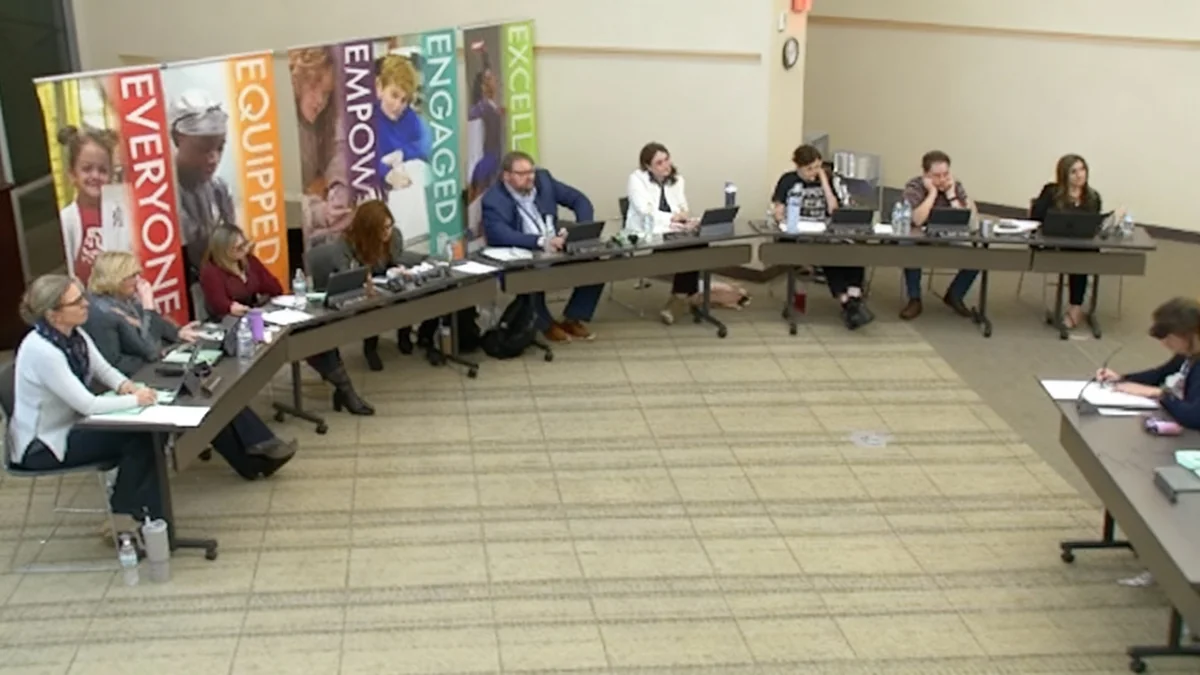
During a special session, the Cedar Rapids Community School District board reviewed three comprehensive proposals for restructuring the district. These plans, developed by a community coalition, offer different approaches to grade alignment and school utilization, each with unique financial and logistical implications.
A core component of every plan is the closure of at least four school buildings: Wright, Cleveland, and Nixon Elementary Schools, along with the Truman Early Learning Center. The district intends to integrate preschool classes into all remaining elementary schools, making a dedicated early learning center redundant under the new structures.
Why Consolidate Now?
Like many districts, Cedar Rapids is likely facing challenges related to shifting enrollment patterns, aging infrastructure, and budget constraints. Consolidation is often pursued as a strategy to operate more efficiently, reduce maintenance costs on underutilized buildings, and reallocate resources more directly to student programming and instruction.
Option 1: The Intermediate Model
The first proposal, known as the Intermediate Model, presents two variations. The central idea is to create a new three-tier system below the high school level. All elementary schools would serve students from preschool through 4th grade.
Following elementary school, students would attend a 5th-6th grade intermediate building before moving to a separate 7th-8th grade middle school. This model would convert Franklin, Wilson, and Roosevelt into 5-6 grade centers, while McKinley, Taft, and Harding would become 7th-8th grade schools.
Feeder System Variations
The two options within this model differ slightly in which elementary schools close and the resulting feeder patterns. Option one would close Pierce Elementary, while option two would close Grant Elementary instead. Johnson STEAM Academy is also identified as a potential closure under this model.
Estimated Savings
The Intermediate Model is projected to save the district approximately $6 million per year, with each elementary school closure contributing around $1 million in savings.
Option 2: The 5-8 Middle School Model
A second distinct approach would expand the district's existing middle schools to serve grades 5 through 8. Currently, Cedar Rapids middle schools house grades 6-8. Under this plan, elementary schools would serve students in preschool through 4th grade.
This model would maintain all six current middle schools—Franklin, McKinley, Taft, Wilson, Harding, and Roosevelt—but would expand their grade configurations. The plan would close six buildings: Wright, Cedar River Academy at Taylor, Cleveland, Nixon, Pierce, and Truman. Johnson STEAM Academy is also a potential closure in this scenario.
This option aims to simplify the transition for students by keeping them in one building for four years before high school, potentially fostering a stronger sense of community within the middle school environment.
The financial impact of the 5-8 model is estimated to be on par with or slightly better than the Intermediate model, with projected savings of $6 million or more annually.
Option 3: The High School Model
The most radical of the three proposals is the High School Model, which would fundamentally restructure the upper grades and create the largest financial savings. This plan would close the most schools, including two middle schools: Franklin and McKinley.
Under this configuration:
- Elementary schools would serve grades PK-4.
- Select schools would become 5-6 grade centers.
- Kennedy High School would be converted into a 7-9 grade building for a large portion of the district.
- Jefferson and Washington would become 10-12 grade high schools.
The city would be divided into east and west zones using the Cedar River and Highway 100 as boundaries to determine feeder patterns. This model would close Wright, Nixon, Truman, Cleveland, Pierce, Franklin, and McKinley schools.
Maximum Savings Potential
The High School Model is projected to save the district more than $8 million annually. The closure of two middle schools alone accounts for significant savings, estimated at $1.5 million each.
Next Steps and Community Impact
The school board now faces the task of weighing the financial benefits of each plan against the potential disruption to students, families, and staff. Each model redraws attendance boundaries, changes familiar school pathways, and impacts neighborhood identity.
The final decision in April will set the course for the district for years to come. While the changes are not scheduled for implementation until the 2027-28 school year, the upcoming vote marks a critical juncture for the future of public education in Cedar Rapids.