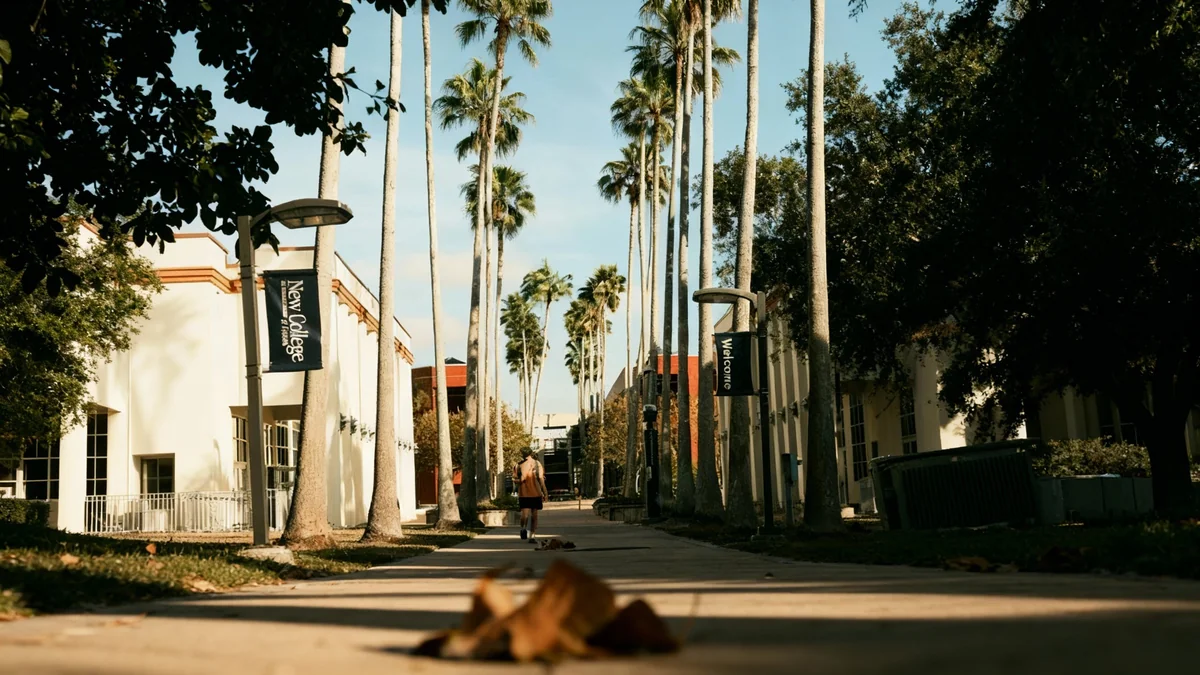
New College of Florida, a small public liberal arts school in Sarasota, has implemented significant curriculum changes following a state-led overhaul. The transformation includes a new mandatory course for all students focusing on Homer's epic poem, "The Odyssey," signaling a shift away from its historically progressive academic identity.
This change is a central component of a broader effort to reshape the institution's educational philosophy, moving toward a classical studies model and de-emphasizing subjects like gender studies.
Key Takeaways
- New College of Florida now requires all students to complete a seven-week course on Homer's "The Odyssey."
- The curriculum shift is part of a larger conservative-led restructuring of the state college initiated by Governor Ron DeSantis.
- Previously progressive courses, including those in gender studies, are being phased out in favor of a classical curriculum.
- The changes have sparked a national debate about the role of ideology and governance in public higher education.
A New Chapter for a Veteran Professor
For 25 years, Professor April Flakne has taught philosophy at New College, guiding students through the complex theories of thinkers like Hannah Arendt and Simone de Beauvoir. Her classes often explored concepts of feminism, revolution, and totalitarianism. Today, she finds herself teaching a very different kind of course—one that is now mandatory for every student on campus.
The new requirement is a seven-week, intensive study of a single text: Homer's "The Odyssey." This pivot from modern political theory to ancient Greek literature represents one of the most visible outcomes of the recent overhaul of the college's leadership and mission.
The mandate reflects a deliberate redirection of the college's academic focus. Where students once had wide latitude in course selection, they are now introduced to their college careers with a foundational text of Western civilization. This approach marks a stark departure from the school's long-standing reputation as a progressive institution.
The Vision Behind the Transformation
The changes at New College are not happening in isolation. They are the result of a targeted campaign by Florida Governor Ron DeSantis and his appointees to reform public higher education in the state. The stated goal is to create a public institution grounded in classical liberal arts education, often compared to conservative private schools like Hillsdale College.
This vision involves a fundamental restructuring of the curriculum. Subjects that have been central to modern liberal arts programs, such as gender studies and critical theory, are being systematically removed. In their place, the new administration is building a core curriculum centered on foundational texts and historical events of Western culture.
What is a Classical Education Model?
A classical education model emphasizes the study of the Western canon, including foundational works of literature, philosophy, and history from ancient Greece and Rome through the formation of the United States. It prioritizes the Socratic method of inquiry and the development of logic and rhetoric, often in contrast to more contemporary, specialized, or critical fields of study.
The introduction of "The Odyssey" as a universal requirement is a cornerstone of this new model. Proponents argue that it provides students with a shared intellectual experience and a common grounding in timeless human themes. Critics, however, view it as the imposition of a singular worldview, replacing one form of ideological focus with another.
A Campus in Transition
The academic shift is accompanied by changes to the campus culture itself. New College has long been known for its independent and often unconventional student body. The recent changes have created a palpable sense of transition on the Sarasota campus.
The administration's new direction is also being memorialized in physical symbols. Plans are reportedly underway for a statue of Charlie Kirk, a prominent conservative activist, to be placed on campus. Such moves are seen by supporters as a clear declaration of the college's new identity.
A Changing Student Body
The overhaul has significantly impacted student enrollment. While final numbers for the current academic year are still being analyzed, reports indicate a substantial number of former students chose not to return, while the new administration has actively recruited a new cohort of students more aligned with its classical mission.
Faculty members like Professor Flakne are navigating this new landscape, adapting their teaching to fit the new requirements while still aiming to foster critical thinking among their students. The question for many observers is whether this transformation will create a vibrant new model for public education or simply alienate the community the college once served.
"This class on Homer is a turnabout from all that, and marks a signature accomplishment for conservatives who want to redirect higher education," notes a report on the changes.
The Broader Debate on Higher Education
The events at New College of Florida have become a focal point in a national conversation about the purpose and direction of higher education in the United States. The overhaul has raised fundamental questions about academic freedom, institutional governance, and the role of politics in the classroom.
Supporters of the changes argue that they are necessary to correct a perceived drift in academia toward progressive orthodoxy and to restore a more traditional, rigorous standard of education. They see New College as a potential blueprint for reforming other public universities.
Opponents, including many faculty, alumni, and civil liberties advocates, contend that the changes constitute a hostile takeover that undermines academic freedom and intellectual diversity. They argue that a top-down imposition of a specific ideology, regardless of its content, is contrary to the spirit of free inquiry that should define a university.
As students in Sarasota delve into the ancient story of Odysseus's long journey home, the college itself is on a journey into uncharted territory. The outcome of this experiment will likely have implications far beyond the sunny campus of New College, influencing the future of public education across the country.