
Greenville County Schools, the largest school district in South Carolina, is working through the initial challenges of a new emergency alert system designed to enhance student safety. The Raptor Alert badges, rolled out to staff, have led to a significant number of false alarms, prompting concern from parents and a collaborative effort between the district and the technology provider to find solutions.
Despite the issues, school officials maintain the system is a critical tool for protecting students, citing a decrease in accidental alerts and the system's potential to save lives in a genuine crisis.
Key Takeaways
- Greenville County Schools implemented Raptor Alert badges for staff to provide instant emergency communication.
- The system rollout resulted in 131 accidental lockdown alerts by November 2025, causing concern among parents.
- Officials report that false alarms have decreased from 16 per week in August to 9 per week in November.
- The district and the company, Raptor, are implementing solutions, including protective cases for the badges, to reduce accidental activations.
A New Layer of School Security
In August 2025, Greenville County Schools officially launched the Raptor Alert system across its campuses. The district, which is the 47th largest in the nation, equipped staff with wearable badges intended to provide an immediate line of communication during emergencies.
Greg Porter, the Director of Security, School Safety, and Emergency Management for the district, explained the system's core function. "It allows for instantaneous communication in the building, for the building, for everyone to be alerted, to go into an emergency status," he said. The badges can be used to trigger responses for a range of situations, from a student who has run away to a full-scale school lockdown.
How the System Works
The Raptor Alert badge is a small, wearable device. Staff members can press a button a specific number of times to signal different types of emergencies. For example, three pushes might signal an elopement (a child running off), while seven could initiate a lockdown. This is designed to allow staff to call for help without having to reach a phone or intercom.
The Challenge of Accidental Activations
Soon after the system went live, reports of false alarms began to surface. Data obtained through the Freedom of Information Act revealed the extent of the issue. By November 2025, there had been 131 accidental lockdown emergencies. Porter clarified that in 27 of those cases, users were intentionally pushing the button but did so excessively or incorrectly.
The design of the badge's alert sequence contributes to the confusion. "When you’re pushing it three times for an elopement, there is about a four-second delay before the badge starts beeping at you," Porter explained. He noted the badge has a built-in delay to determine if the user intends to escalate to a more severe, seven-push alert.
Adapting to New Technology
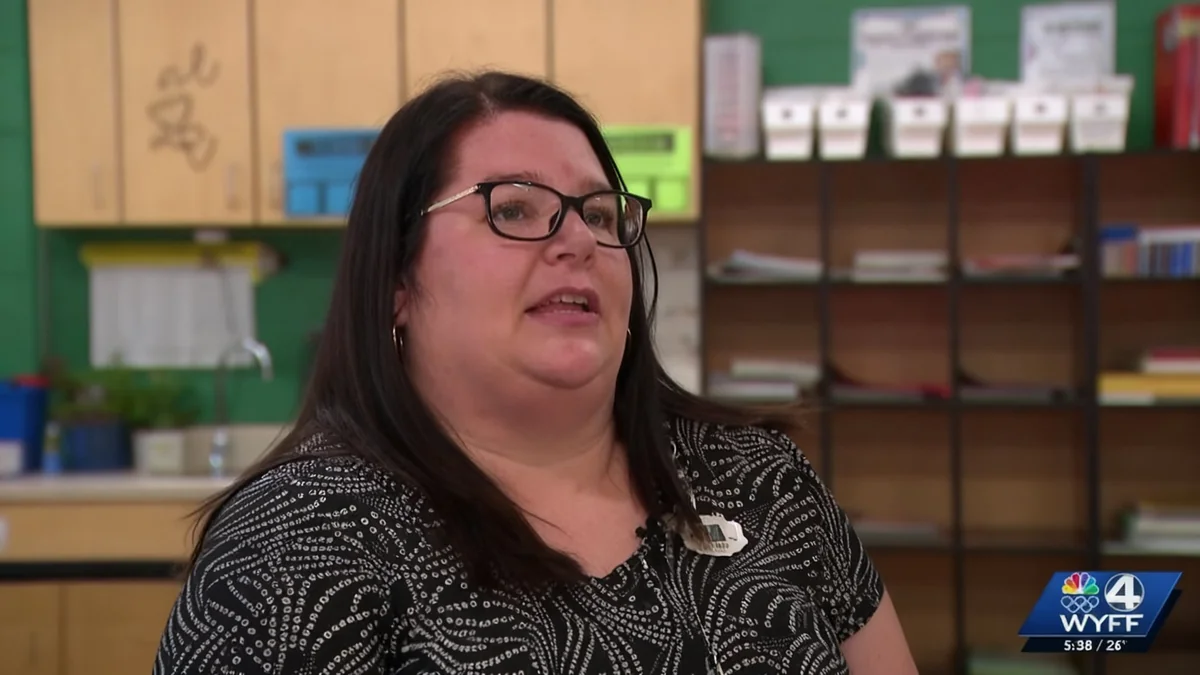
Principal Heather Dye said part of the problem is simply an adjustment period for teachers. Everyday actions have unintentionally triggered alerts. "You know, if I’m washing my hands, I might not want to hold it under my arm. We had that happen," she shared, illustrating how easily the button can be bumped.
These accidental activations, while disruptive, are being treated as learning opportunities. Dye believes the repeated drills, even the false ones, have better prepared everyone on campus. "It’s important to know if something actually happened, what you’re supposed to do," one student commented.
False Alarms by the Numbers
- August 2025: 16 false alarms per week
- November 2025: 9 false alarms per week
This data indicates a nearly 44% reduction in weekly false alarms as staff became more familiar with the devices.
Finding a Solution
The school district is actively working with Raptor to address the design flaws. "We’re in communication with Raptor every almost every other day as far as the badge design and programming," Porter stated. He confirmed that an investigation by the company identified a specific issue with the badge that was contributing to the false alarms.
In the short term, a simple fix is being deployed. "We’re also looking for a more short-term, easier fix of just putting a case or a sleeve over the badge just so that you can’t accidentally bump it," Porter said. The district has confirmed that Raptor is already providing these protective cases to schools.
Why Officials Say the System is Worth It
Despite the initial difficulties, school leaders are standing by the technology. The urgency for such a system was tragically highlighted in September 2024, when 8-year-old Lionel Cervantes left his classroom at Bells Crossing Elementary School and drowned in a nearby pond.
Officials believe the Raptor system gives employees the ability to call for help instantly while keeping their focus on the immediate situation. "Just the employee's ability to be able to communicate that they need help, but also maintain their focus on responding appropriately to that situation, not keeping their eyes off the student, staying with the student," Porter emphasized.
"I would just tell a parent that, you know, there are going to be those bumps, those false alarms, but I would rather us work through that and have the ability to have a communication device that we can respond when there really is an imminent threat or danger."
For Principal Dye, the trade-off is clear. The potential to prevent a tragedy outweighs the inconvenience of the system's growing pains. "Seconds matter. That’s how many lives could be saved, you know? And that’s priceless," she concluded.