
A new legislative proposal in Arizona aims to increase state funding for charter school facilities, igniting a fresh debate over how limited education dollars should be allocated. The bill, sponsored by Southern Arizona Congressman Juan Ciscomani, seeks to address what supporters call inadequate facilities for a growing number of charter school students.
The proposal, known as the Equitable Access to School Facilities Act, is now at the center of a long-standing tension between the state's traditional public schools and its expanding charter school sector. As district schools face budget cuts and declining enrollment, the push for more charter funding has raised concerns about equity and the future of public education in the state.
Key Takeaways
- A new bill proposes increased state funding for charter school facilities in Arizona.
- Supporters argue many charter schools operate in subpar buildings without essential amenities like gyms or science labs.
- Traditional public schools are concerned this will divert needed funds as they already face budget cuts and declining enrollment.
- The debate highlights Arizona's history of low national rankings for overall public education spending.
Details of the Proposed Legislation
The Equitable Access to School Facilities Act directly targets the physical infrastructure of Arizona's charter schools. Congressman Juan Ciscomani, the bill's sponsor, stated that the goal is to provide a funding boost to improve learning environments for students who choose these alternative public schools.
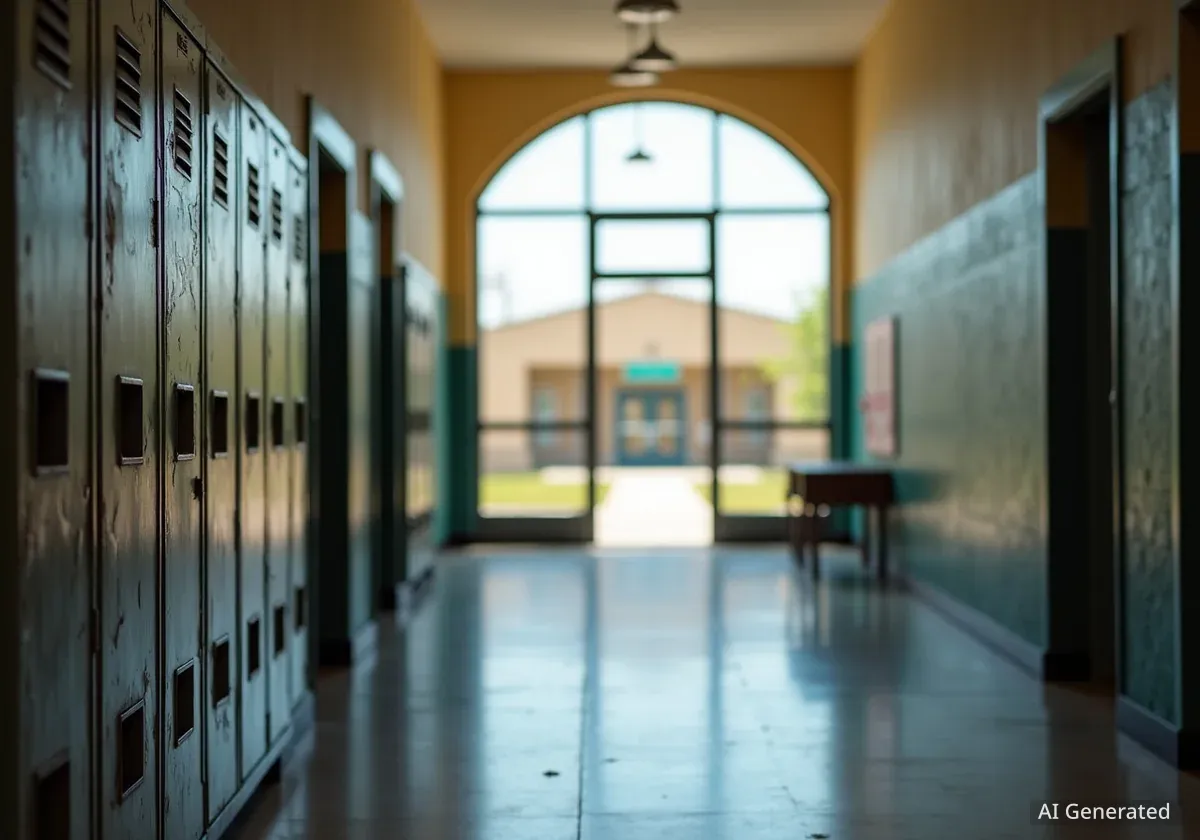
Many of the state's nearly 600 charter schools currently operate in unconventional spaces, such as converted storefronts, church basements, or other repurposed buildings. According to supporters of the bill, this often means students lack access to standard school facilities.
"Arizona is a pioneer in school choice, and we strive to make all education options good options," Ciscomani said in a recent statement, emphasizing the need for better resources.
The legislation aims to give charter schools greater access to state funds specifically for facility improvements. Proponents argue that many charter school buildings are missing key components of a traditional school campus, including gymnasiums, libraries, and dedicated science labs, which can hinder a well-rounded education.
Charter Schools in Arizona
According to the Arizona Charter Schools Association, charter schools now serve more than 20% of all public school students in the state, making it one of the most robust charter systems in the country.
Pressure Mounts on Traditional School Districts
While the bill focuses on charter schools, leaders in traditional public school districts are watching closely. Many districts across Arizona are grappling with significant financial challenges, driven largely by declining student enrollment. The competition from a growing charter sector is a major factor in this trend.
The Chandler Unified School District, for example, has been navigating a steady decrease in its student population. Superintendent Frank Narducci identified a combination of a low birth rate and the expansion of charter schools as primary causes.
This decline in enrollment has direct financial consequences. "We are a business and we are funded based on enrollment, and as we lose enrollment our staffing needs to be evaluated and adjusted," explained district spokesperson Stephanie Ingersoll. This has led to difficult decisions, including staff reductions and program cuts, a struggle she described as a continuous battle for districts.
A Deepening Divide Over Limited Resources
The proposed legislation has amplified the ongoing debate about how to divide a finite pool of education funds in a state that has historically ranked near the bottom nationally for per-pupil spending. Critics of the bill worry that funneling more money toward charter facilities will further strain already underfunded district schools.
Jennifer Pawlik, a first-grade teacher, expressed concern about a potential cycle of decline for traditional schools. As districts are forced to eliminate positions like librarians or scale back programs, she fears more families will be pushed toward the charter system.
"I also worry that some families will say, ‘I want a librarian at my school,’ and they will leave and go to charter schools," Pawlik said.
This migration of students further reduces district funding, potentially leading to more cuts and creating a downward spiral that disproportionately affects the students who remain in the traditional public system.
Concerns Over For-Profit Management
An additional layer of complexity involves the operating structure of many charter schools. While the schools themselves are technically non-profit, they are often managed by for-profit parent companies. In many instances, these parent companies also own the school buildings. Critics of the new bill are asking for transparency to ensure any additional funding directly benefits student learning environments rather than enriching private charter operators through facility fees or lease agreements.
What Happens Next
The Equitable Access to School Facilities Act is scheduled for its first legislative hearing next week, where lawmakers will hear arguments from both sides. The outcome of this debate will have significant implications for the educational landscape in Arizona, potentially reshaping the financial balance between the state's two parallel public school systems.
For educators, parents, and administrators, the discussion is about more than just buildings. It touches on fundamental questions of equity, choice, and the state's long-term commitment to public education for all students, regardless of the type of school they attend.