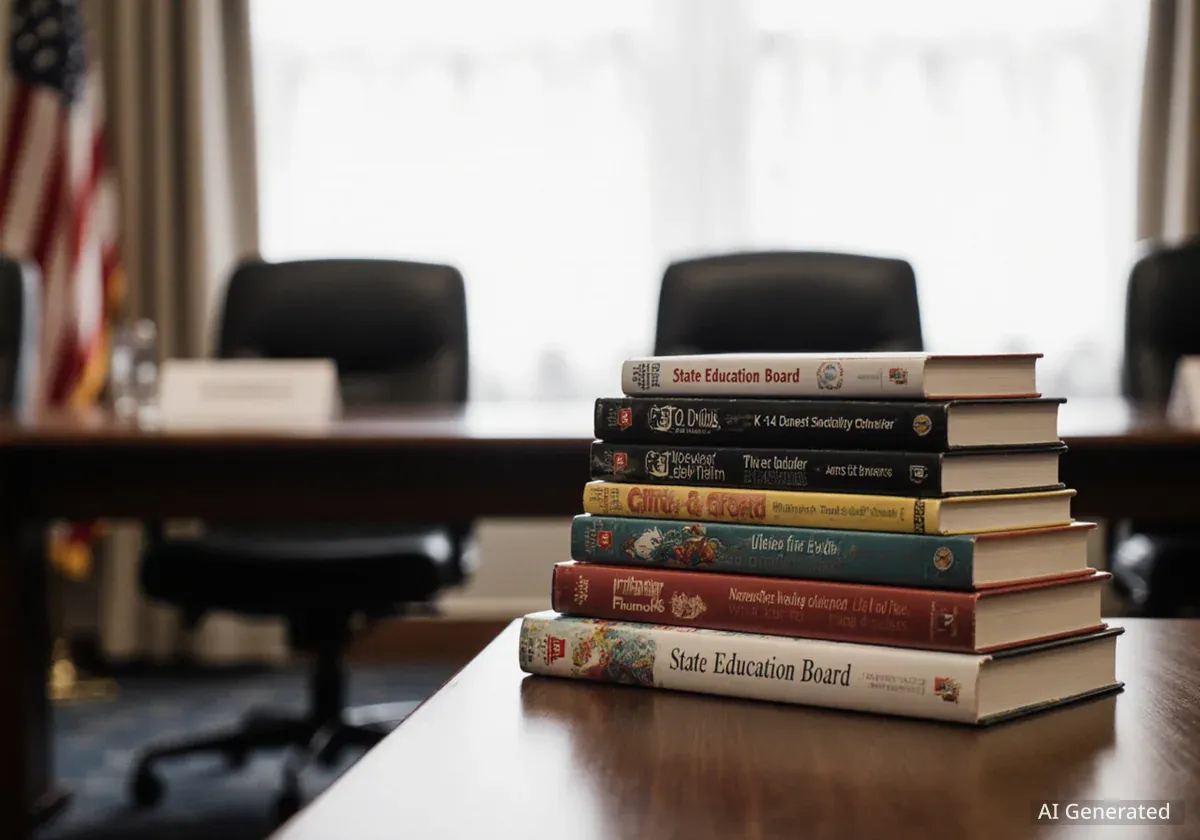

The Texas State Board of Education has postponed a vote on a new statewide K-12 reading list following intense public debate. The proposed curriculum, which includes over 300 books, has drawn criticism for its inclusion of biblical texts and a perceived lack of diverse authors.
The list, recommended by the Texas Education Agency, features classic literature such as "To Kill a Mockingbird" alongside at least seven selections from the King James Version of the Bible for middle and high school students. The delay came after a contentious board meeting where parents, educators, and community members voiced strong opinions on both sides of the issue.
Key Takeaways
- The Texas State Board of Education is considering a new reading list of over 300 books for all K-12 students.
- Controversy surrounds the inclusion of at least seven Bible stories and concerns about insufficient author diversity.
- A vote on the list has been delayed after a heated public meeting, indicating board members are reconsidering the proposal.
- If approved, Texas schools will be required to adopt the new reading list by the 2030 school year.
Details of the Proposed Curriculum
The comprehensive list aims to standardize required reading for students from kindergarten through 12th grade. While it contains many widely accepted literary classics, the inclusion of specific religious texts has become a central point of contention.
Starting in the 7th grade, students would be required to read several well-known biblical narratives. These include the stories of Jonah and the Whale, the Tower of Babel, and David and Goliath. This part of the proposal aligns with a legal opinion issued last year by Texas Attorney General Ken Paxton, who stated that public schools are permitted to include religious teachings in their lessons. Paxton has also actively encouraged school districts to incorporate prayer and scripture into the school day.
Mandatory by 2030
According to state law, any final list approved by the board must be implemented by all Texas public schools no later than the 2030 school year, making the current debate critical for the next generation of students.
Concerns Over Representation and Diversity
During the public comment portion of the board meeting, many speakers focused on the issue of representation. Several educators argued that the proposed list fails to reflect the diverse student body in Texas classrooms.
One teacher highlighted a significant gap in the curriculum. "The proposed list includes no Hispanic authors at several grade levels, including 9th, in which I teach," she stated. This sentiment was echoed by another speaker who emphasized the importance of students seeing themselves in the books they read.
"I think students want to see themselves in books... This disconnect limits students' access to text that functions as mirrors that builds pathways to empathy."
These speakers argued that a more inclusive list would not only validate the experiences of diverse students but also provide all students with a broader understanding of the world.
Arguments in Support of the List
Not all feedback was critical. Supporters of the proposed list urged the board to stand firm against opposition, arguing for the literary and historical value of the selected texts, including the biblical stories.
"The board should not compromise," one speaker urged. They warned against what they described as attempts to introduce unsuitable materials under the guise of modern educational theories.
This faction believes the recommended books represent a return to a foundational, classical education that provides essential cultural and literary knowledge. They view the inclusion of biblical texts not merely as religious instruction but as a study of foundational documents that have influenced Western literature and culture for centuries.
Expert Analysis on the Delay
Dr. Duncan Klussmann, a professor at the University of Houston's Educational Leadership & Policy Studies program and a former superintendent, commented on the board's decision to postpone the vote. "They did delay the vote, so that means there is some concern," he explained. Dr. Klussmann identified two primary issues the board must now navigate: the role of religious content and the demand for a curriculum that is more representative of the state's student population.
A Contentious Meeting and an Uncertain Future
The board meeting was marked by frequent interruptions as passionate speakers and board members engaged in heated exchanges, underscoring the deep divisions on the issue. The decision to delay the vote suggests that the arguments from opponents have resonated with at least some board members.
The board now faces the task of reconciling these competing visions for education in Texas. They must decide whether to amend the list to address the concerns about diversity and religious content or to move forward with the current proposal.
With the 2030 implementation deadline still several years away, there is time for further review and revision. However, the passionate debate indicates that finding a consensus will be a significant challenge for the state's top education officials.