
A wave of fear is sweeping through Twin Cities communities, prompting several school districts to shift to online learning as federal immigration enforcement activities intensify. Student attendance has dropped significantly after a series of incidents, including the detention of a parent at a school bus stop, left families afraid to send their children to school.
In response, districts including Minneapolis, St. Paul, Fridley, and Robbinsdale are implementing temporary virtual learning options. School leaders and community members are rallying to support affected families with transportation, food deliveries, and increased security, while grappling with the challenge of maintaining a safe learning environment.
Key Takeaways
- Multiple Twin Cities school districts are offering online learning due to rising fear over federal immigration enforcement.
- A Robbinsdale parent was detained at a school bus stop, and at least two educators have been detained in separate incidents.
- Student absenteeism has spiked, with one district reporting a third of its students absent on some days.
- Community groups are organizing to provide escorts for children, food deliveries, and other support for families in hiding.
- School officials have updated safety protocols and reassured families that schools remain safe spaces, but fear persists.
Schools Confront Rising Anxiety
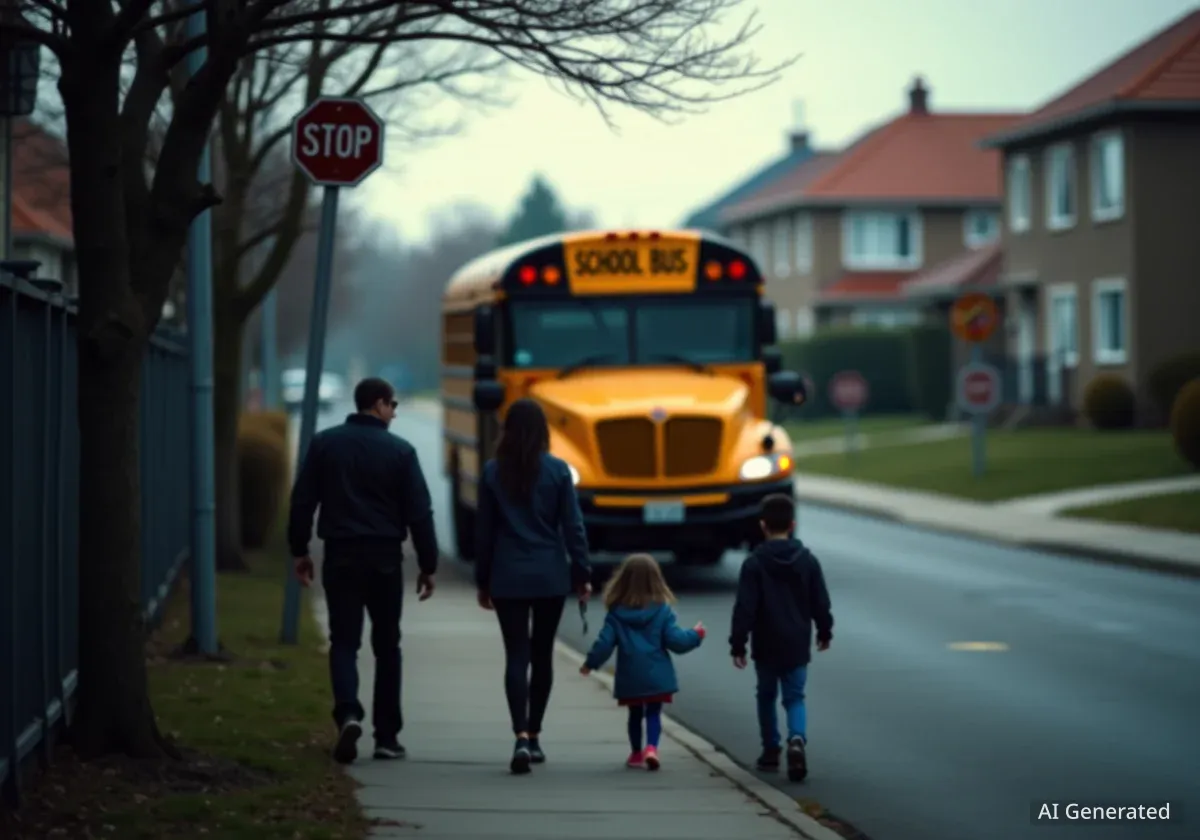
The decision to offer remote learning came swiftly for several districts after a parent was detained by federal agents on January 14 while waiting for the school bus with their child in Brooklyn Center. The incident, confirmed in an email to families from Northport Elementary Principal Bridget Dooley, sent a shockwave through a community already on edge.
Following the detention, Robbinsdale, Fridley, and St. Paul school districts announced temporary e-learning options. St. Paul, the state's second-largest district, is canceling classes from January 19-21 to prepare for its virtual learning launch on January 22. Minneapolis Public Schools had already offered an online option, with nearly 20% of its K-12 students—about 5,500 pupils—expressing interest as of January 13.
Attendance Plummets
The impact on attendance has been stark. In St. Paul, half of the district's Spanish-speaking students and a quarter of its Somali students were absent on a recent Friday. Fridley Public Schools reported that preliminary data showed more than a third of its students were absent on some days, prompting the superintendent to cancel classes entirely on January 9.
A Community on Edge
The anxiety is not limited to a single incident. Reports, some unconfirmed, of federal agents near schools and bus stops have circulated widely. In St. Louis Park, dozens of parents protested on January 14 near Aquila Elementary School, where agents had reportedly been seen staging across the street during student drop-off and pick-up times.
"This feels like we’re being occupied," said Rep. Larry Kraft, DFL-St. Louis Park, describing the agents' presence as "terrorizing" for the community. Teachers at the school reportedly closed window blinds to shield students from the activity outside.
Parent Marcus Penny said students saw agents with guns after they allegedly "kicked down the doors" of a nearby apartment building. "Students saw them and they are afraid," Penny said. "And they should be — these are strange, masked men showing up in their streets, pulling out their guns."
Federal Enforcement Intensifies
The current situation follows a U.S. Department of Homeland Security announcement of what it calls the largest immigration enforcement operation in history, with a reported 3,000 federal agents being sent to Minnesota. While federal officials have stated that agents do not target schools, policy changes in early 2025 removed prior guidance that limited enforcement in such "sensitive locations."
Educators Caught in the Middle
The enforcement actions have also directly impacted school staff. At least two educators were detained in the past week. One was detained outside Roosevelt High School in Minneapolis following a clash between federal agents and protesters on January 7. Another incident on January 12 in Inver Grove Heights involved an educator from Intermediate School District 917.
Bystander video showed a federal agent alleging the educator rammed his car. However, witnesses claimed the federal vehicle struck the educator's car. A DHS official stated the educator, a U.S. citizen, "moved her vehicle dangerously" and was arrested for obstruction after refusing to exit her vehicle.
"This is terrorizing our school community. No one feels safer with this presence, and the damage to our most vulnerable students will take years to undo."
- Brenda Lewis, Superintendent, Fridley Public Schools
Fridley Public Schools, where over three-quarters of students are of color and around 100 staff members are international educators, has been particularly affected. Superintendent Brenda Lewis said she fears these legally present educators will be profiled. The district has arranged transportation for staff afraid to drive and conducts welfare checks over the weekend.
Districts and Communities Mobilize
In the face of widespread fear, school districts and residents are organizing to protect and support students and their families. Many districts have updated and strengthened protocols for how to respond if federal agents appear on school property.
"ICE agents will not be allowed unrestricted access to our school buildings or grounds," Rochester Superintendent Kent Pekel wrote in a message to families, echoing similar statements from other district leaders.
Community response has been robust. In St. Louis Park, a rapid response group of over 1,000 members was formed to help escort children to and from school. Parent volunteers are also organizing home food deliveries for families too scared to go outside.
"Parents across Minneapolis, and not just immigrant families, are afraid to send their kids to school and to go outside. This isn’t right," said Jennifer Arnold, a mother who has helped organize over 90 food deliveries.
Logistical and Emotional Support
Schools are taking multiple steps to provide a safety net:
- Excused Absences: Absences related to safety concerns are being universally excused.
- Bus Driver Training: Drivers in Minneapolis and St. Paul are trained to keep students on the bus if a drop-off location seems unsafe, circling back later.
- Mental Health: Counselors, social workers, and psychologists are available to support students affected by the events.
- Clear Communication: Districts are using multilingual messages to reassure families and deliver resources like Chromebooks and Wi-Fi hotspots in clearly marked school vehicles.
As the community navigates this period of uncertainty, the focus for educators remains on student well-being. "We’re doing everything we can to be helpers," said Fridley Superintendent Lewis. "Right now, that’s what our families need us to be."