


A New York Supreme Court has reversed disciplinary actions, including suspensions and expulsions, that Columbia University imposed on nearly two dozen students involved in the 2024 occupation of Hamilton Hall. The ruling states the university improperly used sealed arrest records to justify the punishments.
The decision, delivered by Justice Gerald Lebovits, found the university's sanctions to be “arbitrary and capricious.” This development reopens a contentious chapter for the Ivy League institution, which is now considering its legal options, including an appeal.
Key Takeaways
- A court has overturned Columbia University's disciplinary actions against students from the 2024 Hamilton Hall protest.
- The judge ruled the university's use of sealed arrest records was improper.
- The punishments, including expulsions, were deemed “arbitrary and capricious.”
- Columbia University is reviewing the decision and may appeal, meaning disciplined students cannot yet return to campus.
The Court's Rationale
The core of the court's decision centers on how Columbia University gathered evidence to punish the students. According to Justice Lebovits, the university relied on arrest records that had been sealed by the court.
These records confirmed that the students were present inside Hamilton Hall during the 22-hour occupation in April 2024. However, the judge determined that mere presence was not enough to warrant severe punishments like expulsion.
“The record did not, however, contain evidence that [students] themselves acted to endanger Hamilton Hall or University property within Hamilton,” Justice Lebovits wrote in his ruling.
This distinction is crucial. The court found that while the university proved the students were there, it failed to provide specific evidence that these particular individuals engaged in destructive or dangerous acts. Using the sealed records as the primary basis for discipline was therefore found to be an overreach.
Legal Context: Sealed Arrest Records
When criminal charges are dismissed, as they were for many of the Hamilton Hall protesters, records are often sealed. This legal protection is designed to prevent dismissed charges from affecting a person's future employment, housing, or educational opportunities. The court's ruling reinforces the principle that sealed records cannot be used as evidence of guilt in subsequent administrative proceedings.
Columbia University's Response
Columbia University has acknowledged the court's ruling but is not immediately reinstating the affected students. A university representative stated that the institution is carefully reviewing the decision and exploring all available options.
“The order does not take effect for at least 30 days, and no student who was disciplined for the occupation of Hamilton Hall can return to campus at this time,” the representative confirmed.
Among the university's potential actions are seeking a stay of the order, which would temporarily halt its enforcement, and filing a formal appeal against the decision. This indicates a potential for a prolonged legal battle over the students' status and the university's disciplinary authority.
By the Numbers: The Hamilton Hall Occupation
- 46: Total number of people arrested in connection with the building takeover.
- 31: Number of cases dismissed by the Manhattan District Attorney's office, leading to sealed records.
- 22 hours: The approximate duration of the student occupation of Hamilton Hall.
- 70+: The number of students who faced suspensions and other punishments from the university.
Background of the 2024 Protest
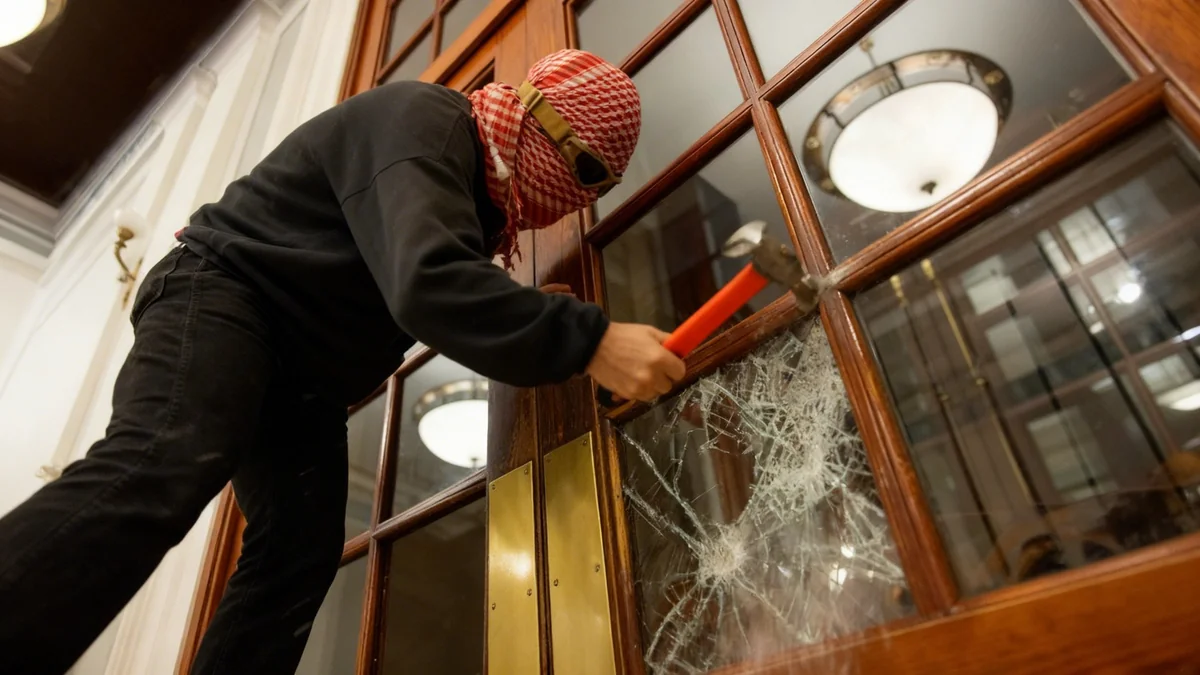
The occupation of Hamilton Hall on April 30, 2024, was a significant escalation of on-campus protests related to the Israeli-Palestinian conflict. Protesters, many with their faces covered, barricaded themselves inside the historic building, smashing windows and unfurling a banner that read “Intifada.”
The takeover resulted in a tense standoff that ended when the New York Police Department (NYPD) entered the building and made dozens of arrests. During the occupation, two janitors were reportedly assaulted and held captive inside the building, leading to a separate lawsuit filed by the workers.
Following the incident, Columbia University faced immense pressure to address antisemitic activity on campus, including a threat from the Trump administration to withhold approximately $400 million in federal funding. More than a year after the takeover, the university issued a wave of disciplinary actions against students it identified as participants.
Students Affected by the Ruling
The court's decision directly impacts several students who were prominent figures during the 2024 campus protests. One student whose expulsion was reversed is Aidan Parisi, who was a leader of the on-campus encampment that preceded the Hamilton Hall occupation.
Another is Grant Miner, who was president of the university's graduate student union. He was also expelled in March of last year for his alleged role in organizing the encampment and the subsequent building takeover. Both students were among the group whose punishments the court has now nullified based on the procedural grounds of using sealed records.
The future for these students remains uncertain. While the court has sided with them, the university's potential appeal means their return to Columbia is not yet guaranteed. The ruling, however, sets a significant precedent regarding how universities can use law enforcement records in their internal disciplinary processes.