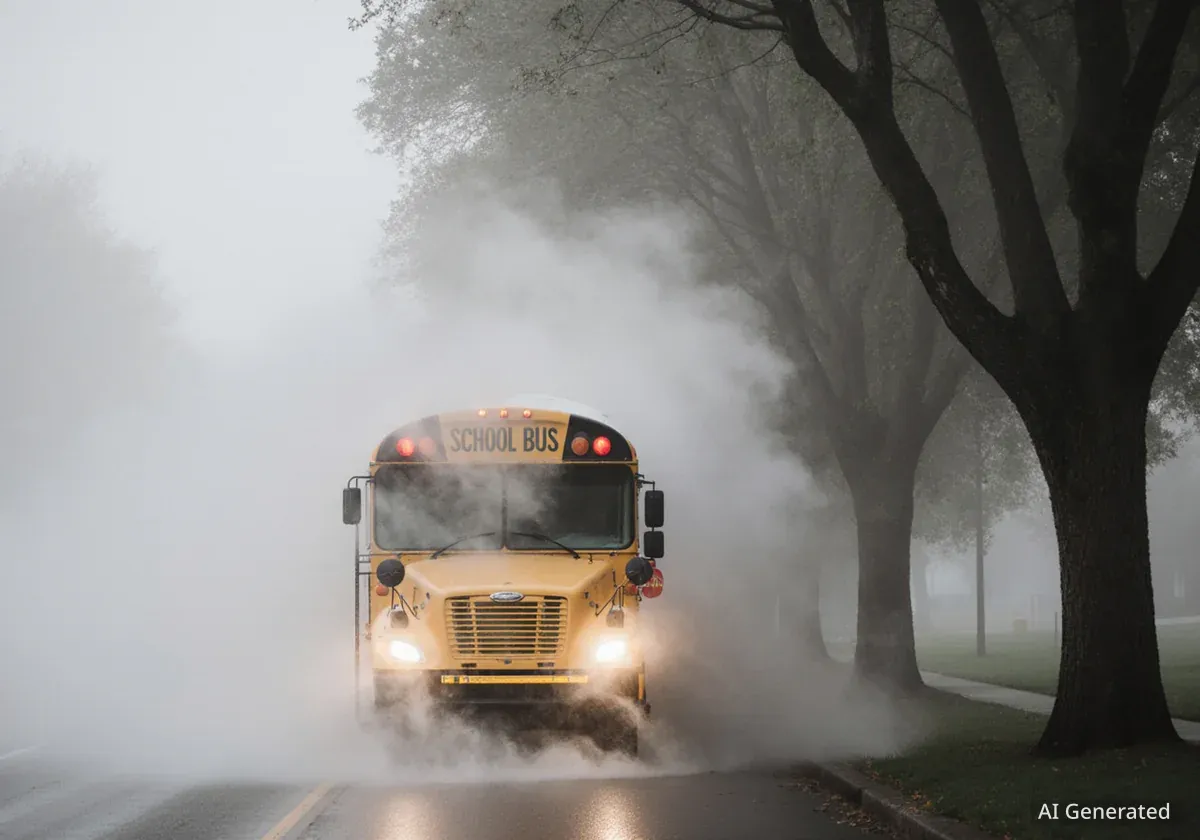

A persistent blanket of fog across Bakersfield this season is causing significant disruption for local school districts, leading to a wave of delays and closures that are impacting thousands of students and forcing parents to make last-minute arrangements. The frequent schedule changes are raising concerns about lost instructional time and the challenge of maintaining educational routines.
School officials are now implementing various strategies, from adjusting daily schedules to seeking state-level waivers, in an effort to manage the fallout from the unusually dense and consistent fog conditions that have settled over the region.
Key Takeaways
- Multiple school districts in the Bakersfield area, including Delano Union and Lakeside Union, have reported numerous fog-related delays and closures.
- Parents are facing significant childcare challenges due to the unpredictable school schedules, relying on family and friends for support.
- The disruptions are affecting student learning routines and creating a need for schools to make up for lost instructional hours.
- Districts are using methods like adding minutes to the school day and utilizing banked time to compensate for the delays.
A Season of Delays and Closures
The impact of this year's weather has been felt across Kern County. Several school districts are reporting a higher-than-usual number of weather-related disruptions. The Delano Union School District, for instance, has already called for six fog delays this season.
The situation is even more acute in other areas. The Lakeside Union School District has faced four delays and has been forced to close entirely on three separate occasions due to poor visibility. Similarly, the Kern High School District has announced three delays, affecting a large student population across its campuses.
Disruptions by the Numbers
- Delano Union School District: 6 fog delays
- Lakeside Union School District: 4 delays, 3 full closures
- Kern High School District: 3 delays
These numbers represent a significant departure from previous years, leaving administrators and families to navigate a constantly shifting daily schedule.
The Ripple Effect on Families and Students
For working parents, the sudden changes are more than a minor inconvenience. Finding reliable, last-minute childcare has become a major source of stress. Jessica McWilliams, a local parent, expressed her surprise at the frequency of the interruptions.
"Oh, my goodness. It's been more than what I expected," McWilliams said. "I think we've had at least five or six so far, including a few closures that they had to close school for the whole day."
She explained how her family has managed to cope. "I do work full time, but luckily with family, friends, support, we were able to figure it out," she added, highlighting the community network many are relying on.
Beyond Childcare: The Impact on Learning
The disruptions extend beyond logistical challenges. Educators and parents worry about the effect on students' learning and development. Consistent routines are crucial for academic progress, especially for younger children. Frequent delays can break this rhythm, making it harder for students to stay engaged and on track with their curriculum.
Mariella Ruiz, who is both a mother and a teacher in the Buttonwillow School District, sees the issue from both sides. She noted that the constant changes disrupt the educational environment and the established routines that help students thrive.
Even students are feeling the consequences. Parker, a student in the Rio Bravo District, shared a mixed perspective on the delays. While a late start might seem appealing, he understands the tradeoff. "I don't like them at the same time, because we kind of have to make them up," he explained.
Schools Scramble to Make Up Lost Time
Recognizing the potential for academic setbacks, school districts are proactively working to reclaim lost instructional hours. The strategies vary, tailored to the specific needs and calendars of each district.
The Lakeside Union School District, which has experienced some of the most significant disruptions, has responded by adding extra minutes to the instructional day. This approach ensures that students receive the required amount of teaching time over the course of the school year.
The Kern High School District is employing a different method. Officials there have confirmed that the district has banked approximately 240 minutes of instructional time. This reserve can be used to cover the three delays experienced so far without needing to add days to the calendar. However, if more delays occur, the district may need to cancel planned early-out days to meet state requirements.
Seeking Flexibility from the State
In cases of extreme and prolonged weather disruptions, districts have another option. Several are considering applying for a waiver from the California Department of Education. This formal request, if approved, could exempt them from the need to make up some of the lost time, depending on the severity of the circumstances. The waiver process allows the state to acknowledge that events beyond a district's control have impeded its ability to meet standard attendance requirements.
This step is typically reserved for significant disruptions and requires districts to demonstrate that they have made every reasonable effort to maintain their schedules. The decision to apply for a waiver will likely depend on whether the fog continues to be a persistent problem in the coming weeks.