OREM, Utah – Students at Utah Valley University held a sit-in protest on Wednesday against the presence of Department of Homeland Security recruiters at a campus career fair. The demonstration, organized by a student group formed in the wake of a traumatic campus event, has cast a new light on the deep political tensions that continue to simmer just months after the assassination of conservative activist Charlie Kirk.
Key Takeaways
- Utah Valley University students staged a sit-in to protest Department of Homeland Security (DHS) and Customs and Border Protection (CBP) recruitment at a campus job fair on February 4, 2026.
- The event was organized by the Civil Disobedience Club, a student group established last fall following the on-campus assassination of conservative commentator Charlie Kirk.
- Student leaders and participants say the protest reflects a desire for community and a response to a heightened and often tense political climate at UVU since the September 10th shooting.
- The campus remains divided, with some students supporting the protest and others welcoming the federal agencies, showcasing a polarized student body.
A Quiet Protest in a Charged Atmosphere
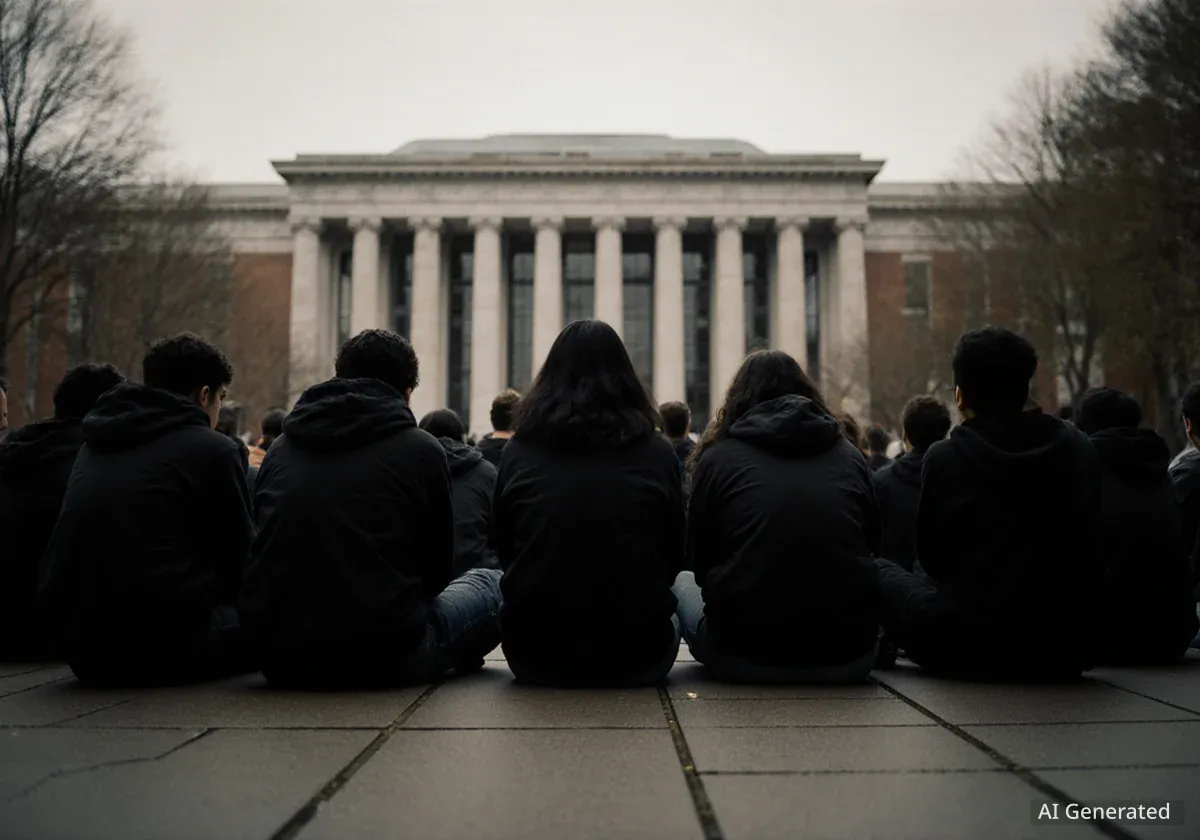
On Wednesday afternoon, the hallway outside the Sorensen Center Grande Ballroom became a space for quiet dissent. While more than 70 organizations met with students inside a bustling career fair, a group of demonstrators occupied a taped-off section of the floor. They held signs, played guitars, and sang softly, their presence a direct challenge to the recruitment efforts of one specific employer: the Department of Homeland Security.
The protest was organized by the UVU Civil Disobedience Club, a group that didn't exist before this academic year. Its formation was a direct result of the events of September 10, when conservative activist Charlie Kirk was shot and killed during a campus event. That incident sent shockwaves through the university community, and its aftershocks are still being felt.
Harper McGee, co-president of the club, was present at the Kirk event. She described the fear she felt returning to campus afterward. "It felt like the world was going crazy, and there was nothing anyone could do... and we wanted community," McGee said. That search for community and a constructive outlet for their concerns led to the club's creation and, eventually, to Wednesday's sit-in.
Differing Views on Campus Presence
The goal of the protest was clear. Jack McNiven, the club's other co-president, stated, "We hoped there would be a chance that Customs and Border Protection wouldn’t come if there was enough friction with it." The organizers used social media to spread the word, with their flyer reportedly reaching an audience of 50,000 after being shared by activist accounts like Indivisible and BURRN.
However, support for the federal agencies was also present on campus. The UVU College Republicans expressed a starkly different opinion.
"We’re glad DHS is on our campus, and we welcome them with open arms. College Republicans would love to see them on campus again at all of UVU’s job recruitment events."
- Sage Lloyd, Communications Director, UVU College Republicans
This sentiment highlights the deep ideological lines that exist within the student body, lines that have become more pronounced in recent months.
The Shadow of September 10th
The assassination of Charlie Kirk on September 10th remains a pivotal event for the UVU community. Kirk was shot while answering a student's question related to transgender issues. The man charged in the killing, 22-year-old Tyler Robinson, allegedly had a partner who was transitioning. The incident immediately intensified political discourse on campus, leading to what some students describe as a more hostile environment.
Lingering Wounds and a Search for Safety
For many politically active students, the assassination didn't create the campus divisions, but it poured fuel on an existing fire. Alexander Draper, secretary of the Civil Disobedience Club, described the aftermath as an explosion of blame.
"Immediately we had people pointing fingers, throwing blame against the radical left, against transgender people," Draper explained. He noted that this has created an environment where some of his LGBT friends feel threatened on campus. At the same time, some conservative students have also reported feeling unsafe.
A Campus in Transition
UVU Student Body President Kyle Cullimore, who was helping with crowd control when Kirk was shot, described the past year as "crazy, crazy." He acknowledged the wide spectrum of beliefs among students and emphasized his goal of representing everyone. "We have students that believe all different types of things," Cullimore said, adding that he believes political groups still feel comfortable operating on campus.
The protest against DHS, for some, is an extension of this activism. Sariah Holmes, a member of both the Civil Disobedience and Students for a Democratic Society clubs, said she has been involved in making "ICE whistle kits" and distributing voting rights flyers. Her focus, like that of fellow student Ella Smart, is on the actions of Immigration and Customs Enforcement (ICE).
"I’m here to protest against ICE. I think their actions are absolutely abysmal and they lack humanity," Smart said during the sit-in.
Moving On or Staying Engaged?
While the protest drew a dedicated crowd, other students walking by expressed different perspectives. Josue Salazar, a psychology student, was near the Kirk event when it happened. "It was scary. It’s honestly really sad that it happened here," he recalled. However, he believes the broader student population is trying to look forward.
"They know it’s not going to happen here again. We’re not worried about that," Salazar commented, suggesting many have "moved on" from the assassination. Regarding the protest, he was ambivalent. "They are fine to do it, but I just don’t know how much of a difference it makes."
This sentiment captures the complex state of the UVU campus. While some students are more politically activated than ever, channeling their energy into groups and demonstrations, others are seeking a return to normalcy, choosing to focus on their studies and disengage from the political friction.
The quiet demonstration in the hallway of the Sorensen Center served as a powerful symbol of this moment at UVU. It was a physical manifestation of a student body grappling with trauma, political polarization, and the fundamental question of what it means to feel safe and represented on their own campus.