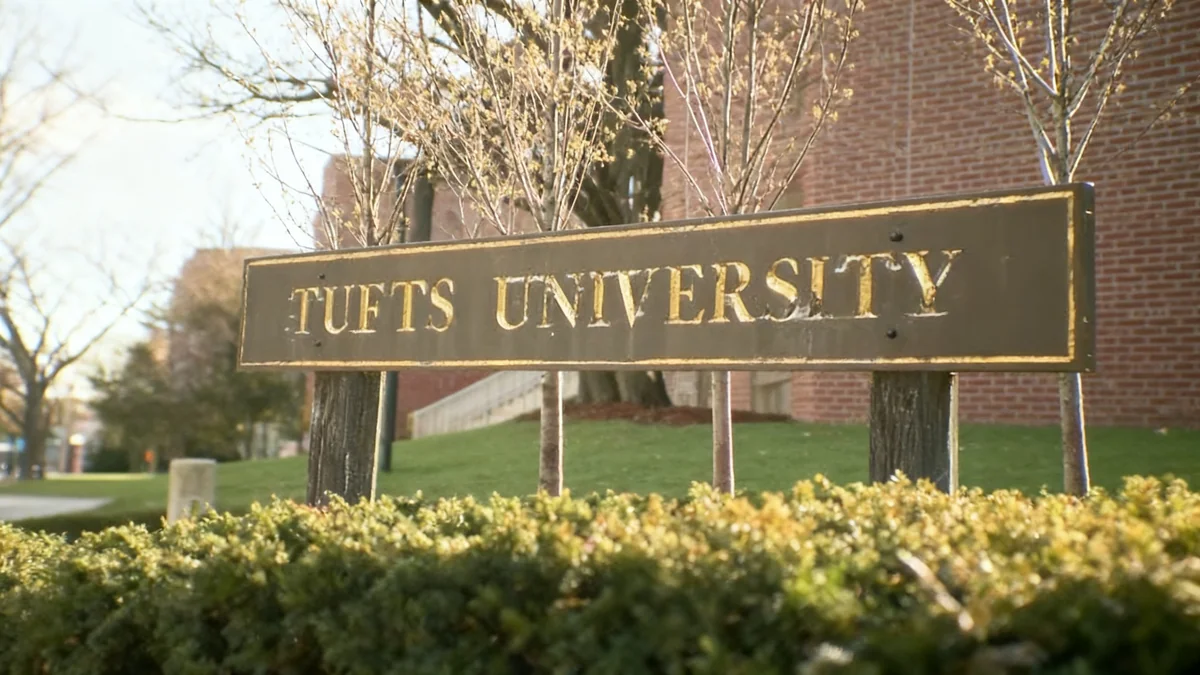

The U.S. Department of Education has launched a formal investigation into Tufts University and the National Student Clearinghouse regarding the handling of student voting data. The probe centers on allegations that a research project based at the university may have violated federal student privacy laws by improperly sharing sensitive information.
Federal officials are examining whether the National Study of Learning, Voting, and Engagement (NSLVE), a project housed at Tufts, shared personally identifiable student data with third-party organizations without the required consent. The investigation raises significant questions about data privacy on college campuses and the potential for misuse of student information.
Key Takeaways
- The U.S. Department of Education is investigating Tufts University and the National Student Clearinghouse.
- The probe focuses on the National Study of Learning, Voting, and Engagement (NSLVE) and potential violations of the Family Educational Rights and Privacy Act (FERPA).
- Allegations suggest student voting data may have been illegally shared with third parties, including political organizations.
- Institutions found in violation of FERPA risk the termination of all federal education funding.
Details of the Federal Probe
The investigation was initiated by the Department of Education’s Student Privacy Policy Office following multiple reports of potential misconduct. The core of the inquiry involves the NSLVE, a widely used research initiative that analyzes student voting patterns to promote civic engagement on college campuses across the United States.
According to the Department of Education, the investigation will scrutinize several key areas. Officials are tasked with determining what specific data was collected from students, how that information was shared, and which third-party entities received it. A central point of the review is whether participating students provided the proper consent as mandated by federal law.
The allegations suggest that personally identifying information might have been disseminated beyond the participating colleges and the National Student Clearinghouse, which acts as a data repository for educational institutions.
The Role of the National Student Clearinghouse
The National Student Clearinghouse is also a subject of the investigation due to its integral role in the NSLVE project. The non-profit organization collects and disseminates student data from thousands of colleges and universities, often for purposes of academic verification and research.
The probe will examine the Clearinghouse's procedures for handling and sharing the data provided by participating institutions for the NSLVE study. The partnership between universities, the Clearinghouse, and research projects like NSLVE is common, but it is strictly governed by privacy regulations to protect students.
What is the NSLVE Project?
The National Study of Learning, Voting, and Engagement (NSLVE) is a research study based at Tufts University's Institute for Democracy & Higher Education. Its stated goal is to help colleges and universities improve student civic learning and participation in democracy. Over 1,200 campuses nationwide have participated in the study.
FERPA and the Stakes for Higher Education
This investigation hinges on compliance with the Family Educational Rights and Privacy Act (FERPA). This federal law is a cornerstone of student privacy, designed to protect the confidentiality of student education records.
Understanding FERPA
The Family Educational Rights and Privacy Act gives parents certain rights with respect to their children's education records. These rights transfer to the student when he or she reaches the age of 18 or attends a school beyond the high school level. Generally, schools must have written permission from the parent or eligible student to release any information from a student's education record.
Under FERPA, information such as a student's name, address, course schedule, and grades are considered protected. Any disclosure of this information to outside parties without explicit, written consent is a potential violation of the law. The consequences for non-compliance are severe.
U.S. Secretary of Education Linda McMahon commented on the department's position regarding such activities.
“American colleges and universities should be focused on teaching, learning, and research – not influencing elections.”
The Secretary emphasized the seriousness of potential violations, stating that a breach of FERPA can lead to the termination of all federal education funding for the institution involved. This represents a significant financial risk for any university, including a prominent private institution like Tufts.
New Guidance and Policy Reversal
In conjunction with the investigation, the Department of Education has taken immediate action by issuing new guidance to all colleges and universities. This new directive officially rescinds previous policies from the Biden administration that had encouraged schools to participate in the NSLVE project.
The department warned that any institution planning to use the NSLVE dataset scheduled for release this year could face its own FERPA violations if strict consent requirements are not met. This move signals a significant policy shift and places hundreds of participating institutions on high alert.
The key elements of the new guidance include:
- Rescinding Previous Endorsements: All prior encouragement for participating in NSLVE has been withdrawn.
- Warning of Potential Violations: Schools are now formally warned about the risks of using NSLVE data without verifying proper student consent.
- Emphasis on Core Mission: The department has reiterated that the primary focus of educational institutions should be academics, not activities that could be perceived as influencing elections.
University and Clearinghouse Response
When contacted for comment, a spokesperson for Tufts University confirmed that the institution had received the government's letter announcing the investigation. However, the university stated that it would not be commenting on the matter at this time.
The Medford, Massachusetts-based university is now tasked with cooperating with the federal inquiry. The outcome will likely have far-reaching implications not only for Tufts and the National Student Clearinghouse but also for the hundreds of other colleges that have participated in the NSLVE study.
The investigation remains ongoing, and the Student Privacy Policy Office has not provided a timeline for its conclusion. The findings will be closely watched by the higher education community, privacy advocates, and political organizations alike, as they could reshape how student data is handled for research and civic engagement initiatives nationwide.