


The Alabama High School Athletic Association (AHSAA) has voted to separate public and private schools into their own distinct brackets for all championship playoff competitions. The decision, passed by a 13-2 margin by the Central Board of Control, has left many school administrators and coaches with a mix of disappointment and uncertainty about the future of high school sports in the state.
While the new structure allows for regular-season games between public and private schools, the path to a state title will now be completely segregated. The move is raising immediate questions about competitive fairness, travel logistics, and the potential end of long-standing rivalries that have defined Alabama high school athletics for decades.
Key Takeaways
- The AHSAA Central Board of Control voted 13-2 to create separate playoff brackets for public and private schools.
- Coaches and administrators have expressed concerns about new competitive imbalances, with some private schools facing opponents three times their size.
- Significant increases in travel time and costs are anticipated, impacting student-athletes' class time and school budgets.
- The decision affects all sports, not just football, raising questions about championships for smaller programs like wrestling and tennis.
A Landmark Decision Years in the Making
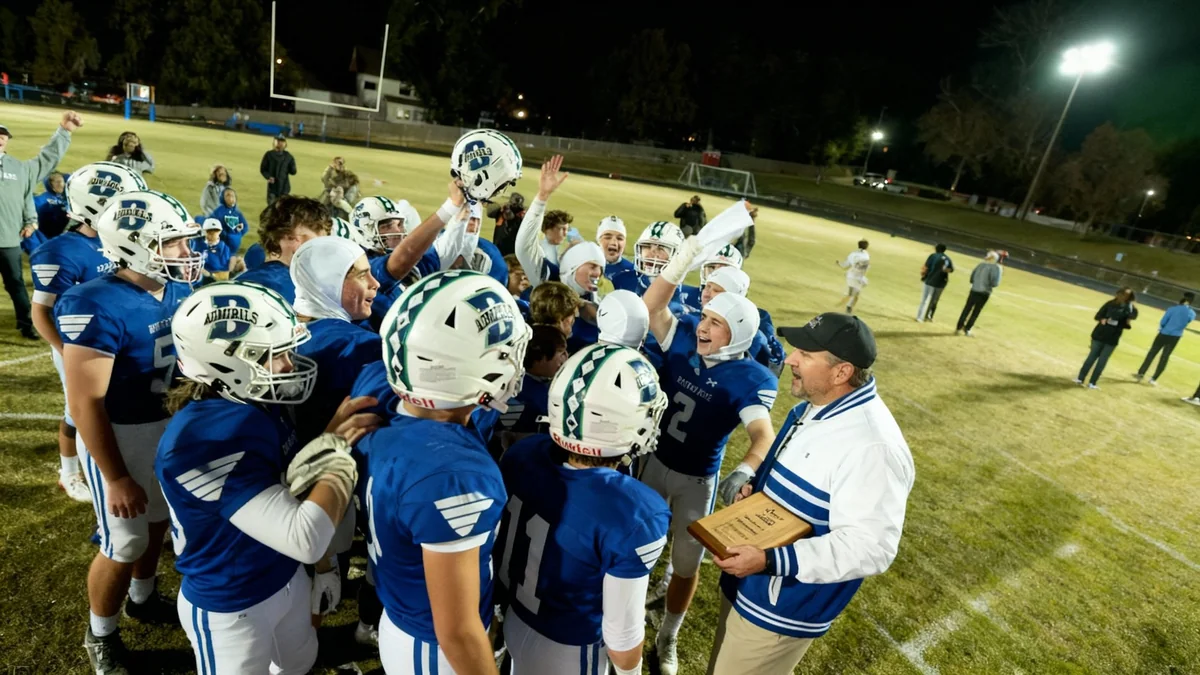
The separation of public and private schools during the postseason is not a sudden development. According to Madison Academy football coach Bob Godsey, the issue has been a topic of discussion for a long time. "This day has been brewing for a lot of years. This isn’t something that has just happened," Godsey said.
Despite the long-simmering debate, the finality of the vote has sent ripples through the state's athletic community. The primary hope among coaches is that the plan was thoroughly considered. "I just hope it was well thought out, well planned out from an administrative standpoint, and that this was not some kind of knee-jerk reaction; that’s my hope," Godsey added.
For now, schools are left waiting for the specific rules and parameters of the new system. The consensus is to adapt and compete under whatever framework is provided. As Godsey put it, "It is what it is and we’re going to go play wherever they tell us to go play."
The End of an Era
For many, the integrated playoff system was a unique feature of Alabama sports. Mike Morris, director of athletics at Randolph School, noted that the competition between different types of schools—public, private, city, and rural—made the state championships special. "That’s one of the things that made Alabama a really special place in terms of high school athletics," he stated, expressing sadness that this aspect is now gone.
New Questions of Competitive Fairness Arise
While the split may have been intended to address existing competitive balance issues, some administrators believe it has created new, more severe problems, particularly within the private school classifications. The disparity in student enrollment among private schools is now a major point of contention.
For example, in the new Double-A private school football division, Glenwood School has an enrollment of just over 191 students, while McGill-Toolen Catholic High School has 483. Both schools are now in the same region and will compete against each other for a championship.
"If we’re worried about the student-athletes, and I mean, I know we are, then having a school three times bigger than another school playing each other in football seems difficult."
John Repoll, the athletic director at McGill-Toolen, expressed his own reservations. His school will now compete in a classification with only 17 teams, a stark contrast to the 32-team Class 7A they previously belonged to. "We do like competing at the highest level, and that’s what we want to do," Repoll said, indicating a desire for a more robust competitive environment.
Logistical Hurdles and Financial Burdens
Beyond the philosophical debates about competition, the new alignment presents immediate and practical challenges related to travel and finances. The geographic spread of private schools across Alabama means some teams will face extensive road trips for regional games.
Lee-Scott Academy in Auburn provides a clear example. Its closest regional opponent, Briarwood Christian, is approximately 100 miles away. Other opponents in its new region, such as Madison Academy and Randolph, are over 200 miles away.
Travel by the Numbers
- 250 miles: The approximate distance Glenwood School will have to travel to play regional opponents in the Mobile area.
- 200+ miles: The distance Lee-Scott Academy will travel for several of its new regional matchups.
These long distances create multiple problems. "If you have games — region games, as it relates to football — that far away, just logistically you’re missing school," said Mike Morris of Randolph School. He argued that extensive travel for weeknight games goes against the fundamental well-being of student-athletes.
The financial strain is another significant concern. Scott Phillipps pointed out that the issue extends far beyond varsity football. "This doesn’t just affect football. This affects JV tennis, it affects wrestling," he explained. The costs of transportation, meals, and lodging for multiple teams across various sports could become a serious burden for school budgets.
An Uncertain Path Forward
With playoff brackets and other details still to be released, private school leaders are in a state of limbo. A conference call was planned for the schools to discuss the decision and align on a path forward. The goal, according to Phillipps, is to ensure all 58 private and independent schools are "on the same page and working together."
Many administrators are adopting a cautious approach until the full implications of the new structure become clear. "I think most of us are kind of in a wait and see mindset. We don’t have all the details yet," Phillipps said. "We don’t know how this is all going to play out."
The sentiment across the state is a mix of resignation and a hope that the change will ultimately benefit students. However, doubts remain. As Coach Godsey concluded, "I’ve said it all along, and many times, one of the best things that Alabama has going for it is high school athletics. I hope we’ve helped today and not set us back."