


A significant debate is unfolding within Alabama's high school athletic community as coaches and administrators consider separating public and private schools for championship competitions. The discussion, driven by concerns over competitive fairness and resource disparities, has intensified ahead of a key reclassification decision by the Alabama High School Athletic Association (AHSAA).
An informal survey of 54 high school football coaches reveals a fractured landscape, with no clear consensus on the path forward. While a majority favor maintaining the current integrated system, a substantial portion of public school coaches are advocating for a fundamental change that could reshape the state's athletic future.
Key Takeaways
- A survey of 54 coaches showed 43% support the current system, while 31% favor separating public and private schools for playoffs.
- No private school coaches surveyed supported separation, highlighting a clear divide in perspectives.
- The debate centers on competitive balance, enrollment calculations, and the impact of state funding initiatives like the CHOOSE Act.
- The AHSAA has postponed its reclassification announcement as it navigates this complex issue and recent legislative interest.
A Deeply Divided Community
The conversation surrounding the structure of high school sports in Alabama is not new, but it has reached a critical point. At the heart of the matter is whether the nearly 60 private schools that are members of the AHSAA should compete in the same championship brackets as their public school counterparts.
A recent poll of football coaches across the state underscores the division. Of the 54 respondents, which included 45 public school coaches and 9 from private schools, opinions were split. While 43% believe the system should remain largely unchanged, 31% argue for separating the schools during championship play, allowing them to continue competing in the regular season.
Notably, all nine private school coaches who participated in the survey voted against any form of separation. This indicates that the 21 votes for separation came exclusively from the public school coaches surveyed, revealing a significant philosophical gap between the two groups.
One public school coach, who remained anonymous to speak candidly, suggested that a split is necessary for true fairness. "If you truly want a fair competitive playing field for everybody, that’s probably going to be your best method," the coach stated, acknowledging potential travel and scheduling challenges but prioritizing competitive equity.
The Mechanics of Competition
The current system includes measures intended to level the playing field. Private schools are subject to a 1.35 enrollment multiplier, which artificially increases their student count for classification purposes. Additionally, a "competitive balance factor" can move highly successful teams into higher classifications, regardless of their actual enrollment.
Arguments for Change
Many public school coaches argue these measures are not enough. They point to what they see as inherent advantages for private institutions, such as the ability to select their student body. One coach explained that public schools must serve all students within their district, including those with significant special needs or those facing economic hardship, which can impact athletic participation.
"It is a significant issue that private schools will never have to deal with," one coach wrote. "They don’t understand what it is like to have a potential student athlete not play because they are helping support their families."
The recently passed CHOOSE Act, which provides public funds for students attending private schools, has added another layer to the debate. Some public school advocates argue that if private schools accept taxpayer money, they should be subject to the same open-enrollment rules as public institutions.
Arguments for Unity
Those who support keeping the current system worry about the logistical fallout of a split. With only 58 private schools in the AHSAA, creating separate classifications could lead to significant scheduling difficulties and increased travel costs for those schools. There is also the question of whether private schools would choose to remain in the AHSAA if a separation were enacted.
Looking at Neighbors
Alabama would not be the first state to implement such a change. Several neighboring states, including Florida, Georgia, Louisiana, and Tennessee, have already created separate playoff structures for public and private schools. Proponents of separation often point to these states as models for how a new system could function.
The Path Forward
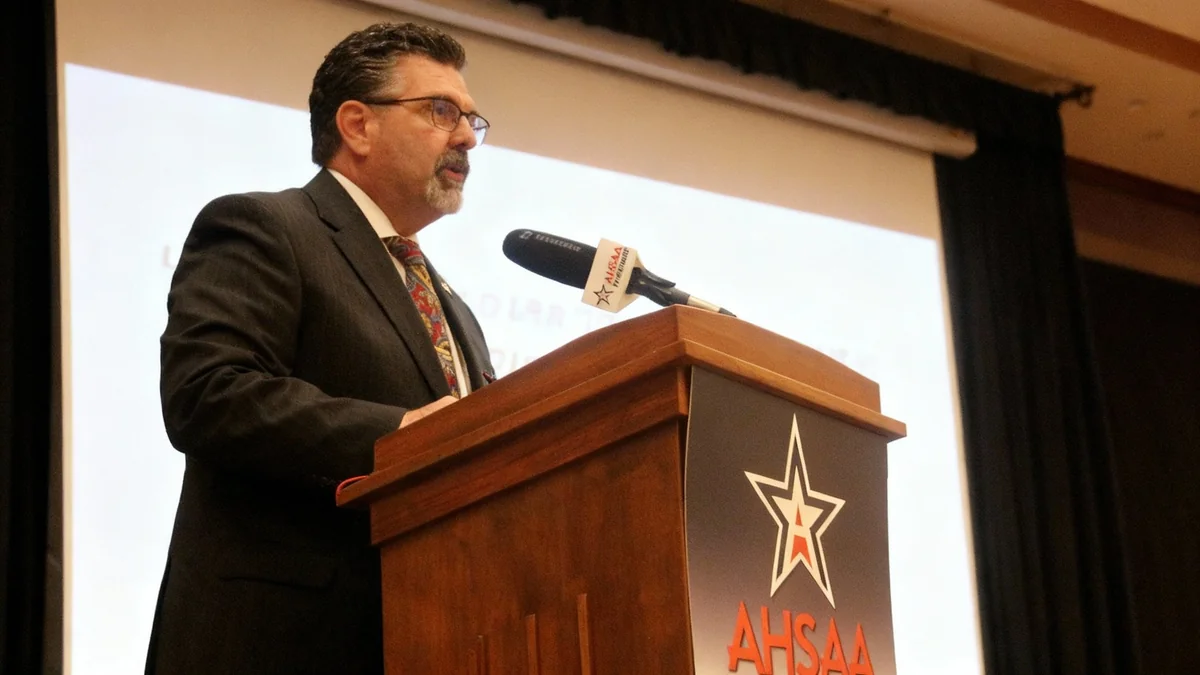
The AHSAA is actively engaging with all parties involved. In October, Executive Director Heath Harmon held a meeting with representatives from all 58 member private schools to discuss their concerns. The meeting was described as a productive dialogue where private school leaders could voice their opinions on the multiplier and competitive balance rules.
Shane Sullivan, the athletic director at St. Paul's, commented on the importance of the meeting. "I think the biggest thing is we are just happy to have a voice," he said. "We actually had a chance to voice our opinions... and I think that Mr. Harmon’s goal was to hear us out and try to work with us the best he can."
The association has postponed its reclassification announcement, originally scheduled for earlier this year, as it continues to weigh the feedback from schools and monitor discussions in the state legislature. The decision it ultimately makes will have a lasting impact on the traditions and competitive structure of high school sports across Alabama for years to come.