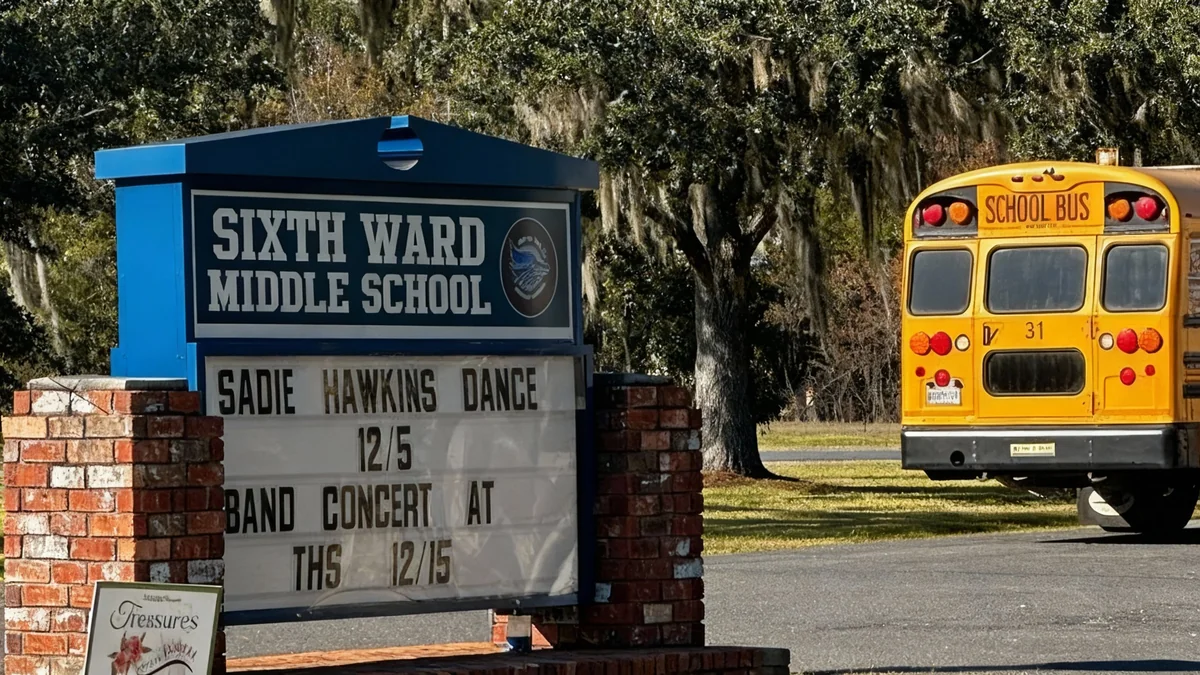

A 13-year-old girl in Lafourche Parish, Louisiana, was expelled from her middle school after physically confronting a classmate she accused of spreading AI-generated nude images of her and her friends. The incident has exposed a critical gap in school policies, which are struggling to keep pace with the rapid rise of artificial intelligence as a tool for cyberbullying and harassment.
The girl's family argues she was victimized twice: first by the fake images and then by a school system that failed to protect her, ultimately punishing her for her reaction to relentless torment. The case has since resulted in criminal charges against two boys, but it raises difficult questions about student safety and institutional accountability in the digital age.
Key Takeaways
- A 13-year-old Louisiana girl was expelled for over 10 weeks after a fight related to AI-generated nude images of her and classmates.
- The student reported the cyberbullying to school officials, but an initial investigation found no evidence of the images.
- The fight occurred on a school bus after the girl saw a male classmate displaying the images on his phone.
- Two boys were later charged by the sheriff's department under a new state law against AI image dissemination, while the girl faced no charges.
- The school board eventually overturned the expulsion, allowing the student to return to her school on probation.
A Digital Nightmare Begins
The ordeal for the eighth-grader at Sixth Ward Middle School began with rumors circulating through the school's hallways. On the morning of August 26, she and two friends approached a guidance counselor for help after hearing that explicit, digitally altered images of them were being shared among students.
According to testimony from a later disciplinary hearing, the girls believed a male classmate and two other students from different schools were creating and spreading the images on Snapchat, an app where messages can disappear seconds after being viewed. The images were described by the girl's father, Joseph Daniels, as “full nudes with her face put on them.”
The Rise of 'Nudify' Apps
The technology to create such realistic deepfakes has become alarmingly accessible. What once required technical expertise can now be done in moments using apps that strip clothing from existing photos. This ease of use has turned social media profiles into a source for malicious content, creating viral nightmares for unsuspecting victims, particularly minors.
Despite the girls' pleas, the school's initial response was ineffective. The principal, Danielle Coriell, stated at the hearing that an investigation that day came up empty. A sheriff's deputy assigned to the school also searched for the images on social media but could not find them. This lack of immediate evidence led school officials to doubt the girls' claims.
“I was led to believe that this was just hearsay and rumors,” Daniels said, recounting a conversation with the school counselor. Yet, the taunting continued throughout the day, leaving his daughter feeling miserable and unheard.
School's Response Under Scrutiny
As the school day progressed, the 13-year-old felt increasingly isolated. She returned to the counselor in the afternoon to ask to call her father but said she was refused. A text message simply reading “Dad” was all she managed to send. With the situation escalating among students, she texted her sister, “It’s not getting handled.”
School officials remained skeptical. At the disciplinary hearing, Principal Coriell defended the initial inaction. When asked why the accused boy's phone wasn't checked, she responded, “Kids lie a lot. They lie about all kinds of things.” She added that by 2 p.m., she believed no pictures existed.
Outdated Policies
The Lafourche Parish School District was only beginning to develop AI-specific policies, which were primarily focused on academics. Its cyberbullying training curriculum dated back to 2018, long before the widespread availability of AI image generation tools.
This gap in preparedness is not unique. Sameer Hinduja, co-director of the Cyberbullying Research Center, noted that most schools are “just kind of burying their heads in the sand, hoping that this isn’t happening.” The failure to adapt policies to new technological threats leaves students vulnerable and staff ill-equipped to handle complex digital harassment cases.
The Breaking Point on the Bus
Just 15 minutes after the principal dismissed the issue, the situation erupted. When the 13-year-old girl boarded her school bus, she saw the very boy she had accused showing images on his phone to another student. She said fake nude photos of her friends were visible on the screen.
“I went the whole day with getting bullied and getting made fun of about my body,” the girl explained at her hearing. Seeing the images again was the final straw.
Fueled by a day of frustration and humiliation, she confronted the boy. According to the principal's account of a bus video, she slapped him twice. When he shrugged it off, she reportedly asked aloud, “Why am I the only one doing this?” Two other classmates then joined in, and the girl climbed over a seat to punch and stomp on the boy.
Video of the fight quickly spread on Facebook, leading to public outrage. In a joint statement, the school district and sheriff's office acknowledged that “overwhelming social media sentiment was one of outrage and a demand that the students involved in the fight be held accountable.”
The girl, who had no prior disciplinary record, was removed from her school and assigned to an alternative program. The district moved to expel her for the entire semester, a total of 89 school days.
Aftermath and Accountability
While the girl was punished for the fight, the investigation into the deepfake images continued. Three weeks after the bus incident, on the same day as her disciplinary hearing, one of the accused boys was charged with 10 counts of unlawful dissemination of AI-generated images under a new Louisiana law. A second boy faced identical charges in December. The girl faced no criminal charges.
At her hearing, the girl's attorneys questioned what discipline the male student faced, but school officials cited federal student privacy laws and declined to comment. Attorney Gregory Miller stated he has no knowledge of the boy facing any school-level discipline for his role in sharing the images.
The panel upheld the girl's expulsion. “She just felt like she was victimized multiple times,” her father said. The experience took a severe toll on her mental health; she began skipping meals and was unable to focus on her online schoolwork until she started therapy for depression and anxiety.
Her family appealed to the school board. Superintendent Jarod Martin argued that “sometimes in life we can be both victims and perpetrators.” However, board members were more sympathetic.
“I’m also trying to put into perspective what she went through all day,” said board member Henry Lafont. The board voted to allow her to return to Sixth Ward Middle School immediately. She went back on November 7 but remains on probation until late January, barring her from extracurricular activities like basketball.
Her father calls the entire situation “heartbreaking,” expressing concern that the school's handling of the incident has permanently damaged his daughter's middle school experience. The case serves as a stark warning for school districts nationwide about the urgent need to address the real-world consequences of digital harm.