
If you've ever found yourself squinting at distorted letters or endlessly clicking on pictures of traffic lights just to prove you're human, you're not alone. For years, these digital puzzles, known as CAPTCHAs, have been a familiar annoyance online. But a new generation of security checks is quietly replacing them, aiming to make the internet both safer and less frustrating for users.
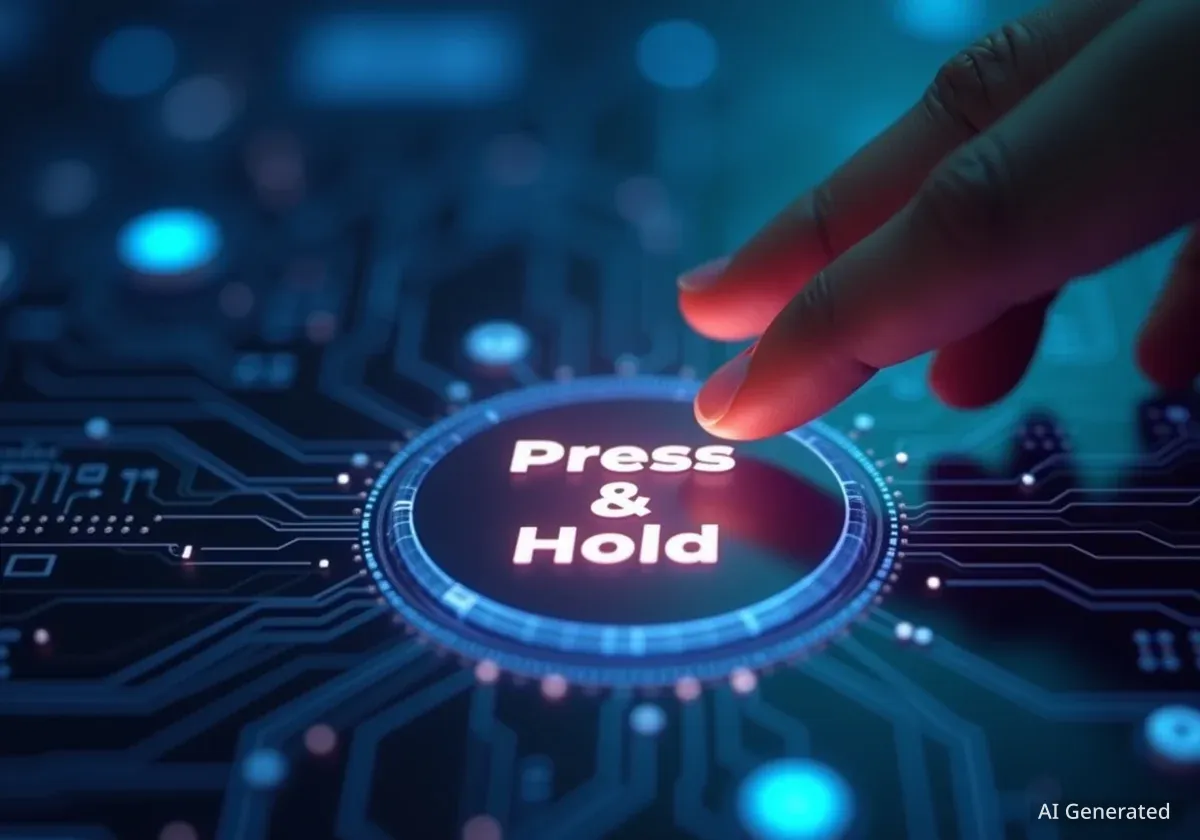
Companies are increasingly adopting simpler, behavior-based tests, such as a 'press and hold' button, to distinguish human visitors from automated bots. This shift marks a significant change in how websites manage security, moving from challenging puzzles to invisible analysis of user interaction. The goal is to stop malicious bots without disrupting the experience for legitimate visitors.
Key Takeaways
- Traditional CAPTCHAs, like identifying images or reading distorted text, are being phased out due to user frustration and advancements in AI that can solve them.
- Newer security methods focus on behavioral biometrics, analyzing how a user interacts with a page, such as mouse movements or the way they press a button.
- Technologies like 'Press & Hold' verification, developed by security firms such as PerimeterX, offer a less intrusive way to confirm a user is human.
- The primary driver for this change is the need to improve user experience and reduce the high rates of website abandonment caused by difficult CAPTCHAs.
The Slow Fade of Traditional Puzzles
For nearly two decades, the CAPTCHA has been the internet's default gatekeeper. The acronym stands for 'Completely Automated Public Turing test to tell Computers and Humans Apart.' Its purpose was simple: present a challenge that humans could easily solve but that early computer programs could not.
Initially, this involved typing out wavy, distorted words. As optical character recognition technology improved, these tests became more difficult for everyone. The system then evolved into the familiar image-based challenges, asking users to identify everything from storefronts to crosswalks.
However, these puzzles have become a major point of friction. They can be difficult for people with visual impairments, time-consuming for all users, and increasingly, beatable by the very bots they are designed to stop. Advanced artificial intelligence can now solve image recognition tasks with remarkable accuracy, rendering many traditional CAPTCHAs obsolete.
A New Approach: Analyzing Behavior
In response to the shortcomings of older methods, web security has shifted its focus from what you know to how you act. The new frontier is behavioral biometrics, a method that analyzes the unique patterns of human interaction with a device.
Instead of a puzzle, these systems run in the background, monitoring subtle cues. These can include:
- The path your mouse takes to move across the screen.
- The rhythm and speed of your typing.
- The precise way you tap or swipe on a mobile device.
- The duration and pressure of a click.
This data creates a unique signature that is difficult for a rigid, automated script to replicate. A bot might click a button instantly and perfectly, while a human will have a slight delay, a natural curve in their mouse movement, and a variable press duration. It is this nuanced, 'imperfect' interaction that signals a human presence.
What is a 'Press & Hold' Check?
One of the most visible examples of this new approach is the 'Press & Hold' button. Instead of a simple click, the user is instructed to press the button and hold it for a moment. During that time, the system measures the duration, pressure (on compatible devices), and tiny movements of the cursor or finger, comparing them against patterns known to be human. It’s a simple action for a person but a complex behavior for a basic bot to fake.
The Companies Behind the Change
This technological shift is being led by cybersecurity firms specializing in bot detection and mitigation. Companies like PerimeterX (now part of HUMAN) are at the forefront of developing these user-friendly security solutions. Their systems are designed to be largely invisible, only presenting a challenge when a user's behavior is flagged as suspicious.
When a direct challenge is needed, it often takes the form of a simple, intuitive action like the 'Press & Hold' verification. This method avoids the cognitive load of solving a puzzle and can be completed in a fraction of the time. The underlying technology analyzes the interaction in milliseconds to grant access.
Why User Experience is a Top Priority
The move away from frustrating puzzles isn't just about better technology; it's also about good business. A difficult or confusing user experience can directly impact a company's bottom line. Studies have shown that complex CAPTCHAs can lead to high rates of 'cart abandonment' on e-commerce sites, where frustrated customers give up on a purchase.
By implementing security measures that are nearly invisible, companies can protect their platforms without alienating their customers. A seamless login or checkout process leads to higher conversion rates and greater customer satisfaction.
"The best security is the security you don't notice," one web developer commented. "If we can validate a user is human without making them solve a puzzle, we've created a better, more accessible internet for everyone."
While bots will continue to evolve and security measures will need to adapt, the trend is clear. The days of deciphering illegible text and searching for hidden traffic lights are numbered. The future of online verification is one that understands human behavior, making the digital world a little less robotic for the real people using it.