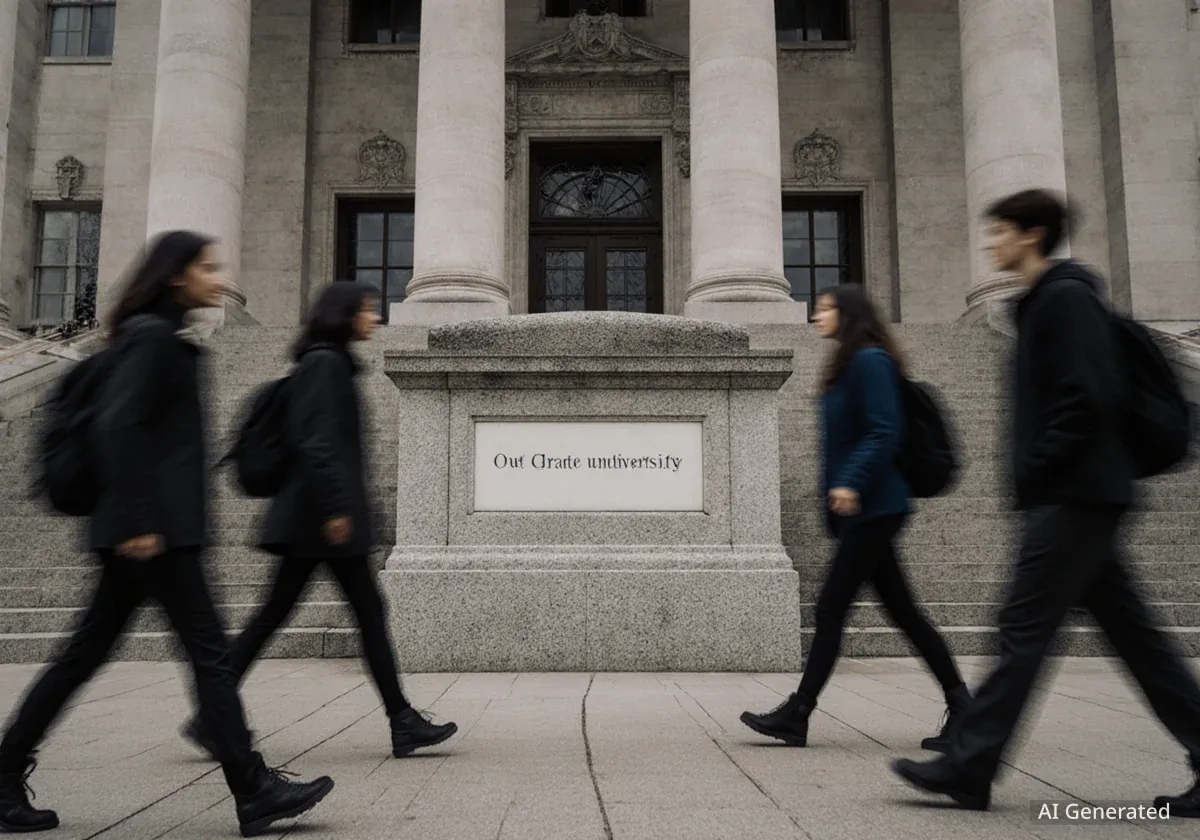

Students at the Harvard Kennedy School (HKS) are intensifying their calls for the university to remove Leslie H. Wexner's name from a prominent campus building. The renewed pressure follows the recent disclosure of an FBI document naming the billionaire philanthropist as a co-conspirator of the convicted sex offender Jeffrey E. Epstein.
The document, which has reignited a long-standing debate over donor influence and institutional accountability, has prompted students to voice feelings of distress and betrayal, arguing that the building's name is a constant, painful reminder of Wexner's association with Epstein's crimes.
Key Takeaways
- Harvard Kennedy School students are publicly urging the administration to rename the Leslie H. Wexner Building.
- The calls follow the unsealing of a 2019 FBI document that named Wexner as a co-conspirator of Jeffrey Epstein.
- Students report emotional distress, citing the name as a daily reminder of Epstein's crimes and a contradiction of the school's values.
- Harvard has stated it is reviewing individuals named in Epstein-related files to determine if action is warranted.
- Wexner, who has not been charged with a crime related to Epstein, donated over $42 million to the Kennedy School before 2012.
Student Voices on Campus
For many students at the Kennedy School, walking into the main building has become a deeply unsettling experience. The name emblazoned on the facade, they say, represents a direct conflict with the public service values the institution promotes.
"To me, it feels borderline dystopian to walk in through the main entrance of the Leslie H. Wexner Building," said Ana-Sofia Gonzalez, a second-year student pursuing a master's in public policy. She described feeling "dirty and complicit in something I never consented to and do not condone."
The emotional impact is particularly acute for some. Lauren E. Barnes, a second-year master's in public administration student, shared her personal reaction upon learning of the connection.
"As a survivor of sexual assault and a parent of a 14-year-old, my stomach felt like it dropped out of my body," Barnes recalled.
She emphasized the need for the university to prioritize the well-being of those most affected by the issue. "I want Harvard to put its students and its survivors at the center of the process, not just its donors or a PR firm, and really listening to those that are impacted," she added.
A Test of Institutional Values
The campaign to remove Wexner's name is being framed by students as a critical test of Harvard's moral character. They argue that while the university may not have known the full extent of the allegations when it accepted the donations, the information available now requires a decisive response.
"If the school doesn’t take action to remove this name, it’s a very public symbol of our failure as an institution to live up to the values that we espouse," stated Hanna A. Tripp, another student in the public administration program.
The FBI Document
The catalyst for the recent student action was the public release of an internal FBI document from April 2019. Previously redacted, the document explicitly named Leslie Wexner as a co-conspirator of Jeffrey Epstein, alongside Ghislaine Maxwell and others. Wexner has not been criminally charged in relation to Epstein's activities.
Students contend that the continued association with Wexner tarnishes the school's reputation and undermines its mission. The debate also raises broader questions about the university's processes for vetting major donors.
"I think it’s a larger question around what goes into vetting a donation — a large donation — and how much scrutiny is that person put up to," questioned HKS student Brittany S. Mangini.
University Response and Policy
In response to the growing concerns, a spokesperson for the Harvard Kennedy School acknowledged the gravity of the situation. "We take concerns raised by members of our community very seriously," the spokesperson wrote in a statement, calling Epstein's crimes "reprehensible."
The university confirmed it is actively reviewing its ties to individuals named in the Epstein files.
According to the HKS spokesperson, Harvard is conducting a review of individuals named in the Epstein documents "to evaluate what actions may be warranted."
The spokesperson also highlighted the university's official de-naming policy. This policy allows for the renaming of buildings based on specific criteria, including showing compassion for community members and making decisions grounded in careful deliberation. Notably, the process for a de-naming proposal can be initiated by students, faculty, or staff.
Historical Precedent and Calls for Action
Students advocating for the change are pointing to a recent precedent as a source of hope. In July 2025, after a multi-year review prompted by a student petition, Harvard removed "John" from the name of John Winthrop House. The decision was made to address concerns that the name alienated Black and Indigenous community members due to the legacies of the two John Winthrops associated with the House.
This previous action demonstrates that the university is willing to respond to sustained pressure from its community on issues of naming and legacy.
For many, the current situation demands the same level of institutional courage. The sentiment was summarized in a statement from MC/MPA student Ausama Abdelhadi.
"My memory of the Kennedy School will forever be tainted," he wrote. "Leadership by definition is having the good judgement to act."