


For decades, Mississippi was a fixture at the bottom of national education rankings. Today, the state is being studied as a model for success after a dramatic turnaround in student performance since 2013. A focused, statewide effort on early literacy has propelled its schools from last place to a national example of progress.
This transformation was not accidental. It resulted from a deliberate, long-term strategy centered on foundational skills, teacher support, and a refusal to accept generational underperformance. The state's journey offers valuable insights for education systems across the country facing similar challenges.
Key Takeaways
- Since 2013, Mississippi has seen one of the most significant improvements in national test scores, particularly in early-grade reading.
- The state's strategy heavily relies on placing literacy coaches in low-performing schools to provide direct support to teachers.
- A core focus of the reform is the “science of reading,” an evidence-based approach to teaching phonics and foundational literacy skills.
- The turnaround began with addressing fundamental issues, such as students entering kindergarten without knowing their letters or numbers.
The Problem of Generational Underachievement
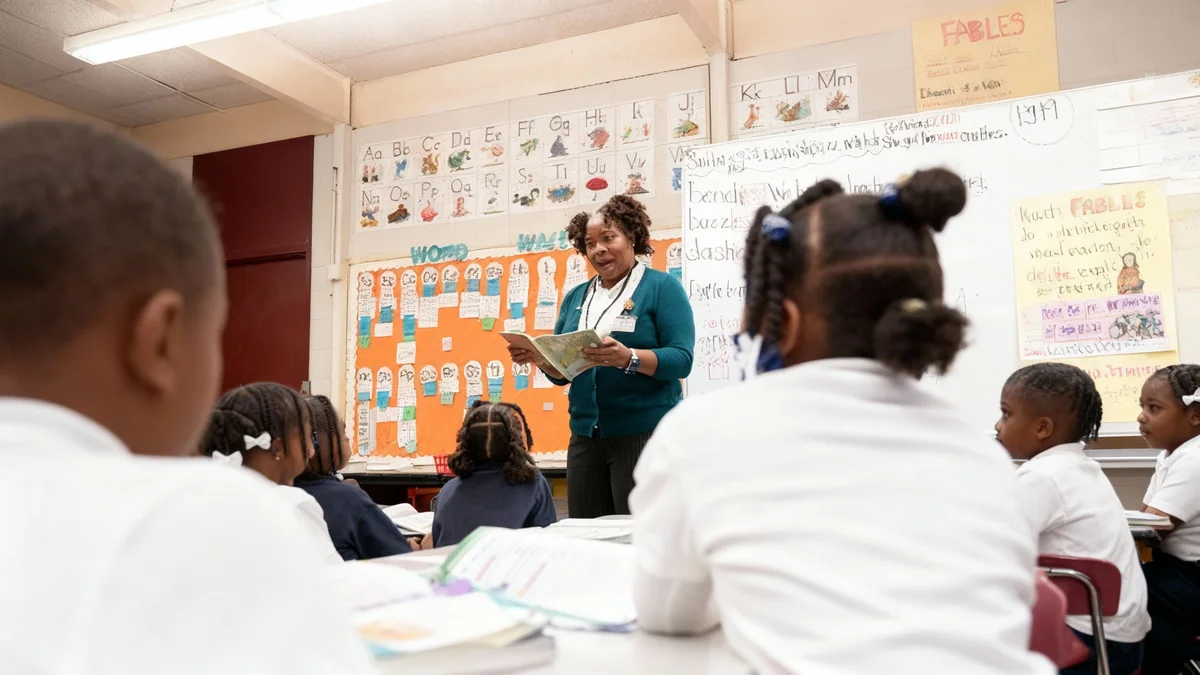
A decade ago, the educational landscape in many parts of Mississippi was bleak. At schools like Hazlehurst Elementary, located outside the state capital of Jackson, the challenges were deeply ingrained. Administrators and teachers faced classrooms where the building blocks of learning were missing entirely.
Kim Luckett-Langston, the principal at Hazlehurst, identified a core issue she termed “A.B.T.,” or “Ain’t been taught.” This wasn't a criticism of previous teachers but a diagnosis of a systemic problem where students progressed through grades without mastering essential skills.
“We had kindergartners arriving who couldn't distinguish between a letter and a number,” an educator familiar with the period explained. “The gap was immense from day one, and it only widened over time.”
This reality was reflected in the data. At its lowest point, Hazlehurst Elementary saw only 12 percent of its students reading at their designated grade level. This figure was not an outlier but a symptom of a statewide crisis that consistently placed Mississippi at or near 50th in the nation for academic achievement.
A Statewide Pivot to Literacy
The turning point came with a concentrated, legislative push to overhaul how reading was taught. Instead of scattered initiatives, Mississippi implemented a cohesive, top-down strategy focused on the “science of reading.” This approach emphasizes explicit, systematic instruction in phonics, phonemic awareness, vocabulary, and comprehension.
What is the Science of Reading?
The science of reading is not a single program but a vast body of research from cognitive psychology, linguistics, and neuroscience. It clarifies how the human brain learns to read and identifies the most effective instructional methods. Key components include direct instruction in phonics (the relationship between letters and sounds) and phonemic awareness (the ability to identify and manipulate individual sounds in spoken words).
The most visible component of this new strategy was the deployment of highly trained literacy coaches. These specialists were sent directly into the state's lowest-performing elementary schools. Their job was not to take over classrooms but to work alongside teachers, providing real-time feedback, modeling effective lessons, and helping analyze student data to tailor instruction.
This hands-on support proved crucial. It empowered teachers with new tools and the confidence to implement an evidence-based curriculum effectively, ensuring that the new standards were being met in the classroom, not just on paper.
The Role of Literacy Coaches
The introduction of literacy coaches marked a fundamental shift from passive professional development to active, in-school support. These coaches became integral members of the school staff, working to build a culture of high expectations around reading.
Day-to-Day Impact
A coach's typical day might involve:
- Co-teaching a phonics lesson with a first-grade teacher.
- Analyzing reading assessment data with a third-grade team to identify struggling students.
- Modeling a small-group intervention for children who are falling behind.
- Providing resources and strategies for teaching complex vocabulary.
This sustained, job-embedded coaching model ensures that best practices are consistently applied. It helps teachers diagnose specific reading difficulties and provides them with the precise strategies needed to address them. The focus is always on equipping the classroom teacher for long-term success.
A Remarkable Climb
Mississippi's fourth-grade reading scores on the National Assessment of Educational Progress (NAEP), often called “the nation’s report card,” have shown remarkable growth. While many states have seen scores stagnate or decline, Mississippi has climbed steadily, outperforming numerous wealthier states with higher per-pupil spending.
Measuring the Results
The results of Mississippi's focused effort have been undeniable. The state has skyrocketed in national rankings, particularly on the NAEP tests. This progress is not just a statistical anomaly; it represents a tangible change in the lives of thousands of children who are now equipped with the fundamental skill of literacy.
While Mississippi still faces significant challenges, including high poverty rates, its educational transformation demonstrates that targeted investment and a commitment to evidence-based practices can yield powerful results. The state has moved from being a cautionary tale to a source of inspiration.
The journey from the bottom has been long and required immense dedication from educators, policymakers, and communities. The success in Mississippi suggests that with a clear vision and unwavering focus on what works, even the most entrenched educational challenges can be overcome. The state's story is a powerful reminder that student potential is universal, but unlocking it requires a strategic and sustained effort.