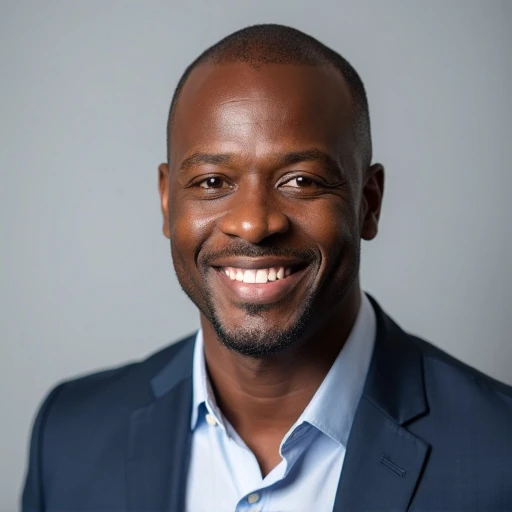


Mayor Zohran Mamdani has appointed Kamar Samuels, a veteran educator with deep roots in the city's school system, as the next Chancellor of New York City Public Schools. The announcement places Samuels at the helm of the largest and one of the most complex public school systems in the United States, overseeing the education of nearly one million students.
Samuels, who most recently served as the superintendent for School District 3 on the Upper West Side, brings a long history of leadership from various boroughs to the city-wide role. His career has spanned from the classroom to the highest levels of district administration, shaping his approach to the system's most pressing challenges.
Key Takeaways
- Kamar Samuels, former superintendent of School District 3, is the new Chancellor of NYC Public Schools.
- Appointed by Mayor Zohran Mamdani, he will lead the largest school district in the nation.
- Samuels has a track record of promoting school desegregation and innovative academic programs.
- His stated priorities include improving literacy through the 'NYC Reads' initiative, supporting asylum-seeking students, and addressing enrollment declines.
A Career Forged in New York's Schools
Kamar Samuels' journey to becoming Schools Chancellor began as a teacher in the Bronx. This foundational experience in the classroom provided him with a ground-level perspective on the daily realities facing students and educators. He steadily rose through the ranks, taking on roles as a principal and later as a deputy superintendent in Brownsville, Brooklyn.
Before his most recent post in Manhattan, Samuels led School District 13 in central Brooklyn. In each position, he developed a reputation for engaging directly with the communities he served. His latest role was as Community Superintendent for School District 3, a diverse district that includes 29 schools and stretches from Midtown Manhattan to Morningside Heights.
NYC Public Schools by the Numbers
- Students: Approximately 900,000
- Schools: Over 1,800
- Employees: Roughly 135,000
- Annual Budget: Over $37 billion
This extensive experience across different boroughs and at multiple levels of the educational hierarchy gives Samuels a unique and comprehensive understanding of the system he now leads. His progression reflects a career dedicated entirely to the city's public education system.
A Focus on Equity and Academic Innovation
Throughout his career, Samuels has become known for his efforts to address systemic inequities within the school system. He has been a notable advocate for school desegregation, leading initiatives to merge schools and create more integrated learning environments in both Manhattan and Brooklyn. These efforts have often been complex, requiring delicate navigation of community concerns and logistical challenges.
In addition to integration, Samuels has explored alternatives to traditional academic tracking. He has championed International Baccalaureate (IB) programs, which are recognized globally for their academic rigor and emphasis on critical and philosophical thinking. This approach has been viewed as a potential replacement for conventional gifted and talented programs, aiming to provide high-level academic opportunities to a broader range of students.
What is an International Baccalaureate (IB) Program?
The IB program is a non-profit educational foundation offering four highly respected programs of international education. It aims to develop inquiring, knowledgeable, and caring young people who help to create a better and more peaceful world through intercultural understanding and respect. Its curriculum is known for being challenging and comprehensive, focusing on global perspectives and independent research.
This focus on both equity and high academic standards suggests a dual-pronged strategy for his chancellorship: dismantling barriers to opportunity while simultaneously raising the academic bar for all students across the city.
Stated Priorities for a System in Flux
In a previous discussion about his work as a superintendent, Samuels outlined several key priorities that are likely to inform his agenda as Chancellor. These priorities address some of the most significant issues facing New York City schools today.
Championing Literacy with 'New York City Reads'
One of his top goals is the successful implementation of the 'New York City Reads' initiative. This city-wide campaign focuses on shifting reading instruction to methods grounded in the science of reading, ensuring a more standardized and effective approach to literacy across all elementary schools.
“Number one, I think of the chancellor’s priorities, the most impactful one for us being New York City Reads, which is a thoughtful approach to reading instruction, and making sure we implement those policies.”
This commitment signals a focus on foundational skills and data-driven instructional practices as a cornerstone of his academic vision for the city.
Welcoming the 'Newest New Yorkers'
Samuels has also highlighted the critical need to support the influx of asylum-seeking students into the school system. He has emphasized creating welcoming environments and providing the necessary resources to educate these new arrivals, who often face language barriers and significant personal trauma.
“Another priority is making sure we welcome and set up platforms to educate our newest New Yorkers [asylum seekers], and we’re working with our schools to make sure that happens,” Samuels stated previously. This focus will be crucial as the city continues to integrate thousands of new families.
Addressing the Enrollment Challenge
A third major challenge on his radar is the issue of declining enrollment in many schools, a trend that predates the recent arrival of migrant families. Samuels has spoken about the need to engage parents more effectively in school selection processes, particularly for middle school, and to re-evaluate school programming to attract and retain students.
He has framed this not just as a numbers problem, but as an opportunity to innovate. “[We are] engaging parents about how they make decisions for middle school, and how we can…programmatically and structurally address some of the enrollment concerns,” he explained.
A Community-First Philosophy
Underpinning his policy priorities is a core belief in the importance of community engagement. Samuels has consistently emphasized that understanding and responding to the specific needs of each neighborhood is fundamental to effective leadership. This philosophy is embedded in the very title he held on the Upper West Side.
“The position is called ‘Community Superintendent’ for a reason, the community comes before the superintendent,” Samuels once remarked. “So, you’re not strong in the position, no matter where you are in the city, unless you are able to tap in and really have a deep understanding of your community.”
As he steps onto the city-wide stage, applying this localized, community-centric approach to a system of nearly one million students and over 1,800 schools will be his greatest test. His success as Chancellor will likely depend on his ability to scale this philosophy, building trust and collaboration across all five boroughs.