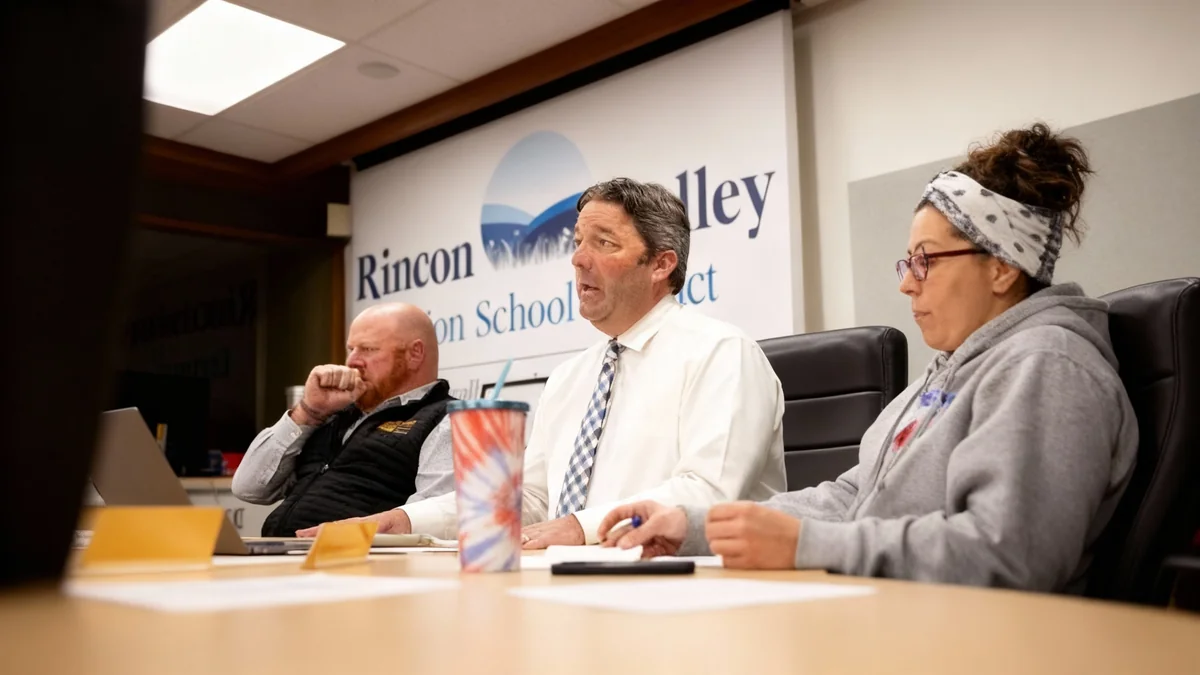





The Rincon Valley Union School District is set to decide which of its elementary schools will permanently close in June, a difficult measure aimed at addressing a severe $8.5 million budget deficit. The board of trustees is expected to make the final decision at its upcoming Tuesday meeting, impacting the community of 3,200 students in east Santa Rosa.
This move is part of a broader strategy to resolve a financial shortfall that constitutes approximately 8% of the district's annual budget. The closure is projected to save $1.2 million, representing the largest single cut in a plan that also includes staff layoffs and contract negotiations with employee unions.
Key Takeaways
- Rincon Valley Union School District faces an $8.5 million budget deficit, about 8% of its annual operating budget.
- Trustees will vote on Tuesday to close one of the district's seven elementary schools, effective this June.
- The school closure is expected to save $1.2 million, as part of a larger $4.3 million savings goal for the next fiscal year.
- Additional measures include potential staff layoffs and contract concessions from unions, which could save another $3 million.
Financial Pressures Force Difficult Choices
The decision to close a campus comes after the district notified the state that it would be unable to meet its financial obligations for the current fiscal year and the subsequent two years. This declaration, known as a negative certification, signals a fiscal crisis that requires immediate and substantial action.
Like many school districts in Sonoma County, Rincon Valley is grappling with a combination of declining student enrollment, rising operational costs, and unpredictable state and federal funding. This situation has created a structural deficit that administrative concessions alone cannot solve.
A Widespread Trend in Sonoma County
The challenges facing Rincon Valley are not unique. School districts across the region are facing similar pressures. Santa Rosa City Schools, the county's largest district and the one that receives Rincon Valley students for higher grades, recently underwent its own sweeping set of campus closures to address fiscal imbalances.
The board of trustees unanimously approved the resolution to close a school on December 19, following weeks of public outreach. "We are grateful to our community for engaging with us through emails, public comment and attendance at our town hall meetings," Board President Shelby Moeller stated in December. "We want the public to know that their voices were welcomed and heard."
Community Feedback Shapes the Path Forward
District leaders held three public forums in November and December to present various options and gather input from families. A significant proposal involved reconfiguring the remaining schools by splitting grade levels across different campuses.
However, community response to this idea was overwhelmingly negative. Interim Superintendent Mike Herfurth explained that the feedback was decisive in shaping the board's direction.
"We felt like we heard very loud and clear from the community that they did not want the split schools. All the feedback we got, both in person and online was very clear – to keep them as transitional kindergarten through six (grade) schools."
With the reconfiguration option rejected, the focus shifted entirely to selecting a single campus for closure. The district is using a set of established criteria to guide this difficult choice.
Criteria for School Selection
The administration and trustees are evaluating each elementary school based on several key factors:
- Enrollment and Capacity: Current student numbers compared to the school's maximum capacity.
- Facility Condition: The physical state of the buildings and grounds, and any needed repairs.
- Projected Savings: The estimated financial benefit from closing a specific site.
- Equity and Community Impact: How the closure would affect different student populations and neighborhoods.
- Transportation and Safety: Concerns related to student travel to new schools.
Herfurth acknowledged the decision is on a "tight timeline" but emphasized that the process has been transparent. Unlike some other districts, Rincon Valley did not form a specific school-closure committee, instead relying on public forums and direct feedback.
A Multi-Pronged Approach to Savings
The $1.2 million saved from closing a school is the cornerstone of a larger plan to cut $4.3 million from next year's budget. The remaining savings are expected to come from painful but necessary personnel adjustments.
The district is currently in negotiations with its labor unions, representing teachers and classified staff, to secure contract concessions. If an agreement is reached, it could save an additional $3 million.
Proposed union concessions include reductions in work days, a cap on district-paid health benefits, and shortening the academic day by moving teacher prep time to after school hours.
The outcome of these negotiations is critical. "I am confident we can meet our goal but a lot of it will hinge on the negotiations and agreements we are able to make with our labor unions," Herfurth said. He noted that if concessions cannot be agreed upon, "obviously that would mean more layoffs have to happen." The district expects to identify which positions will be affected by layoffs in February.
Final Decision Imminent
The district administration is scheduled to present its official recommendation for which school to close during the public board meeting this Tuesday. Trustees will then hold a vote to finalize the decision.
The future of the closed campus has not yet been determined, as district leaders focus on navigating the immediate fiscal crisis and managing the transition for students and staff who will be reassigned to other schools for the upcoming academic year.
The meeting will take place at 6 p.m. at the Rincon Valley district office, located at 1000 Yulupa Ave., and is open to the public.