
San Francisco is on the brink of its first teachers' strike in 47 years, with schools set to close on Monday if a last-minute deal is not reached. Negotiations between the San Francisco Unified School District (SFUSD) and the United Educators of San Francisco (UESF) have stalled, leaving thousands of families uncertain about the week ahead.
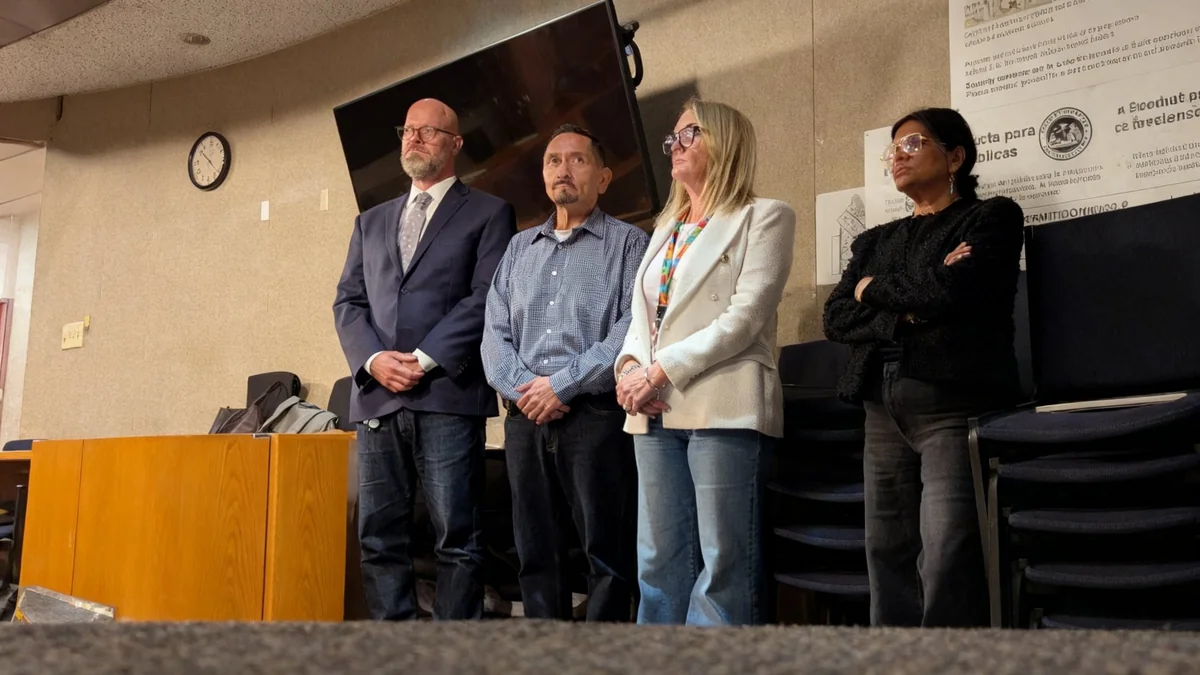
During a tense press conference on Friday, a visibly emotional Superintendent Maria Su confirmed the district's contingency plans. "I do not want a strike," she stated, her voice wavering. "But if UESF proceeds with a strike on Monday, schools will be closed." The two sides are scheduled to meet again on Saturday in a final attempt to avert the walkout.
Key Takeaways
- A teachers' strike is scheduled to begin Monday at 8 a.m. unless a weekend agreement is reached.
- Major disagreements persist over wages, healthcare benefits for dependents, and class sizes.
- San Francisco school administrators have announced they will strike in solidarity, making it highly unlikely schools can remain open.
- The city is preparing contingency plans for up to 6,000 students, a fraction of the district's 49,000 children.
Negotiations at a Standstill
Despite nearly a year of negotiations, the district and the teachers' union remain far apart on several critical issues. A neutral fact-finding report released Wednesday, intended to provide a compromise, has not bridged the divide. According to Superintendent Su, SFUSD did not present an offer in line with the report's recommendations, and the union did not provide a counteroffer during the latest session.
Union leaders have disputed the characterization of the negotiations, noting that Superintendent Su was not present at the bargaining table on Thursday night. They claim their refusal to negotiate on Friday was a strategic move to give the district time to formulate a more serious proposal for Saturday's meeting.
Wages and Healthcare Remain Core Issues
The primary points of contention are salary increases and healthcare coverage. The district has offered a 6% wage increase spread over three years. This falls short of the neutral fact-finder's recommendation of 6% over two years and is significantly lower than the union's demand for raises between 9% and 14% over a two-year period.
Healthcare is another major sticking point. The district's latest proposal offered two choices: either cover 75% of family healthcare costs or provide a $24,000 annual health benefits allowance for each educator. This is a step back from previous suggestions of fully funded healthcare for dependents. The district proposed using parcel tax funds to cover these benefits, but as a separate memorandum of understanding, not a binding part of the collective bargaining agreement.
By the Numbers: The Negotiation Gap
- District Wage Offer: 6% over 3 years
- Union Wage Demand: 9% to 14% over 2 years
- Fact-Finder Recommendation: 6% over 2 years
Working Conditions and Class Sizes
Beyond compensation, the union is fighting for changes to working conditions, particularly for special education professionals and in overall class sizes. UESF is demanding a transition from a caseload model to a workload model for special education staff. A workload model would account for the time and effort required for each student, rather than just the number of students assigned.
The union also seeks hard caps on class sizes, a proposal the district has not agreed to. Union member Michelle Cody criticized the district's latest proposals in a social media video.
"Every proposal they gave us was contingent on increasing our class sizes, cutting existing budgets, site funding, pay, and staff," Cody said.
These issues reflect a broader concern among educators about resources and support within the school system, which they argue directly impacts the quality of education for students.
Administrators Join the Picket Line
In a significant development, the United Administrators of San Francisco (UASF), which represents 253 principals, assistant principals, and other supervisors, announced Friday that its members would strike in solidarity with the teachers. This move makes it nearly impossible for the district to keep schools open and operational during a walkout.
A Look Back: The 1979 Strike
The last SFUSD teachers' strike occurred in 1979. Historical accounts show that school administrators were essential in gradually reopening and running schools during that period. With administrators now joining the picket lines, the district faces a much greater operational challenge, and a complete shutdown of all campuses appears unavoidable.
The solidarity from principals and assistant principals signals a widespread level of dissatisfaction with the district's management and its handling of the negotiations. This unified front from both teachers and administrators puts additional pressure on the district to reach an agreement.
City Scrambles to Support Families
With a potential shutdown looming, city officials are coordinating an emergency response to support the district's 49,000 students and their families. Mayor Daniel Lurie expressed hope that a deal could be reached over the weekend but confirmed that the city is preparing for the worst-case scenario.
"We will be ready to support our children and our families come Monday if we don’t reach an agreement," Lurie stated during a call with the SF Parents Coalition.
Limited Contingency Options
Sherrice Dorsey-Smith, executive director of the Department of Children, Youth and Their Families, outlined the city's plans. The agency intends to increase staffing at recreation centers and libraries, establish sites for free breakfast and lunch, and connect families in need with childcare providers. However, she acknowledged the significant gap between the need and the available resources.
"We don’t have enough space for all 49,000 kids that are part of the district," Dorsey-Smith admitted, estimating that the city could provide up to 6,000 slots for children. It remains unclear how many of these spaces will be ready by Monday.
The district has stated it is working to prioritize students with the most significant needs, including special education students and those from families who face extreme difficulty finding alternative care. As the Saturday deadline for negotiations approaches, parents, teachers, and city officials are anxiously awaiting a resolution that will determine whether classroom doors will open on Monday morning.