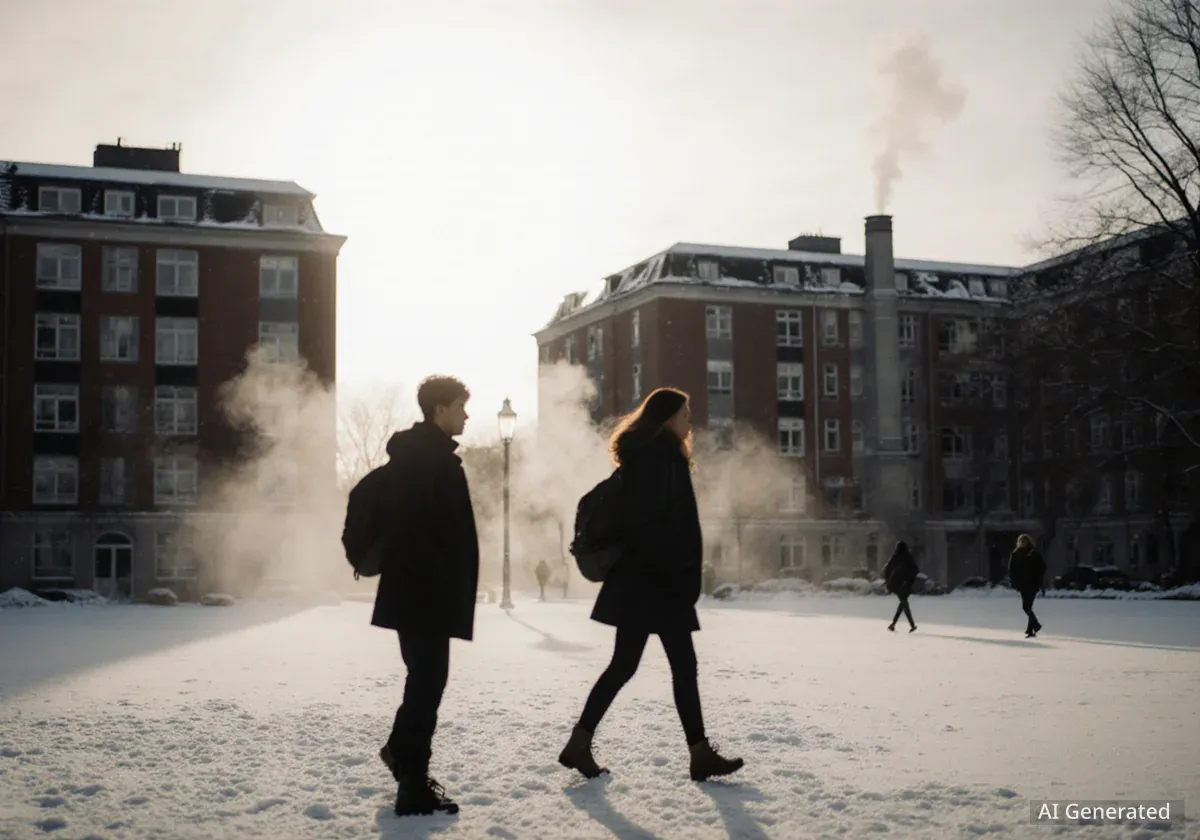

The University of Maryland's College Park campus experienced a two-day shutdown on Thursday and Friday following a critical failure in its temporary heating system. This left numerous dormitories without heat or hot water during a period of extremely cold weather. Students faced uncomfortable conditions, prompting many to seek alternative accommodations.
Key Takeaways
- University of Maryland College Park campus closed for two days.
- Temporary heating system failed during cold weather.
- Dorms lacked heat and hot water, impacting student living.
- Students advised to leave campus or find heated alternatives.
- Crews worked to restore service, but intermittent outages expected.
Campus Facilities Without Heat
Students reported waking up Wednesday night to significantly cold dorm rooms. Access to hot water was also severely limited or non-existent. The sudden drop in temperature inside residential buildings created an immediate challenge for thousands of students.
Many students made quick decisions to leave campus. Grace, a student affected by the outage, explained the situation.
"They recommended that students go home or find the closest place they could with heat, and they’re like lending out blankets," she stated.This recommendation highlighted the severity of the situation. The university provided blankets, but many felt leaving was the best option.
Important Fact
The outage occurred during a cold snap, emphasizing the critical need for a reliable heating system on campus. Temperatures dropped significantly, making the lack of heat a serious concern for student welfare.Root Cause: Temporary Boiler System Failure
University officials confirmed that the heating failure stemmed from the campus's reliance on a temporary external boiler system. The central energy plant is currently undergoing reconstruction. This temporary setup was unable to cope with the recent cold snap, leading to the widespread outage.
A notice posted on a campus weather website by school officials explained the issue. The temporary system could not maintain adequate heating capacity against the unusually low temperatures. This left the campus vulnerable during a critical time.
Madeline, another student, expressed her frustration.
"It’s been pretty cold recently. We don’t have hot water yet, so I’m currently heading to another campus because there’s no reason to be here right now," she said.Her sentiment reflected a common feeling among students who sought warmth elsewhere.
Around-the-Clock Restoration Efforts
Crews have been working continuously since the weekend snowstorm to stabilize the heating system. Their efforts aimed to restore essential services to the campus. By Thursday morning, university officials announced that heat and hot water had been restored to most areas.
However, the announcement also included a warning. Officials advised students to prepare for intermittent outages. This uncertainty led more students to decide against staying on campus, even after the initial restoration.
Background Information
The University of Maryland's central energy plant is undergoing a significant reconstruction project. This project necessitates the use of temporary heating solutions, which proved insufficient during adverse weather conditions. Such projects are complex and can sometimes lead to unforeseen challenges.Student Reactions and Uncertainty
Despite the reported restoration, many students remained wary. The possibility of future disruptions influenced their decisions. Zach, a student, articulated this concern.
"Right now it’s alright. It’s more just the ambiguity — just not sure if the heat is going to go off and on," he commented.This uncertainty created a difficult environment for academic focus and daily living.
The university's recommendation for students to leave campus or find alternative heated locations underscored the gravity of the situation. While some students found temporary housing with family or friends, others sought refuge at nearby campuses or off-campus facilities with reliable heating.
- Many students opted to leave campus immediately.
- The university offered blankets as a temporary measure.
- Fear of recurrent outages contributed to student departures.
- The incident highlighted challenges with temporary infrastructure during extreme weather.
Impact on Campus Life and Operations
The two-day shutdown significantly disrupted academic and extracurricular activities. Classes were canceled, and many campus services were either closed or operating with reduced capacity. The university prioritized student safety and well-being during the crisis.
The incident serves as a reminder of the importance of robust infrastructure, especially in large educational institutions. Ensuring continuous and reliable services, particularly heating during cold months, is crucial for maintaining a functional and safe learning environment.
University administrators are expected to conduct a thorough review of the temporary heating system's performance. This review will likely inform future decisions regarding emergency preparedness and infrastructure projects. The goal is to prevent similar disruptions from affecting students in the future.