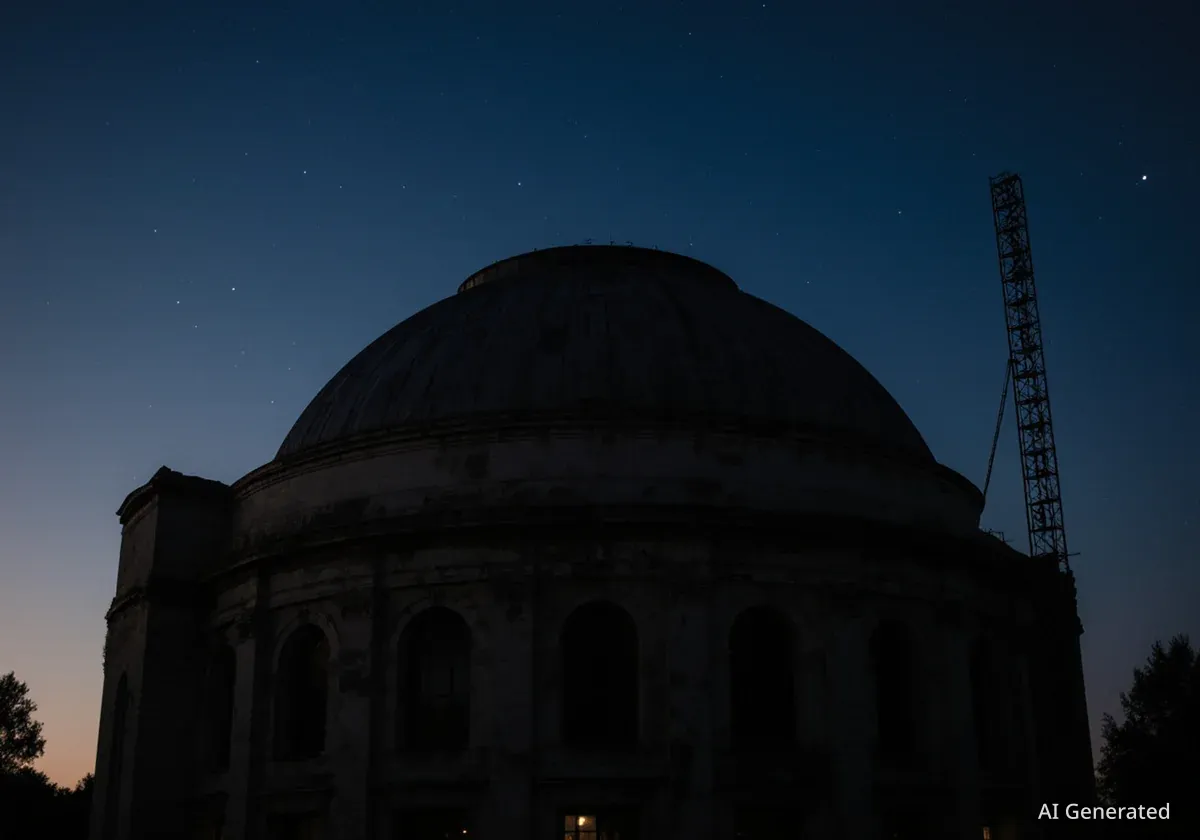

The University of Louisville has announced the permanent closure of the Rauch Planetarium and the adjoining Gheens Science Hall on its Belknap campus. The facilities, which have been shuttered since the start of the COVID-19 pandemic, will not reopen due to significant financial challenges and the high cost of necessary upgrades.
In a letter to the campus community, UofL President Gerry Bradley confirmed the decision, describing it as a difficult but necessary step. The closure marks the end of an era for a facility that served as a hub for science education, public events, and community outreach for decades.
Key Takeaways
- The University of Louisville will not reopen the Rauch Planetarium or the Gheens Science Hall.
- Both facilities have been closed to the public since the COVID-19 pandemic began.
- The university cited years of operating at a financial loss and the high cost of equipment upgrades as primary reasons for the closure.
- Efforts to secure external funding or partnerships to save the planetarium were unsuccessful.
- The university will assess the site for future use, and existing equipment will be repurposed or sold.
A Difficult Financial Reality
The decision to close the facilities stems from persistent financial issues that predate the pandemic. According to university officials, the planetarium operated at a loss for several years, requiring subsidies from the university's general budget to remain open.
The pandemic-related closure exacerbated these underlying problems. President Bradley's announcement highlighted that the cost to bring the facility back to modern standards was a major barrier.
"The cost of reopening the facility — which needs a significant investment in new equipment — is not one the university is able to justify," Bradley stated in his letter.
This financial strain made reopening an untenable option, especially as the university focuses on aligning its spending with its core strategic goals. The administration emphasized the need to make choices that benefit the entire campus community rather than subsidizing a single segment.
The Search for a Lifeline
Before making the final decision, the University of Louisville explored several avenues to keep the planetarium operational. The administration actively sought external partners and donors to help cover the substantial expenses needed for both reopening and long-term operation.
Despite these efforts, a viable financial partner could not be secured. The university's inability to find an external underwriter ultimately sealed the fate of the beloved campus landmark, forcing the administration to move forward with the permanent closure.
A Legacy of Science and Community
The Rauch Planetarium has been more than just a university building; it was a community resource. For years, it hosted K-12 school field trips, public astronomy shows, and popular laser-light events set to music. These programs provided accessible science education to thousands of people in the Louisville area, inspiring curiosity about the cosmos in children and adults alike.
Impact on the University and Community
The closure of the Rauch Planetarium and Gheens Science Hall represents a significant shift for the University of Louisville's Belknap campus. For many students, alumni, and local residents, the planetarium was a gateway to science and a place of fond memories.
The facility was used for university classes, providing a unique, hands-on learning environment for students studying astronomy and related fields. Its closure removes a valuable instructional tool from the university's academic resources.
Beyond the campus, the closure leaves a void in Louisville's cultural and educational landscape. The planetarium was one of the few places in the region dedicated to public astronomy education, and its absence will be felt by families, schools, and science enthusiasts who frequented its programs.
President Gerry Bradley's letter framed the closure as part of a broader financial strategy. "We understand and acknowledge that it is a disappointing outcome for some on our campus and in our community, but it is consistent with our plan to make financial choices that align with our strategic plan and support our entire campus community," he wrote.
The Future of the Site
With the decision finalized, the university is now planning for the future of the physical space occupied by the planetarium and science hall. The immediate steps involve managing the assets within the buildings.
The university has stated that the equipment from the planetarium will be carefully assessed. Items that can be used elsewhere on campus will be repurposed for other academic or research needs. Any remaining equipment will be sold.
Regarding the building and the land it occupies, President Bradley announced that a comprehensive review will be undertaken.
- Strategic Assessment: The university will conduct a formal assessment to determine the best possible use for the site going forward.
- Campus Needs: This process will likely consider the university's current and future needs for academic space, research facilities, or other student-centered projects.
- No Immediate Plans: As of now, no specific plans for redevelopment have been announced, and the assessment will guide the next steps.
The closure of the Rauch Planetarium is a poignant reminder of the financial pressures facing higher education institutions. While the decision marks the end of a chapter for the University of Louisville, the administration is focused on reallocating resources to support its broader educational mission and ensure long-term financial stability.