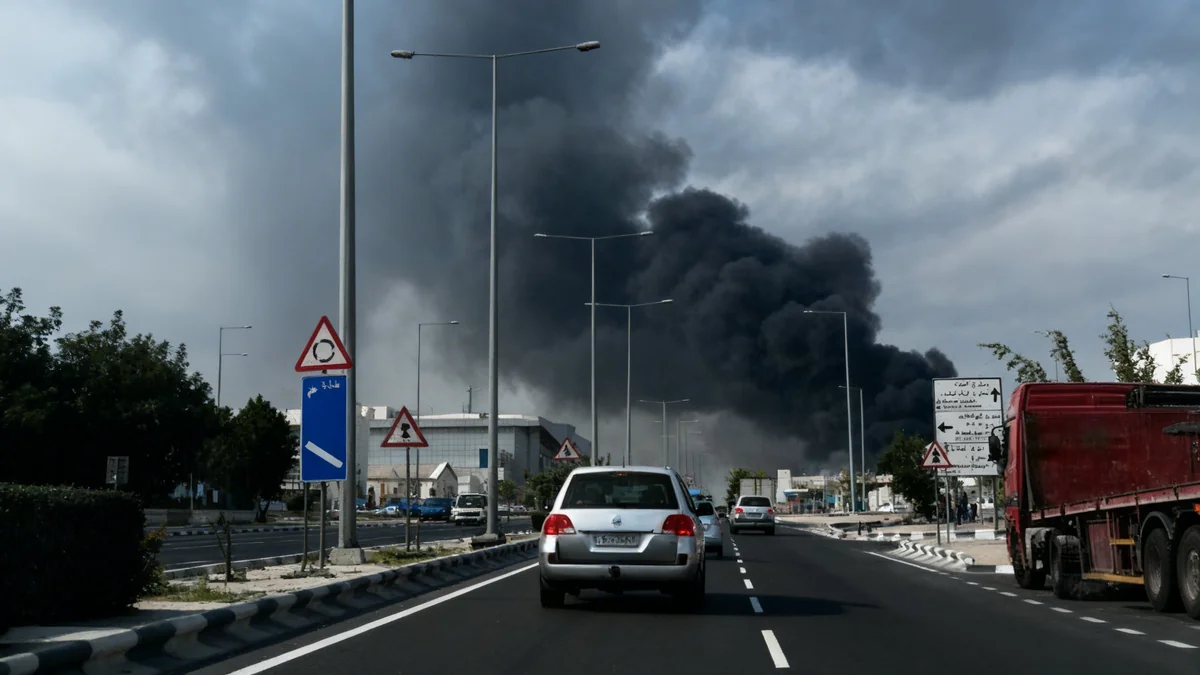

Major American universities with campuses in Qatar and the United Arab Emirates have suspended in-person classes and moved to remote learning this week. The decision follows a significant escalation of regional conflict, including recent strikes by Iran on targets in Doha, Qatar, prompting immediate safety measures for thousands of students and staff.
Institutions including Georgetown University, New York University, Carnegie Mellon, and Northwestern have confirmed the shift to online operations. University officials are closely monitoring the situation in coordination with local governments and U.S. embassies, prioritizing the safety of their campus communities.
Key Takeaways
- Several prominent U.S. university campuses in Qatar and the UAE have transitioned to remote learning.
- The move is a direct response to escalating military conflict and strikes in the region.
- Universities affected include Georgetown, NYU, Carnegie Mellon, Northwestern, and others.
- Student and staff safety is the primary reason cited for the temporary closures of physical campuses.
Campuses Respond to Escalating Tensions
The transition to remote operations was swift across multiple institutions. At New York University's campus in Abu Dhabi, United Arab Emirates, students and staff have been sheltering in place since Saturday. After cancelling classes on Monday, the university resumed instruction remotely on Tuesday.
NYU's Abu Dhabi campus, which opened in 2010, is a significant international hub with approximately 2,200 students from more than 100 countries. University administrators have stressed that all members of the campus community are safe.
In a statement, Wiley Norvell, NYU’s senior vice president for university relations and public affairs, emphasized the university's preparedness.
“As a global university, we are always on alert and our teams constantly plan and prepare for emergencies,” Norvell said.
Widespread Shift in Qatar
In Doha, the capital of Qatar, the response has been similarly cautious. Georgetown University announced its Qatar campus would operate remotely for the remainder of the week, with daily assessments to follow.
Robert M. Groves, Georgetown's interim president, also confirmed that a business school program scheduled to start in Dubai was suspended. The university is actively working to evacuate those students from the area.
Affected Universities in Doha
- Georgetown University: Operating remotely, assessing situation daily.
- Carnegie Mellon University: Remote operations until further notice, staff sheltering in place.
- Northwestern University: Functioning remotely for the entire week.
- Virginia Commonwealth University School of the Arts: Moved online after cancelling classes Sunday.
- Weill Cornell Medicine-Qatar: Campus facilities closed, transitioned to remote work and learning.
- Texas A&M University at Qatar: Conducting classes remotely through the end of the week.
A Decade of Growth Faces New Challenges
For several decades, American universities have expanded their global footprint by establishing satellite campuses in the Middle East, particularly within Qatar's Education City. These institutions attract a diverse student body from across the region and the world, offering U.S.-accredited degrees in various fields.
Background: Education City
Education City in Doha is a massive initiative by the Qatar Foundation to establish the nation as a high-quality education hub. It hosts branch campuses of some of the world's leading universities, allowing students in the region to access elite educational programs without having to travel to the West.
This model has allowed thousands of students to receive a Western-style education closer to home. However, the current instability presents one of the most significant operational challenges these campuses have ever faced.
The situation has also validated earlier concerns for some. Two years ago, the Texas A&M University System Board of Regents voted to begin winding down its Qatar campus, with a full closure planned by 2028. In a February 2024 statement, the board cited “the heightened instability in the Middle East” as a key factor in its decision to reassess its presence in the country.
Prioritizing Safety and Communication
Across all affected universities, the primary message has been a focus on safety and clear communication. A spokesperson for Carnegie Mellon confirmed its students, faculty, and staff in Doha were sheltering in place.
“Campus operations and classes will remain remote until further notice, and we are in regular communication with our external international security experts, the U.S. Embassy, and other governmental entities on necessary precautions and next steps,” the spokesperson stated.
Similarly, Weill Cornell Medicine-Qatar noted its leadership was following all directives from the Qatari government. “Our campus leadership in Doha has taken all appropriate steps following guidance from the Government of Qatar, including an immediate transition to remote learning and remote work,” the university said in a public statement.
This coordinated response reflects a reliance on guidance from both local authorities, such as the UAE Ministry of Higher Education and Scientific Research, and American diplomatic missions in the region. The immediate future for these campuses remains uncertain as administrators monitor the evolving security landscape day by day.