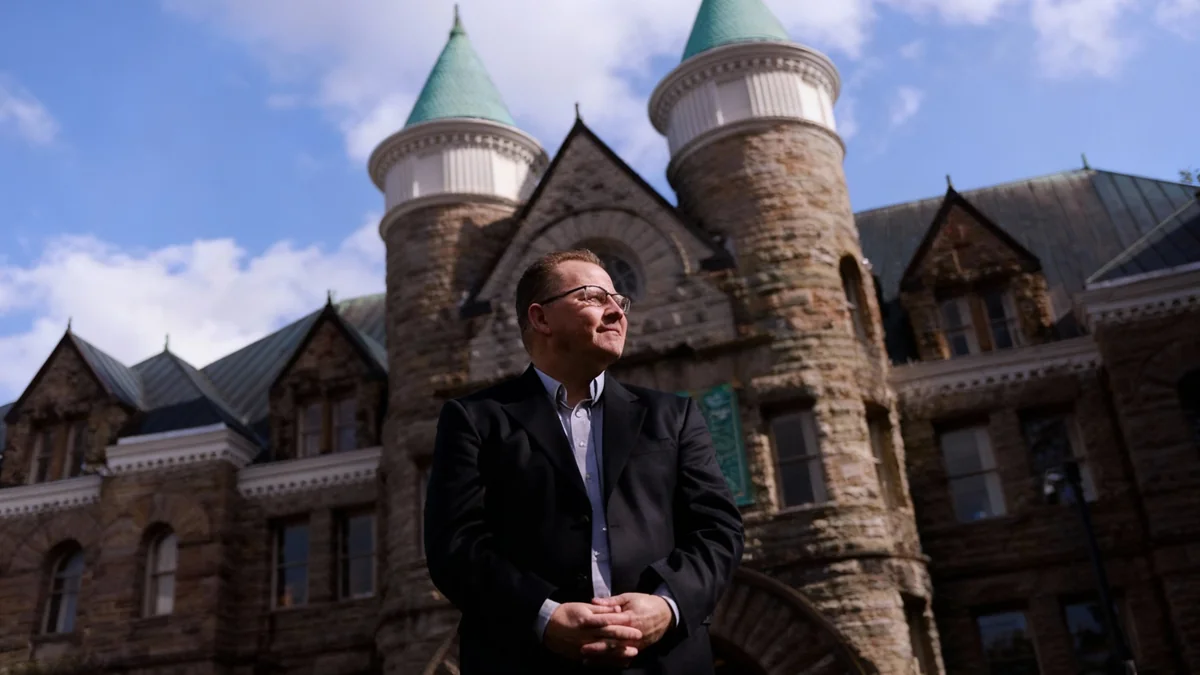
Washington State Superintendent of Public Instruction Chris Reykdal is advocating for a significant increase in K-12 education funding, with a specific focus on strengthening mathematics programs across the state. The proposal comes amid a broader call for tax system reforms to ensure sustainable and equitable financing for public schools.
Reykdal's initiative aims to address persistent challenges in student math proficiency and better prepare students for a future dominated by technology and data-driven industries. This push for more resources highlights a growing concern over the foundational skills necessary for Washington's evolving economy.
Key Takeaways
- State Superintendent Chris Reykdal is pushing for increased funding for Washington's K-12 schools.
- A primary focus of the proposed funding is to enhance mathematics education programs.
- Reykdal also suggests that a fairer state tax system is necessary to pay for these educational improvements.
- The goal is to better equip students with essential skills for the modern workforce and higher education.
The Case for Enhanced Math Education
In a recent address, Superintendent Reykdal outlined the critical need for bolstering math instruction in Washington's public schools. He argued that current funding levels are insufficient to provide the resources and specialized teaching required to help all students excel in the subject.
The emphasis on mathematics is not arbitrary. Officials point to data showing that strong quantitative reasoning skills are increasingly vital for success in college and careers. Fields like technology, engineering, healthcare, and finance, which are major drivers of Washington's economy, all demand a high level of mathematical competency.
Reykdal stressed that the investment is about more than just test scores; it's about providing students with the analytical tools to navigate a complex world. "We are not just preparing students for a test," he stated, "we are preparing them for a lifetime of critical thinking and problem-solving."
Why the Focus on Math?
Mathematics is often called a "gateway" subject. Proficiency in math is a strong predictor of future academic success and opens doors to higher-paying careers in STEM (Science, Technology, Engineering, and Mathematics) fields. By investing in early and consistent math education, the state aims to close achievement gaps and create a more competitive workforce.
The proposed plan would likely involve funding for several key areas:
- Recruiting and retaining highly qualified math teachers, potentially through improved salaries or incentives.
- Providing ongoing professional development for current educators on the latest teaching strategies.
- Updating curriculum and classroom technology to make math more engaging and relevant.
- Offering additional support and tutoring for students who are struggling with the subject.
This comprehensive approach seeks to build a stronger educational foundation from elementary school through high school, ensuring students are prepared for post-secondary challenges.
Funding the Future: A Call for Tax Reform
A central component of Reykdal's proposal is the acknowledgment that significant new investments require a sustainable revenue source. He has directly linked the need for more education funding to a broader conversation about Washington's tax structure.
The Superintendent has called for the state to enact a "fairer tax system" to generate the necessary funds. While specific tax proposals were not detailed, the implication is a move away from the current system, which relies heavily on sales tax, towards a structure that may include more progressive forms of taxation.
This is often a contentious issue in state politics, but Reykdal argues that the state's constitutional duty to amply fund education necessitates a serious look at revenue generation.
Washington's Funding Mandate
The Washington State Constitution declares that it is the "paramount duty of the state to make ample provision for the education of all children." This clause has been the basis for major legal challenges, including the landmark McCleary case, which compelled the legislature to significantly increase education funding over the past decade.
Reykdal's position frames education funding not as an expense, but as an essential investment in the state's economic future. By creating a more skilled and capable workforce, the state can attract more high-wage jobs and foster long-term prosperity.
"Investing in our students is the single most important economic development strategy we can have. A well-educated populace is the engine of innovation and growth."
The debate will now likely move to the state legislature, where lawmakers will have to weigh the demand for improved educational outcomes against the political challenges of tax reform.
The Potential Impact on Students and Teachers
If enacted, the proposed funding increase could have a tangible impact on classrooms across Washington. For students, it could mean smaller class sizes, more one-on-one attention from teachers, and access to modern learning tools that make abstract math concepts easier to understand.
For teachers, additional resources could alleviate some of the pressures they face. Better funding for professional development would allow them to stay current with best practices in math education, while more support staff could help address the diverse needs of students in their classrooms.
Educators and parent groups have largely reacted positively to the call for more resources, though many remain cautious until a concrete funding plan is approved by lawmakers. The success of the initiative will depend on how the funds are allocated and whether they truly reach the schools and students with the greatest need.
Looking Ahead: The Path Forward
Superintendent Reykdal's proposal marks the beginning of what is expected to be a major legislative debate in the upcoming session. The Office of the Superintendent of Public Instruction (OSPI) will likely present a detailed budget request that quantifies the need for math programs and other educational priorities.
Stakeholders from across the state, including school districts, teacher unions, parent organizations, and business leaders, will be watching closely. The outcome will not only shape the future of math education in Washington but will also serve as a test of the state's commitment to fulfilling its paramount duty to its students.