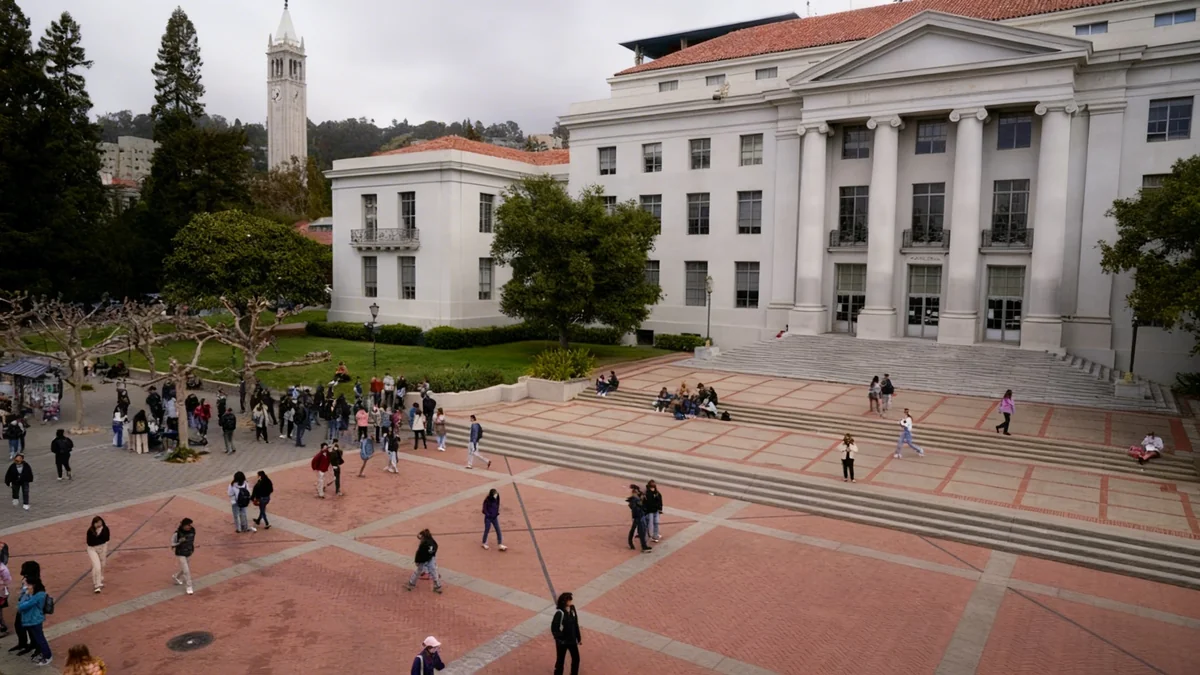




The University of California, Berkeley, has ended its relationship with a nonprofit organization focused on increasing diversity among business school faculty. This decision follows an investigation by the U.S. Department of Education into allegations that the group violated federal anti-discrimination laws.
UC Berkeley is one of 31 universities nationwide to sever partnerships with The PhD Project, a group that has supported minority students pursuing doctoral degrees in business for three decades. The Department of Education’s Office for Civil Rights concluded that the organization’s programs improperly restricted admission based on race.
Key Takeaways
- UC Berkeley and 30 other universities have ended their partnerships with The PhD Project.
- The U.S. Department of Education investigated the nonprofit for allegedly violating Title VI of the Civil Rights Act by restricting program access based on race.
- The PhD Project, which has helped over 1,700 minority students earn doctorates, now states its programs are open to all races.
- This action is part of a broader national trend of legal and political challenges to Diversity, Equity, and Inclusion (DEI) initiatives in higher education.
Federal Investigation Prompts Widespread Changes
The U.S. Department of Education announced on Thursday that it had reached settlement agreements with 31 colleges and universities regarding their partnerships with The PhD Project. The investigation by the department's Office for Civil Rights focused on whether the nonprofit's activities violated Title VI of the Civil Rights Act of 1964, which prohibits discrimination on the basis of race, color, or national origin in any program receiving federal financial assistance.
The inquiry was initiated after concerns were raised that The PhD Project’s programs, including its annual conference for prospective doctoral students, were limited to individuals who identified as Black/African American, LatinX/Hispanic American, or Native American. These concerns gained prominence after being highlighted by conservative activist Christopher Rufo.
As part of the settlements, the 31 universities agreed to either end their existing relationships with the organization or refrain from future partnerships. According to the Education Department, negotiations are still underway with 14 other institutions.
What is The PhD Project?
Founded in the 1990s, The PhD Project was established to address the underrepresentation of certain minority groups in business school faculties. Its mission has been to create a more diverse pipeline of business leaders and academic role models. The organization reports that it has successfully helped more than 1,700 Black, Latino, and Native American students achieve their doctoral degrees in business fields.
In response to the investigation, The PhD Project has updated its policies. The group now states that its programs are open to all students interested in pursuing a business doctorate, regardless of their racial or ethnic background. In a statement, the organization affirmed its ongoing commitment, saying, "Our vision is to create a broader talent pipeline of current and future business leaders who are committed to excellence and to each other."
UC Berkeley Confirms End of Partnership
Officials at UC Berkeley have confirmed that the university no longer has a formal relationship with The PhD Project. University spokesperson Janet Gilmore stated that while campus participants had attended the organization's programs in previous academic years, there is no current formal tie.
Gilmore also addressed the university's compliance with federal law. She noted that UC Berkeley "complies with all state and federal laws and consequently has not had to change any of its practices under the PhD Project agreement with the U.S. Department of Education."
A Nationwide Impact
The settlements require the involved universities to conduct a broader review of their external partnerships. Each school has pledged to examine other programs and affiliations to ensure none violate Title VI by restricting participation based on race. This has led some institutions to sever ties with other minority-focused organizations, such as the Cal Poly Pomona campus ending its relationship with The Links Inc., a service organization led by Black women.
This development at UC Berkeley is part of a larger pattern of scrutiny aimed at diversity-focused programs on campus. Conservative groups have recently filed complaints with federal agencies about other university initiatives.
- The African American Student Development Office
- The Black Resource Center
- The Latinx Student Resource Center
- The African American Initiative Scholarship
These complaints allege that such programs and scholarships illegally exclude students based on race, either directly or through what they term "racial signaling." No federal agency has confirmed an active investigation into these specific complaints.
The Broader Battle Over DEI in Education
The actions against The PhD Project and its university partners reflect a national pushback against Diversity, Equity, and Inclusion (DEI) programs. The current administration has launched numerous investigations into diversity efforts at universities and school districts across the country.
Education Secretary Linda McMahon framed the settlements as a victory for the administration's policy goals.
"This is the Trump effect in action: institutions of higher education are agreeing to cut ties with discriminatory organizations, recommitting themselves to abiding by federal law, and restoring equality of opportunity on campuses across the nation," McMahon stated.
However, this campaign faces legal headwinds. Just one day before the settlements were announced, a federal judge issued a final ruling invalidating a 2023 Education Department directive that aimed to restrict DEI activities. The court found the guidance, which had accused schools of discriminating against white and Asian students, to be vague and discriminatory itself.
Antonio Ingram, senior counsel at the NAACP’s Legal Defense Fund, commented on the situation. "All the programs that were being scrutinized helped create more belonging for Black students and queer and Latinx and Asian students," he said. He suggested the court's decision might encourage colleges to resist federal pressure but also noted it would be a "reckoning" to see if universities that closed programs would now reopen them.
Ingram added, "Will these schools reopen the Black Student Union? The queer resource center? Time will tell. But I think it’s a lot easier to close down a facility than open it." The outcome of these legal and political battles will likely shape the future of diversity initiatives in American higher education for years to come.