

New York City is spending millions of dollars on rent and construction for more than two dozen early childhood education centers that have never opened, leaving them sitting vacant for years. This comes as thousands of families across the five boroughs struggle to find affordable childcare, facing long waitlists and a shortage of available seats.
An investigation reveals a network of “phantom” preschools, planned under a previous administration, that remain shuttered despite the city investing hundreds of millions into early education initiatives. For parents, the empty buildings represent a frustrating paradox: a solution in plain sight that remains just out of reach.
Key Takeaways
- Over 25 planned 3K and Pre-K centers in New York City are sitting empty, some for several years.
- The city continues to pay rent and has funded costly renovations for these unused facilities.
- Parent demand for free early childhood education is at an all-time high, with local programs reporting waitlists of over 100 children.
- City officials acknowledge the problem, attributing it to planning from the previous administration and the need to bring sites up to code.
A Citywide Problem with Local Consequences
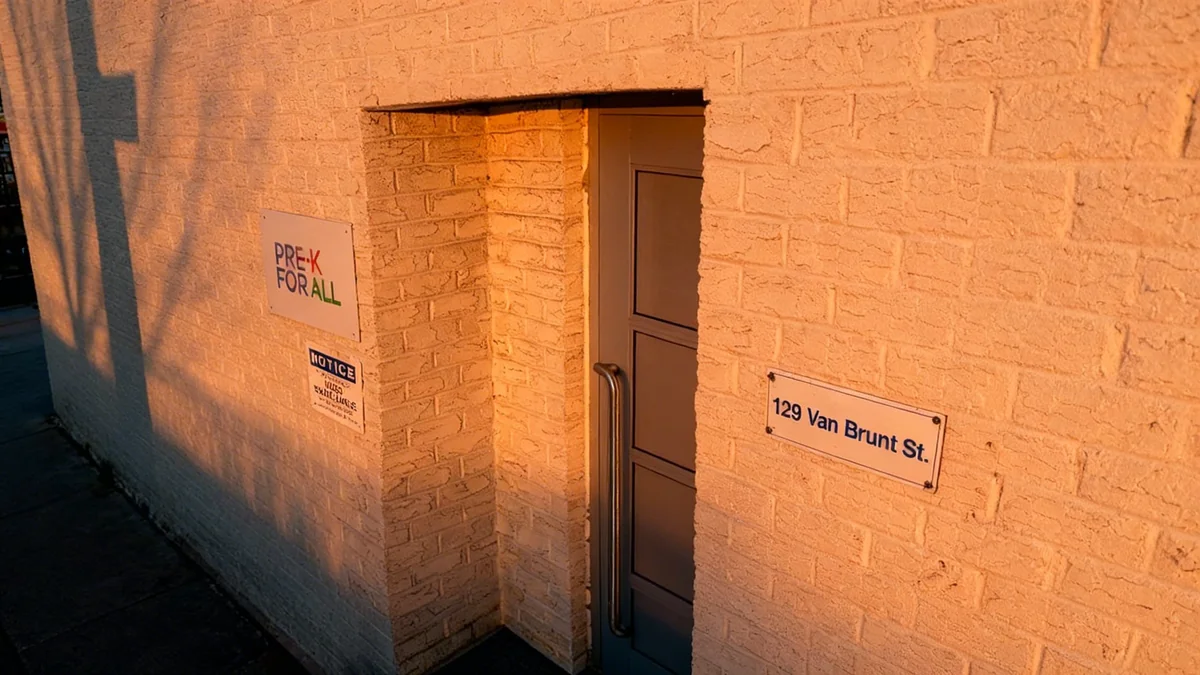
Across multiple boroughs, fully or partially renovated buildings intended for young learners sit dormant. In Brooklyn's Columbia Street waterfront district, a converted warehouse at 129 Van Brunt Street was scheduled to open in 2023. Despite over $1 million in recent construction work, its doors remain closed.
For local families, the impact is immediate. Zach Hetrick, a Brooklyn parent who used to live on the same block, now faces a daily trek of over a mile to take his daughter to another city-run program. He expressed a sentiment shared by many parents.
"There’s not a lot of seats to go around," Hetrick said. "If we’re paying for the school to be built and it already exists, it’d be great to be using that school. Ultimately, I think we should be using the resources we’re already paying for."
The situation in Brooklyn is not unique. A similar site in College Point, Queens, located at 18-31 131st Street, was fully renovated to accommodate 165 students and was expected to open in 2022. It, too, remains empty.
The Financial Drain of Ghost Schools
The cost to taxpayers for these unused facilities is substantial. From fiscal year 2020 to 2024, the city allocated $787 million for early education capital projects. A significant portion of this funding has gone toward sites that are not serving any children.
By the Numbers: The Cost of Inaction
- $22 Million: Estimated total cost for a single vacant site on the Upper West Side.
- $24,000: Monthly rent paid by the city for that same unopened facility.
- $787 Million: Amount spent on early education initiatives between FY2020 and FY2024.
- 853: The number of early childcare centers that have closed in NYC in recent years.
On the Upper West Side, one planned three-floor 3K center at 1972 Broadway incurred rent payments of $24,000 per month while sitting vacant. Council Member Gale Brewer, who represents the district, noted that the Department of Education (DOE) was not even aware the site existed until she brought it to their attention.
"It was the de Blasio administration that planned all of these child care centers," Brewer stated, adding, "but I [was the one who] told the Adams administration."
In another example, city permits show the DOE paid approximately $200,000 for lighting work alone at a site on Third Avenue on the Upper East Side, yet its future remains undetermined.
A Tale of Bureaucracy and Broken Promises
City officials have acknowledged the existence of these vacant sites. At a City Council hearing last year, a DOE representative confirmed that about 21 such locations were sitting empty. The primary reason given was the passage of time, which requires new inspections to ensure the buildings meet current health and safety codes.
North Brooklyn Councilman Lincoln Restler voiced his frustration at the hearing. "We have a need for seats in our community, and we look at a mothballed site in a private building that we put a bunch of money into the capital repairs, and then we’re paying rent," he said. "That is infuriating."
A Growing Crisis in Childcare
The issue of empty preschools is compounded by a broader childcare crisis in New York City. According to City Council Speaker Julie Menin, a staggering 853 early childcare centers have closed in recent years, while demand for free city-run programs has skyrocketed. Private childcare can cost parents tens of thousands of dollars annually, making the universal 3-K and Pre-K programs a critical lifeline.
"I can’t tell you the number of parents that have said to us, ‘if we do not get affordable child care, we’re going to leave the city,’” Menin said recently. “At the end of the day, this is what we need to do citywide — to open up more child-care facilities."
The Path Forward
The current administration has stated it is now addressing the issue. A City Hall representative, Jenna Lyle, explained that the new administration is evaluating the portfolio of vacant buildings inherited from the previous one.
"For years, early childhood programs were slashed and sidelined by the prior administration, despite community need, leaving many of these buildings to sit empty," Lyle said. "That is changing under this administration. We are taking a close look at the areas around all vacant buildings and assessing early childhood seat need."
There are some signs of progress. Following a media investigation into an empty Upper East Side facility, the city opened the site within three weeks. The location at 1972 Broadway, after years of vacancy, has finally opened one floor to special needs preschoolers, with plans to add more 3-K and Pre-K classes.
However, for the dozens of other sites and the thousands of families on waitlists, the question remains: how long will they have to wait for the city to unlock the doors to the schools it has already paid for?