

The Department of Defense is ending its academic partnerships with more than a dozen of the nation's most prestigious universities and several prominent think tanks. The move, announced by Defense Secretary Pete Hegseth, is part of a broader campaign against what he describes as liberal ideologies within higher education.
This policy shift will prevent U.S. service members from enrolling in specific graduate-level programs and fellowships at these institutions starting this September. The decision expands on an earlier ban involving Harvard University and now encompasses a wide range of elite schools and policy analysis centers.
Key Takeaways
- The Defense Department is cutting academic ties with nearly two dozen institutions, including Ivy League universities and major think tanks.
- Defense Secretary Pete Hegseth cited concerns over "wicked ideologies" and anti-American values as the reason for the decision.
- The ban affects 93 military students currently enrolled in various graduate and fellowship programs.
- Alternative institutions, including state universities and conservative colleges like Liberty University and Hillsdale College, are being considered as replacements.
A Sweeping Change in Military Education Policy
In a video statement released on social media, Defense Secretary Pete Hegseth detailed the administration's rationale for the policy change. He characterized the targeted institutions as hubs of political liberalism that are indoctrinating U.S. military personnel.
"This decisive change will ensure our leaders receive a more rigorous and relevant education," a Defense Department memo stated, reinforcing the secretary's public comments. The memo outlines the department's intention to redirect service members to other educational partners.
The Full List of Affected Institutions
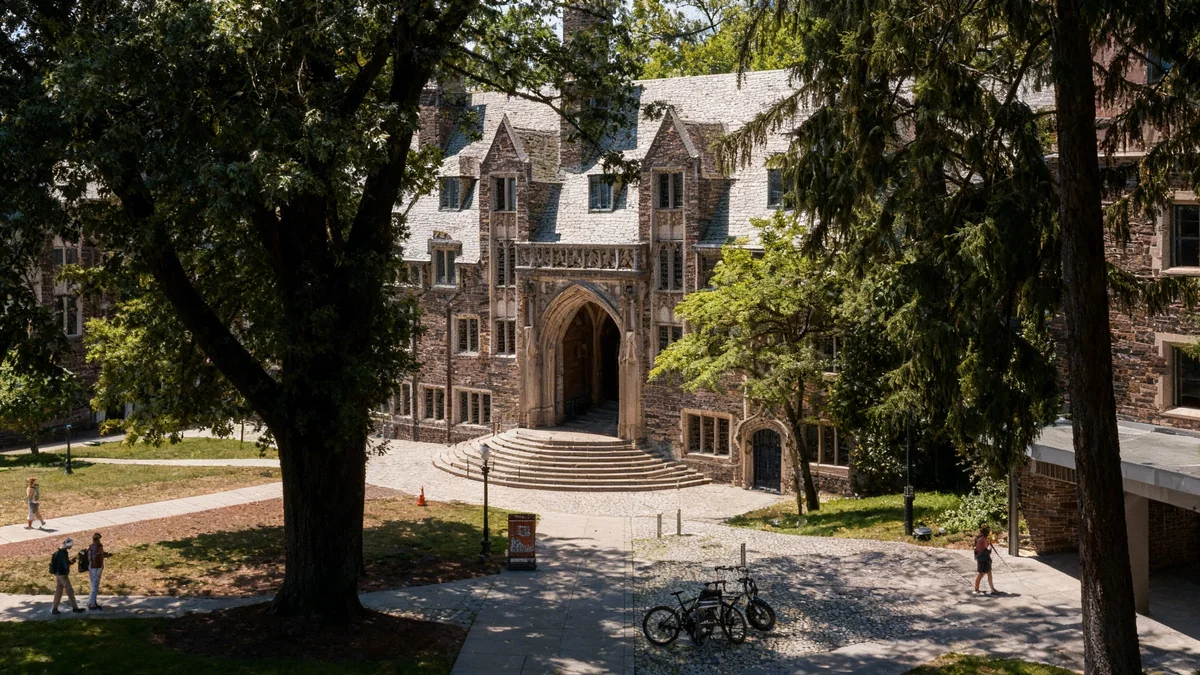
The ban is extensive and includes many of the most respected names in American higher education and public policy. The list of universities now barred from these specific military partnerships includes:
- Massachusetts Institute of Technology (MIT)
- Princeton University
- Yale University
- Brown University
- Georgetown University
- Johns Hopkins University
- Columbia University
- George Washington University
- Tufts University
- St. Louis University
- Carnegie Mellon University
- The College of William & Mary
- Middlebury College
- Queen’s University in Ontario, Canada
This list is in addition to Harvard University, which was banned from similar programs earlier this month.
By the Numbers
Currently, 93 military students are enrolled in graduate programs and fellowships across the now-banned institutions. The largest group, consisting of 21 students, is at Harvard University's various schools.
Prominent Think Tanks Also Targeted
The Pentagon's directive also extends to seven high-profile think tanks based in Washington, D.C. These organizations are well-known for their analysis of defense and national security issues and have long-standing relationships with the military and government agencies.
The think tanks facing new restrictions include:
- Center for Strategic and International Studies (CSIS)
- New America
- The Brookings Institution
- The Atlantic Council
- Center for a New American Security (CNAS)
- Council on Foreign Relations (CFR)
- The Henry L. Stimson Center
Many of the programs offered by these universities and think tanks provide advanced courses on national and international security tailored for mid-career and senior-level military officers. The severing of these ties represents a significant disruption to established military professional development pathways.
A Pattern of Pressure
The initial ban on Harvard was viewed by some as part of a pressure campaign by the administration. However, this latest, much broader action includes universities that had reportedly already complied with a series of administration demands aimed at reforming the culture of higher education.
The Search for Alternative Institutions
The Defense Department is actively exploring new academic partners to replace the banned programs. According to the internal memo, the Pentagon is considering a range of different types of schools to fill the gap.
The memo specifically mentioned state universities as potential partners. It also named two conservative Christian schools, Liberty University and Hillsdale College, as institutions being considered for future military education programs. This suggests a deliberate effort to align the educational environment for service members with the administration's ideological preferences.
Personal Connection to the Policy
The policy is championed by Secretary Hegseth, who himself is a graduate of one of the institutions now facing restrictions. He earned a master's degree in public policy from Harvard's Kennedy School in 2013. Hegseth also served as an infantry officer with the National Guard.
In his video message, Secretary Hegseth denounced the institutions in blistering language, calling them politically liberal institutions with “wicked ideologies” that were indoctrinating U.S. service members.
The long-term impact of this policy on military leadership development remains to be seen. For decades, the armed forces have sent promising officers to top civilian universities to broaden their perspectives on strategic thinking, international relations, and public policy. Critics of the new policy may argue that limiting access to these diverse intellectual environments could narrow the worldview of future military leaders.
Supporters, however, will likely echo the Secretary's view that the military's educational programs must be free from what they perceive as politically biased instruction. The transition to new partner universities will be closely watched as the fall semester approaches, marking a new chapter in the relationship between the U.S. military and academia.