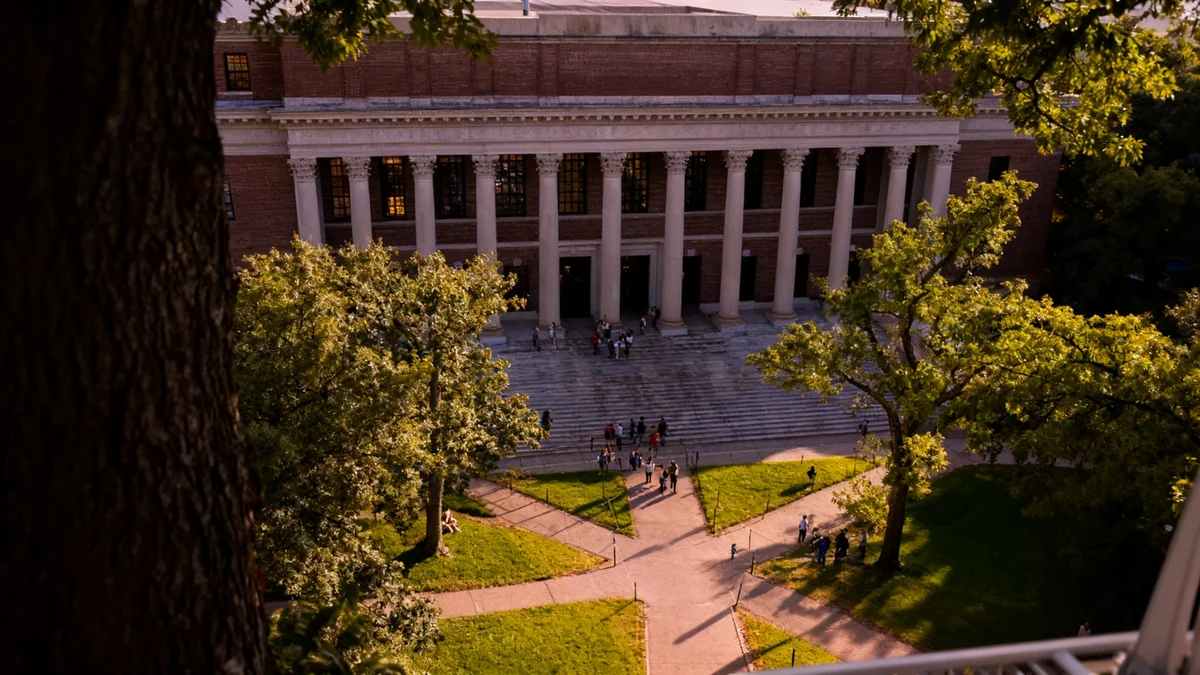
The Pentagon announced on Friday it is cutting all ties with Harvard University, halting military training and educational programs at the Ivy League institution. The decision, effective from the 2026-27 academic year, marks a significant escalation in the ongoing tensions between the Trump administration and elite American universities.
Defense Secretary Pete Hegseth cited ideological concerns, stating the university no longer aligns with the military's core values. This move affects all professional military education, fellowships, and certificate programs previously available to service members at Harvard.
Key Takeaways
- The Pentagon has formally ended all professional military education and fellowship programs with Harvard University.
- The new policy will take effect starting with the 2026-27 academic year.
- Defense Secretary Pete Hegseth stated Harvard promotes “globalist and radical ideologies” unsuitable for military officers.
- This action is part of a broader conflict between the Trump administration and Harvard, which includes disputes over federal funding and campus policies.
A Directive from the Top
The announcement came directly from the office of US Defense Secretary Pete Hegseth. In a formal statement, Hegseth explained the decision was made because Harvard “no longer meets the needs of the War Department or the military services.”
Personnel who are currently enrolled in programs at Harvard will be permitted to complete their courses. However, no new officers will be sent to the university for graduate-level education or fellowships under Pentagon sponsorship once the policy is enacted.
“For too long, this department has sent our best and brightest officers to Harvard, hoping the university would better understand and appreciate our warrior class,” Hegseth's statement read. “Instead, too many of our officers came back looking too much like Harvard — heads full of globalist and radical ideologies that do not improve our fighting ranks.”
Hegseth reinforced his position on social media, posting on X (formerly Twitter) with a clear message: “Harvard is woke; The War Department is not.” The post accompanied the formal announcement, signaling a firm ideological stance behind the policy change.
A History of Criticism
Pete Hegseth, who holds a master's degree from Harvard's Kennedy School of Government, has been a vocal critic of his alma mater for years. In a 2022 segment on Fox News, before his appointment as Defense Secretary, he symbolically returned his diploma, writing “Return to Sender” on it. This history underscores that the current decision is rooted in long-held personal and political convictions.
Broader Implications for Military Education
The decision to sever ties with Harvard could be the first of several similar moves. Secretary Hegseth indicated that programs at other Ivy League universities will be evaluated in the coming weeks, suggesting a wider review of military partnerships with elite civilian institutions is underway.
For decades, the military has offered its officers opportunities to pursue graduate-level education at top civilian universities. These programs are designed to broaden officers' perspectives and provide them with skills and knowledge outside of a purely military context.
Impact on Service Members
While professional military education at institutions like the war colleges is often seen as more directly beneficial for career advancement within the armed forces, a degree from a prestigious university like Harvard has significant value. It can make service members more competitive for high-level strategic roles and highly attractive to employers in the private sector after they transition out of the military.
The termination of these programs removes a significant and prestigious educational pathway for officers. It remains unclear what, if any, alternative civilian university programs will be established or expanded to replace the opportunities lost at Harvard.
Timeline of the Change
- Decision Announced: February 6, 2026
- Effective Date: Start of the 2026-27 academic year
- Affected Programs: All graduate-level professional military education, fellowships, and certificate programs.
- Future Action: Similar programs at other Ivy League schools are now under review.
Part of a Larger Federal Dispute
The Pentagon's action is not an isolated event. It is the latest development in a prolonged and contentious relationship between the Trump administration and Harvard University. The administration has targeted the university over a range of issues, including its diversity and inclusion initiatives, transgender policies, climate research, and its handling of pro-Palestinian campus protests.
The conflict has also had significant financial dimensions. Federal officials have already cut billions of dollars in research funding for Harvard and previously attempted to block the university from enrolling foreign students.
Legal and Financial Battles
Harvard has not passively accepted these measures. The university has filed lawsuits against the administration, arguing that it is facing illegal retaliation for not conforming to the government's ideological demands. To date, federal judges have sided with Harvard in two separate cases, though the administration is appealing those rulings.
Tensions appeared to cool over the summer, with President Trump suggesting a deal was imminent. However, no agreement was reached. More recently, the president demanded $1 billion from Harvard as a condition for restoring its federal funding, a figure double the amount previously requested.
This latest move by the Pentagon deepens the rift, shifting the conflict from financial penalties to a direct severing of institutional partnerships. It signals the administration's continued commitment to confronting what it views as ideological overreach in the nation's most prestigious academic institutions.