
A growing number of universities are moving away from outright bans on artificial intelligence, instead exploring how to integrate these powerful tools into their curriculum. Some courses now require students to use AI, treating it not as a cheating device but as a sophisticated partner for learning and critical thinking.
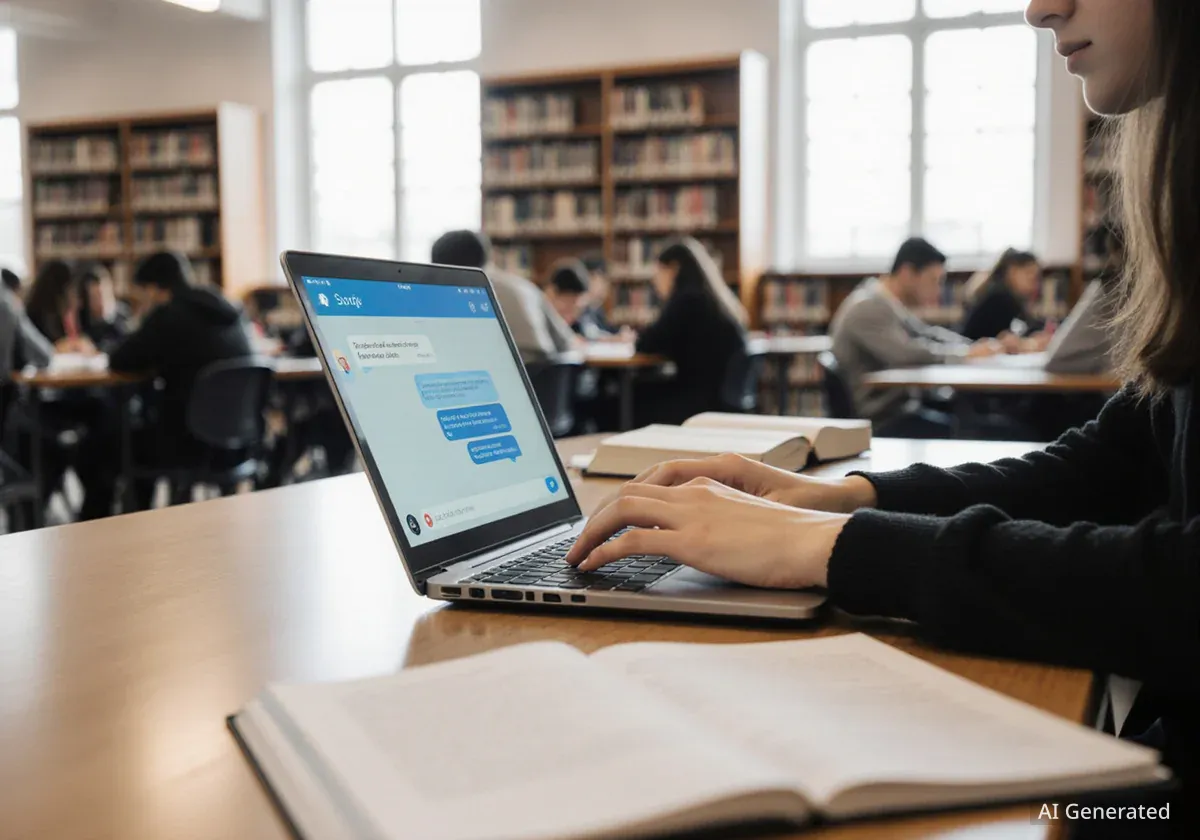
This shift addresses the reality that most teens already use AI chatbots for schoolwork. The new approach focuses on teaching students to use these systems critically, much like they would ask a friend for feedback on an essay, rather than having the friend write it for them.
Key Takeaways
- Some university courses are now making the use of AI mandatory to teach critical engagement with the technology.
- The educational model is shifting from prohibiting AI to teaching students how to use it as a tool for feedback and ideation.
- AI can act as a personal tutor, helping to level the academic playing field for students without access to private resources.
- Students learn to identify the weaknesses of AI, such as biased data and bland writing, which enhances their own critical thinking and writing skills.
- Educators believe these skills are essential for preparing students for a future job market where collaboration with AI will be common.
The New AI-First Classroom
In a departure from the widespread fear of AI-assisted cheating, some educators are running a bold experiment: what if students were required to use it? At institutions like Columbia University, courses designed around an "AI-first" model are emerging. The premise is simple: since students will inevitably use these tools, it's better to teach them how to do so effectively and ethically.
Students in these programs are not using AI to generate entire essays from scratch. Instead, they bring their own outlines and drafts to the AI, prompting it for feedback, suggestions for counterarguments, or help identifying gaps in their logic. This process is often documented, with students explaining why they accepted or rejected the AI's suggestions.
This method reframes AI from an all-knowing oracle to a dynamic study partner. The goal is to avoid what experts call "cognitive offloading," where a person outsources their thinking to a machine. By actively engaging with and questioning the AI's output, students are using it to enhance their own thought processes, not replace them.
An Equalizer in Higher Education
One of the most significant arguments for integrating AI into academia is its potential to democratize access to educational support. Not every student can afford a private tutor or has access to teaching assistants for one-on-one help. AI-powered chatbots can fill this void.
AI Tutors Show Promise
A recent Harvard University study found that students using an AI-powered tutor achieved learning gains more than double those seen in traditional classroom settings. Participants also reported feeling more engaged with the material.
These tools can perform many functions of a human tutor. They can:
- Generate practice questions and mock exams on any subject.
- Create digital flashcards for memorization.
- Offer instant feedback on a paragraph or a specific argument.
- Suggest alternative perspectives to strengthen an essay.
By providing on-demand academic support, AI can help level the playing field, ensuring that all students have the resources they need to succeed, regardless of their financial background. Some large language models even have "study mode" features that guide students toward an answer rather than simply providing it, mimicking the Socratic method used by effective teachers.
Learning the Limits of Technology
A crucial part of an AI-centric education involves teaching students to recognize the technology's inherent flaws. When students feed their work into a large language model, the output is not always an improvement. In fact, it often highlights the weaknesses of the original text.
Vague claims tend to remain vague, and filler language can multiply. The tone often becomes impersonal and corporate, stripping the writing of its unique voice. Maximilian Milovidov, a freshman at Columbia, noted that seeing the AI's bland version of his work sometimes made him proud of his own "messy and imperfect paragraphs."
The Problem of Bias
Generative AI systems are trained on vast datasets from the internet, which contain existing societal biases. This means their outputs can reflect a predominantly Western-centric and often flawed perspective. Teaching students to identify and question this bias is a key component of modern digital literacy.
These experiences teach a valuable lesson: in an age where anyone can generate a passable sentence, the truly important skills are critical thinking, judgment, and revision. The process forces students to become better editors of both AI-generated text and their own work, sharpening their analytical abilities in a way that simply writing a traditional essay might not.
Preparing for the Future Workforce
The push to incorporate AI into education is not just an academic exercise. It is a direct response to the changing demands of the global job market. Many entry-level jobs that focus on information processing and text generation are at risk of automation.
"We cannot control what kind of job market we join, but we can demand that our education prepares us to wield this technology, not hopelessly endure it."
By teaching students how to work alongside AI systems, universities are preparing them for a future where collaboration between humans and machines is the norm. The skills being taught in these forward-thinking classes—prompt engineering, critical evaluation of AI output, and ethical use of technology—are becoming increasingly crucial for professional success.
Ultimately, this educational model seeks to move beyond the campus-wide "AI shame" that drives student use underground. It creates an open environment where students can discuss, experiment with, and master the defining technology of their generation without fear of punishment. This prepares them not only for their final exams but for the complex, AI-integrated world that awaits them after graduation.