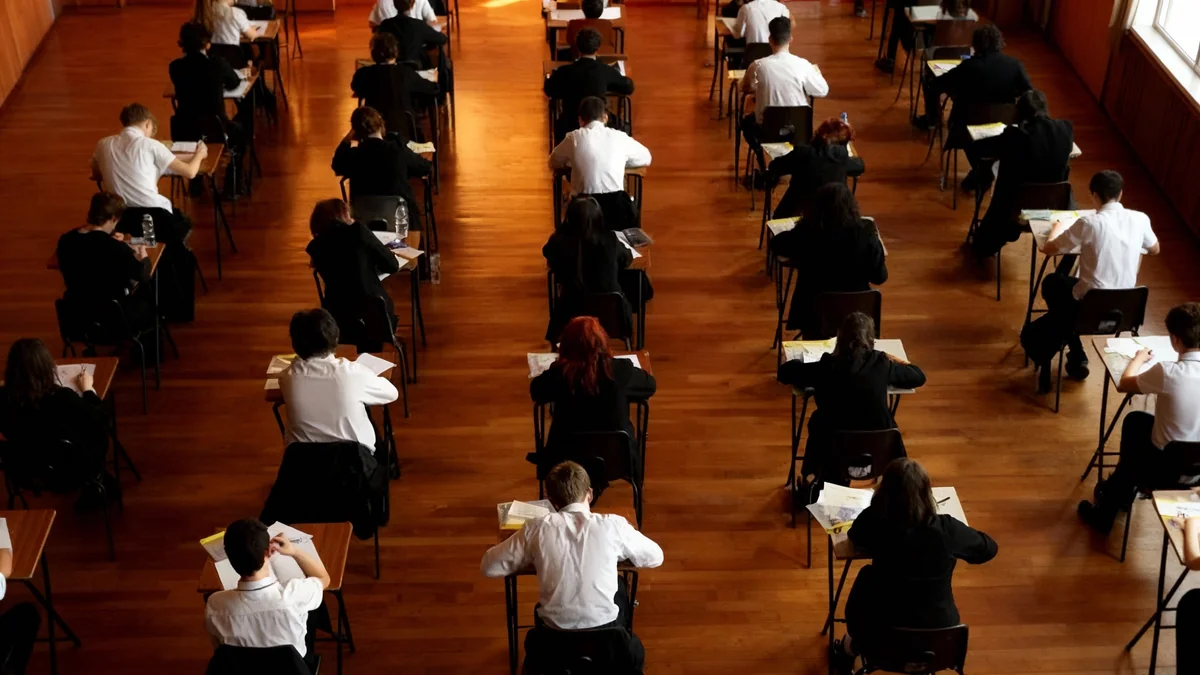
A new era in Scottish education has begun with the official launch of Qualifications Scotland, the successor to the controversial Scottish Qualifications Authority (SQA). The new body is tasked with a comprehensive review of the national qualifications system, aiming to reduce reliance on high-stakes exams and build greater trust with students, teachers, and parents.
Key Takeaways
- Qualifications Scotland has officially replaced the Scottish Qualifications Authority (SQA) after a series of public controversies.
- The new body plans a major review of all qualifications to ensure they are fit for purpose, with changes expected by 2031.
- A key objective is to lessen the dependence on high-stakes final exams and explore alternative forms of assessment.
- The new governing board includes five practicing teachers to ensure classroom perspectives are central to decision-making.
A New Beginning for Scottish Qualifications
Qualifications Scotland (QS) formally took control of the nation's examination and assessment system this week, marking a significant shift in educational policy. The move follows years of criticism directed at its predecessor, the SQA, which was officially dismantled after facing scrutiny over its handling of student results, particularly during the COVID-19 pandemic.
Officials leading the new organization have promised a fundamental change in approach, emphasizing collaboration and transparency. Nick Page, the chief executive of Qualifications Scotland, described the launch as a "momentous occasion." He stressed that the new body is not merely a rebranding of the old one.
"We are absolutely fundamentally changing this," Page stated, highlighting a new governance structure and board. "It is a new board... We've got a whole new set of people. It is very different."
The new board notably includes five practicing teachers, a move designed to bridge the gap between policymakers and the realities of the classroom. The goal, according to Page, is to develop a "world-class qualification system that enables people of whatever age, from whatever background in Scotland, to learn, have their assessment recognised and be employable."
Addressing Past Failures
Why Was the SQA Scrapped?
The decision to replace the Scottish Qualifications Authority, established in 1997, stemmed from mounting public and political pressure. The tipping point for many was the 2020 exams controversy. After exams were cancelled due to the pandemic, the SQA used a moderation algorithm on teacher-estimated grades, which resulted in the downgrading of thousands of results. The algorithm was widely criticized for disproportionately penalizing students from more deprived areas, leading to a government reversal and public apology. This event, coupled with long-standing complaints about a lack of transparency and poor communication with educators, sealed the SQA's fate.
The shadow of the SQA's past looms large over its successor. The 2020 grading scandal, where an algorithm downgraded results for many students from disadvantaged backgrounds, severely damaged public trust. This incident, along with other marking controversies, led to accusations that the SQA was out of touch and opaque.
Donna Stewart, the chief examiner for Qualifications Scotland, acknowledged these past issues and committed the new organization to a different path. She assured that QS would "listen very carefully" and learn from previous mistakes. This commitment to listening is central to the new body's mandate to reform the system.
Education Secretary Jenny Gilruth echoed this sentiment, stating that Qualifications Scotland would "deliver real improvements for learners, teachers and Scotland's education system." She emphasized that the changes are about "building something we can all trust."
What Changes Can Students and Parents Expect?
While the new body is now in place, immediate changes for students currently preparing for exams will be minimal. The experience for those taking National 5s or Highers this summer will be largely the same as last year. However, a significant review of every qualification is now underway.
One of the most discussed proposals is a shift away from the current model of high-stakes final exams. "We have a mandate to look at less reliance on high stake exams," Donna Stewart confirmed, indicating a move towards more continuous or varied forms of assessment.
Other potential changes under consideration include:
- Shorter Exams: The length of exams is being reviewed. Stewart noted that even a reduction from a three-hour exam to a two-hour one can make a significant difference for students.
- Subject Availability: Qualifications with very low student uptake will be examined, though officials have confirmed that Gaelic language qualifications will not be affected.
- Collaborative Development: New qualifications will be developed in partnership with teachers and students to ensure they are relevant and rigorous.
The full implementation of these large-scale changes is not expected until 2031, allowing for a lengthy period of consultation and planning. The immediate priority, Stewart said, is to "deliver a really successful exam diet and awarding" for the current academic year.
The View from the Classroom
For Scotland's teachers, the launch of Qualifications Scotland is a welcome development. Many educators had long expressed frustration with what they saw as a top-down approach from the SQA. There was a common feeling that a disconnect existed between the Curriculum for Excellence framework, what was taught in the classroom, and what was ultimately tested in final exams.
The promise of collaboration and the inclusion of teachers on the governing board are seen as positive first steps. The new leadership's repeated emphasis on listening to the profession has generated cautious optimism among educators who hope for a more responsive and practical system.
However, parents and students may be more reserved, questioning whether this will amount to more than just a change of name. The real test for Qualifications Scotland will be in the coming years, as it navigates the complex task of reforming a system that impacts the future of every young person in the country. The success of this new body will be measured not by its promises, but by its ability to create a fairer, more trusted, and more effective qualifications system for all.