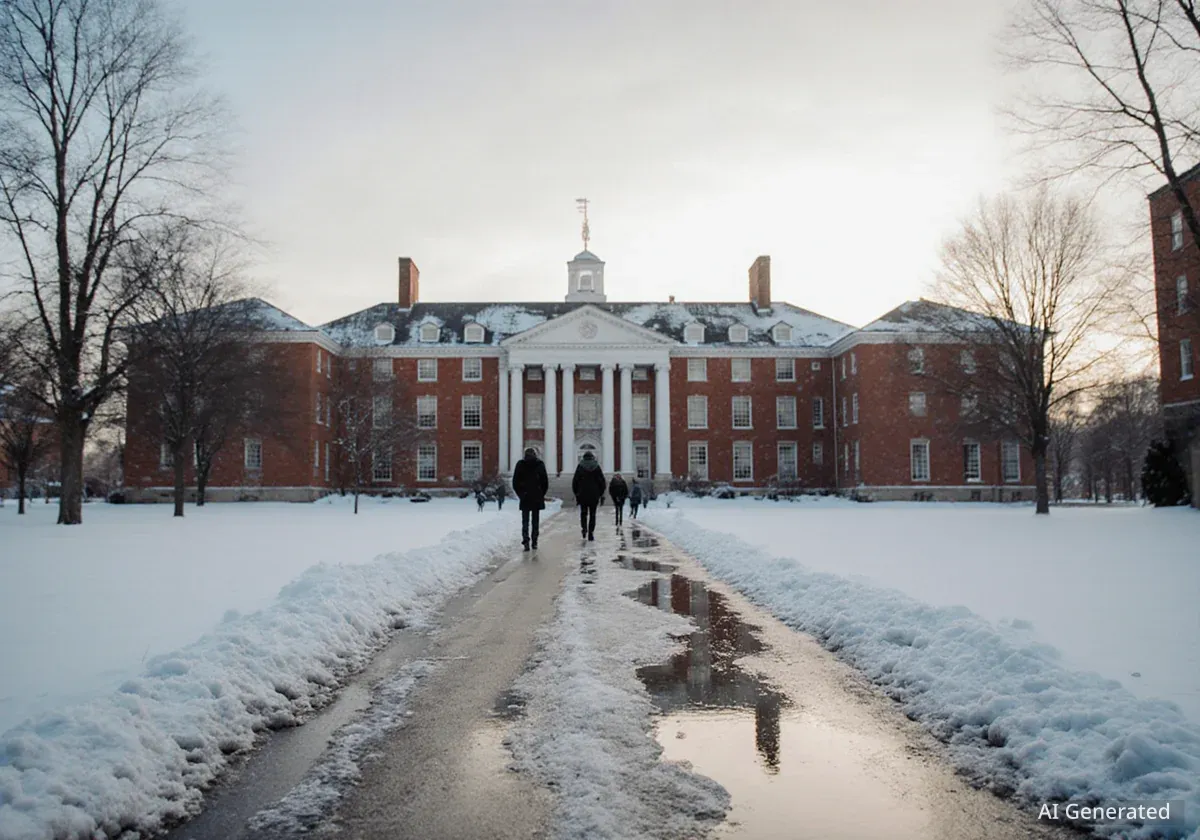

The University of Georgia and the University of North Georgia's Oconee campus will operate on a normal schedule Monday, February 2, while Athens Technical College has canceled all classes. The differing decisions highlight varied approaches to student and staff safety following a weekend snowfall, with concerns over refreezing ice playing a key role.
Officials at Athens Technical College cited hazardous travel conditions as the primary reason for the closure, pointing to the risk of ice on roads and walkways as temperatures drop overnight. The decision creates a split scenario for higher education students across the Athens area, with thousands expected on campus at UGA while others are instructed to stay home.
Key Takeaways
- The University of Georgia will hold classes as scheduled on Monday.
- Athens Technical College has announced a full campus closure for Monday due to safety concerns.
- The University of North Georgia's Oconee Campus in Watkinsville will also remain open.
- The primary concern for the closure is the refreezing of melted snow, creating icy and dangerous travel conditions for commuters.
Divergent Paths for Local Institutions
As the Athens community recovers from a recent dusting of snow, local colleges have announced conflicting operational plans for the start of the week. The University of Georgia, the area's largest institution, confirmed it will proceed with a full day of classes and activities on Monday.
This decision contrasts sharply with the announcement from Athens Technical College, which opted for a complete campus shutdown. In a statement, the college administration emphasized the potential for danger. "The decision to close was made with the safety of our students, faculty, and staff as the highest priority," an official communication noted. The primary concern is not the amount of snow, but the expected overnight refreeze that could turn wet surfaces into hazardous ice slicks.
Joining UGA in maintaining a normal schedule is the University of North Georgia's Oconee Campus, located nearby in Watkinsville. This alignment suggests that larger university systems with significant residential populations and robust maintenance capabilities feel prepared to manage the conditions.
Commuter Safety at the Forefront
The differing responses appear to hinge on the distinct characteristics of each student body. Athens Technical College serves a large population of commuter students, many of whom travel from surrounding counties where road treatment may be less comprehensive than in the city of Athens itself.
An Athens Tech spokesperson explained the rationale. "Our students and staff travel from a wide geographic area. We must consider the conditions on secondary roads and rural routes, which can remain treacherous long after main highways are clear."
Understanding Commuter vs. Residential Campuses
An institution's decision to close for weather often depends on its student population. Universities with a high percentage of on-campus residents, like UGA, can often remain open because a large number of students do not need to travel by car. In contrast, community and technical colleges primarily serve commuters, making off-campus travel conditions a critical safety factor.
This focus on travel safety underscores a key challenge for institutions without large residential facilities. While UGA's extensive grounds crews can work to clear campus walkways and parking lots, they have no control over the public roads their commuting students and employees must navigate to get there.
The Student Perspective
For students, the announcements have been met with a mix of relief and frustration. Many at Athens Tech expressed gratitude for the college's caution. "I drive almost 45 minutes to get to campus, and my back road is still a sheet of ice," one student shared on social media. "Glad they made the safe call."
Conversely, some UGA students who live off-campus voiced concerns about being expected to attend classes. "Campus might be clear, but the side streets in my neighborhood are not," a UGA junior commented. "It feels like a choice between my safety and my grades."
"We are confident in our campus services team's ability to ensure that our pathways, roads, and facilities are safe and accessible for Monday's classes." - Unofficial statement reflecting university preparedness.
Preparing for an Icy Monday
Local authorities are advising all residents to exercise extreme caution during their Monday morning commute. The National Weather Service has warned that any wet surfaces from melted snow will likely refreeze as temperatures dip below 32°F (0°C) Sunday night into Monday morning, creating patches of black ice.
The Danger of Black Ice
Black ice is a thin, transparent coating of ice that is visually difficult to distinguish from a wet road surface. It is a leading cause of weather-related traffic accidents because drivers are often unaware of its presence until they lose traction. It forms most commonly on bridges, overpasses, and shaded areas when temperatures hover near the freezing point.
For those heading to UGA or UNG, officials recommend the following precautions:
- Leave Early: Allow for extra travel time to drive slowly and cautiously.
- Check Your Route: Be aware of bridges and overpasses that freeze first.
- Walk Carefully: Wear appropriate footwear with good traction, as sidewalks and parking lots may still have icy spots.
- Stay Informed: Monitor local news and university alerts for any last-minute changes.
The split decision by Athens-area educational institutions serves as a reminder that weather-related closures are complex. They involve a careful balance between maintaining academic continuity and ensuring the physical safety of a diverse community with varying travel needs.