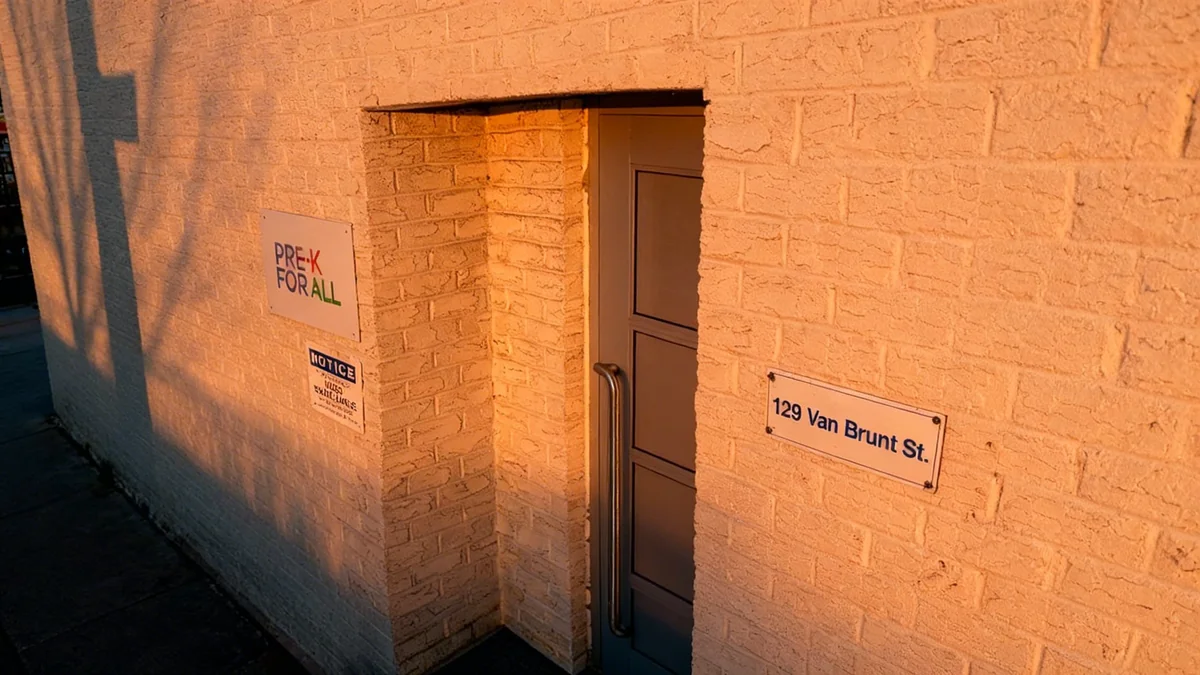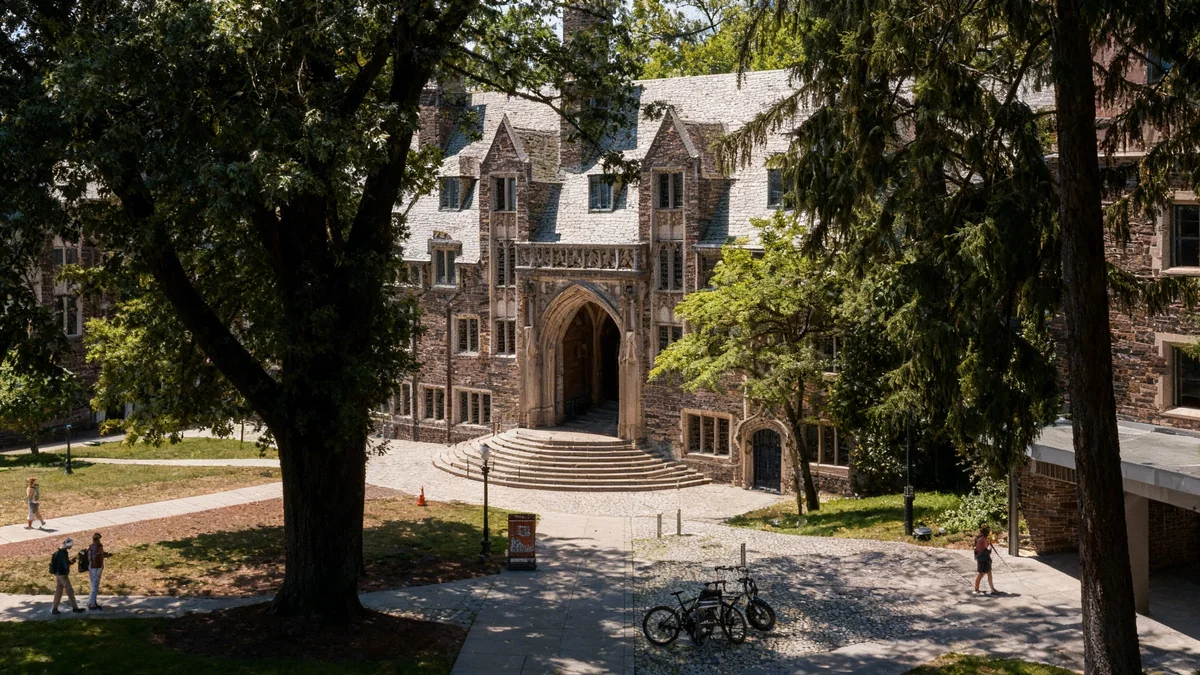
A quiet afternoon on the campus of Bowie State University was momentarily interrupted by a small group with cameras and a microphone. Members of Blexit, a conservative organization, were present during the university's homecoming celebrations, aiming to engage students on political issues. Their efforts, however, were met with a mixture of curiosity, disinterest, and clear reluctance from the student body.
The group's objective was to start conversations and, in their words, "plant seeds" of conservative thought among a demographic that traditionally leans Democratic. Despite their presence, meaningful engagement proved difficult to achieve, highlighting the challenge of political outreach on a historically Black university campus.
Key Takeaways
- The conservative group Blexit visited Bowie State University, an HBCU, as part of a national campus tour to recruit Black college-age voters.
- Student reactions were largely hesitant, with very few students agreeing to on-camera interviews.
- Blexit, founded by Candace Owens and Brandon Tatum, aims to encourage Black Americans to leave the Democratic Party.
- The event underscored the significant political divide and the challenges conservative groups face in engaging with traditionally liberal demographics.
An Attempt to Engage
Outside the bustling student center at Bowie State, conservative commentator Siaka Massaquoi, representing Blexit, attempted to interview students. He posed questions on topics ranging from the role of fathers in the Black community to the impact of government welfare programs. The reception was tepid. For the first hour, only one student, a junior named Andrew Hogan, stopped to speak with the group, though he declined to answer most of the questions posed.
The scene was often awkward. University staff were observed nearby, and at one point, a golf cart partially obstructed the group's initial location. A subsequent attempt by Massaquoi to speak with two first-year students was cut short when their friends, two sophomores, saw the interaction and quickly led them away.
Madison Wells-James, a recent University of Maryland graduate who joined Blexit's Maryland chapter, described the goal as long-term. "I wanted to get involved and do something to help my community," she stated, explaining that her own shift to conservatism happened during her college years. For her, the purpose of the tour was not immediate conversion but to encourage students to "critically think about their positions."
What is Blexit?
Blexit was co-founded by conservative media personalities Candace Owens and Brandon Tatum. It is affiliated with Turning Point USA, a prominent conservative student organization. The group's name is a portmanteau of "Black exit," signifying its mission to persuade Black voters to leave the Democratic Party. According to its website, Blexit has established over 50 chapters and hundreds of "city hubs" across the country.
A Campus Divided in Reaction
While most students walked by without stopping, a few expressed their opinions more directly. One student, upon confirming the group's conservative affiliation, walked away with a smirk and a muttered, "good luck." This sentiment of dismissal seemed to be the prevailing one.
However, not all students were unwilling to talk. Antonette Lamin, a junior from Iowa, agreed to an on-camera interview with Massaquoi. She later explained that she was familiar with Blexit and identifies as liberal, though not with a specific party. "I think the conversation is important," Lamin said. She answered questions about whether Gen Z prioritizes moral correctness or social acceptance, and whether traditional Christian values align more with liberals or conservatives.
"I do think they were trying to get reactions, though," Lamin noted after her interview, suggesting a degree of skepticism about the group's methods and ultimate intentions.
This single, extended conversation stood in stark contrast to the general atmosphere of avoidance. The interaction with Lamin provided Blexit with content for their platform, but it did little to change the overall dynamic of the day.
The Political Landscape
Data from the Pew Research Center indicates that the vast majority of Black voters align with the Democratic party. Approximately 83% of Black voters identify as Democrats or lean Democratic, a statistic that underscores the challenge groups like Blexit face in their outreach efforts.
The Broader Strategy of HBCU Outreach
Blexit's visit to Bowie State is not an isolated event. It is part of a calculated national tour targeting Historically Black Colleges and Universities (HBCUs) during their popular homecoming weeks. This strategy aims to maximize visibility and reach a concentrated audience of young, educated Black Americans.
Why Target HBCUs?
HBCUs are cultural and intellectual centers within the Black community, making them strategic locations for any group seeking to influence Black public opinion. By appearing on these campuses, Blexit attempts to legitimize its message and directly challenge the long-standing political norms within these institutions.
The group's messaging often focuses on themes of:
- Economic empowerment: Arguing that conservative policies offer a better path to financial independence.
- Victimhood mentality: Claiming that liberal ideology fosters a sense of victimhood that holds the Black community back.
- Traditional values: Appealing to socially conservative and religious values present within segments of the community.
Wells-James, the local Blexit member, mentioned her desire to help young Black Americans who "have fallen into the victimhood mentality." This rhetoric is central to Blexit's appeal, framing a departure from liberal politics as an act of self-empowerment.
An Uphill Battle
The quiet reception at Bowie State suggests that Blexit's message is not finding fertile ground, at least not openly. The students' reluctance to engage could stem from various factors, including a firm commitment to their existing political beliefs, a suspicion of outside groups, or simply a desire to enjoy their homecoming festivities without political debate.
For junior Andrew Hogan, the first student to be approached, the encounter was unexpected. He did not recognize the group or the interviewer, Siaka Massaquoi. His decision to largely avoid the questions reflects a common reaction when confronted with unsolicited and potentially charged political questioning.
As Blexit continues its tour of HBCU campuses, the organization faces a significant challenge. While their stated goal is to "plant seeds," the soil on these historic grounds appears, for now, to be resistant. The brief, and mostly one-sided, interactions at Bowie State University serve as a clear example of the deep political divisions that persist and the difficulty of bridging them.