
A student group at Gettysburg College documented an incident where promotional flyers for their event were torn down, sparking a conversation about free expression and campus policy. The Young America's Foundation (YAF) chapter said this is a recurring issue they face when advertising events with conservative speakers.
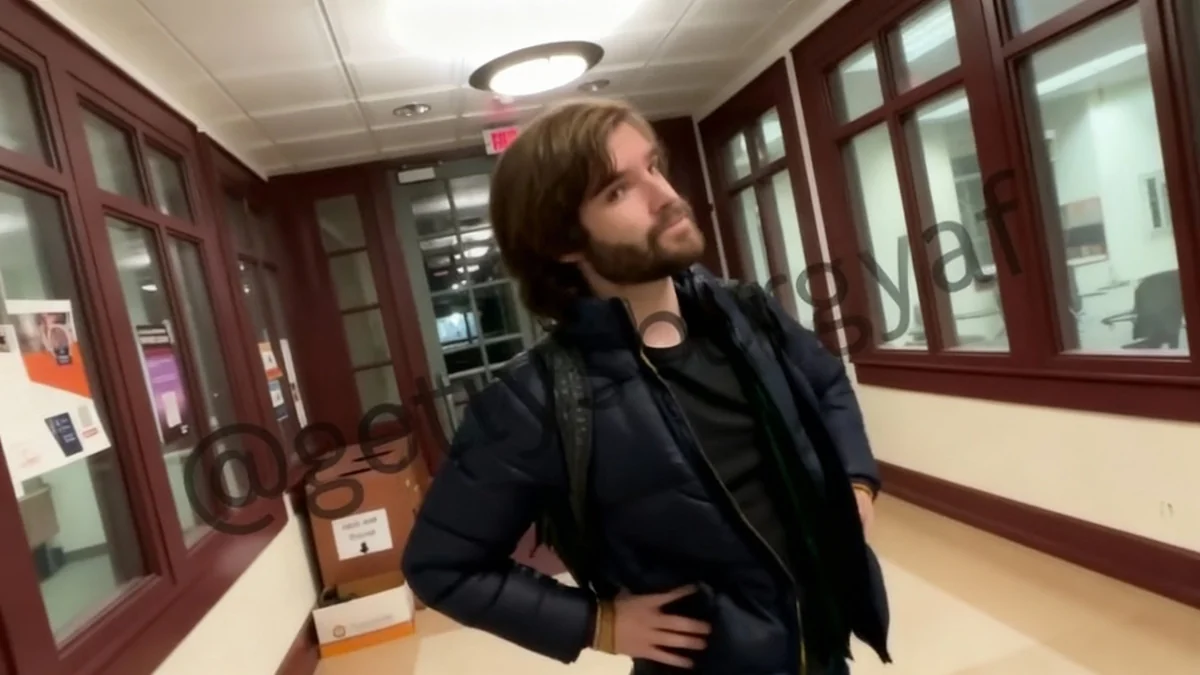
The incident, which was recorded on video, shows a member of the YAF chapter confronting another student who was actively removing flyers from a wall inside a campus building. The flyers were for a lecture by conservative author Vince Ellison held on November 20.
Key Takeaways
- A student at Gettysburg College was filmed tearing down flyers for a conservative group's event.
- The Young America's Foundation (YAF) chapter reports this happens every semester they host a speaker.
- The college administration confirmed that removing flyers violates community standards and is subject to sanctions.
- The YAF chapter chairman is calling for dialogue and debate instead of suppression of speech.
A Recurring Pattern of Opposition
The Gettysburg College chapter of Young America's Foundation has described a consistent pattern of opposition to its campus activities. According to the group's chairman, Tyler Seeman, their promotional materials are targeted each semester.
"Every semester, Gettysburg YAF has a campus lecture," Seeman stated, explaining their process of inviting speakers to discuss various topics. He noted that as the only conservative 501(c)(3) on campus that regularly hosts such lectures, they often face pushback.
The most recent incident occurred in the days leading up to a scheduled talk with Vince Ellison. Members of the YAF chapter posted flyers around campus to advertise the event, a standard practice for student organizations. Shortly after, they discovered many had been removed or destroyed.
The Filmed Confrontation
The situation escalated when a YAF member witnessed a student in the act of tearing down the flyers. The member recorded the encounter on a mobile phone. In the video, the YAF member is seen approaching the student who has a handful of the torn flyers.
The YAF member asks, "You having fun?" to which the other student replies, "Yeah."
When informed that removing flyers is against college policy, the student simply says, "OK," and remains silent for much of the brief interaction. The video concludes with the YAF member escorting the student out of the building.
"Instead of tearing down flyers, show up to our events and ask questions, because we want to have that dialogue."
- Tyler Seeman, Gettysburg College YAF Chairman
College Response and Campus Policy
Gettysburg College administration has addressed the issue, confirming that such actions are a breach of school rules. The college has a specific policy regarding the posting and removal of promotional materials on campus.
In a statement, college spokesperson Jamie White affirmed the institution's position. "Removing flyers posted in accordance with our posting policy is a violation of our community standards," White said. "Students in violation of this policy are subject to sanctions by the College."
Understanding Campus Posting Policies
Most universities and colleges have detailed guidelines for how and where student groups can post flyers and posters. These policies are designed to ensure fair access to advertising space and prevent the unauthorized removal of materials. Violations are typically handled through the student conduct office and can result in disciplinary action, ranging from warnings to more severe sanctions depending on the severity and frequency of the offense.
While federal law, specifically the Family Educational Rights and Privacy Act (FERPA), prohibits the college from discussing specific student disciplinary cases, White indicated that action is typically taken in these situations. "While federal law prohibits us from answering questions about specific student cases, I can say it would be highly unusual for such behavior not to be sanctioned," she added.
Seeman described the school's past responses as inconsistent, claiming the administration has sometimes condemned the behavior but at other times declined requests to do so.
A Call for Dialogue Over Vandalism
For the members of the YAF chapter, the recurring destruction of their flyers is not just an act of vandalism but a rejection of open discourse. Seeman expressed a desire for those who disagree with his group's views to engage in conversation rather than attempt to silence them.
"Some students feel, I would presume, that our views and our speakers' statements are contrary or dangerous to their own perspectives and their own worldview," he commented on the motivations behind the actions.
He extended an open invitation for constructive debate. "At the end of the day, that's just going to get everyone in the room thinking about these issues, and we'd rather have as many people thinking about these issues and talking about these issues as possible, rather than just tearing down flyers and trying to silence other people's speech, because that's not constructive," Seeman urged.
A Broader Trend on Campuses
Student groups, particularly those with political affiliations, often report conflicts over promotional materials and events on college campuses across the country. These incidents frequently raise questions about the balance between free speech, campus safety, and institutional policies. Organizations like the Foundation for Individual Rights and Expression (FIRE) often track and report on these conflicts as part of their mission to defend free speech in academic settings.
This incident at Gettysburg is not an isolated event for YAF chapters nationally. A similar situation occurred at the University of Iowa, where a student was arrested and charged after flipping a YAF information table in October. That same individual was later arrested again for a similar incident involving a Turning Point USA table.
The events at Gettysburg College highlight the ongoing tensions surrounding political speech and expression in higher education, with student groups on all sides navigating how to promote their views in an often polarized environment.