
A palpable sense of fear is quietly disrupting classrooms across Pittsburgh Public Schools. As rumors of immigration enforcement actions circulate, a growing number of students are staying home, leaving teachers to face empty desks and a community grappling with the profound impact of anxiety on education.
Educators report that even unconfirmed reports of Immigration and Customs Enforcement (ICE) activity in neighborhoods are enough to trigger significant drops in attendance, particularly among English language learner populations. This trend is forcing teachers, parents, and administrators to confront a crisis that extends far beyond school walls, directly affecting students' ability to learn.
Key Takeaways
- Rumors of ICE presence near schools are causing sharp increases in student absences in Pittsburgh.
- Chronic absenteeism among Latino students and English language learners is up by 5% and 4%, respectively, compared to last year.
- Teachers report that students' constant fear compromises their ability to focus and learn effectively in the classroom.
- A 2017 district policy limits ICE access to schools, but a change in federal guidance has created uncertainty and heightened concerns.
- Educators and parents are organizing to demand more proactive protective measures from the school district.
The Chilling Effect of Rumors
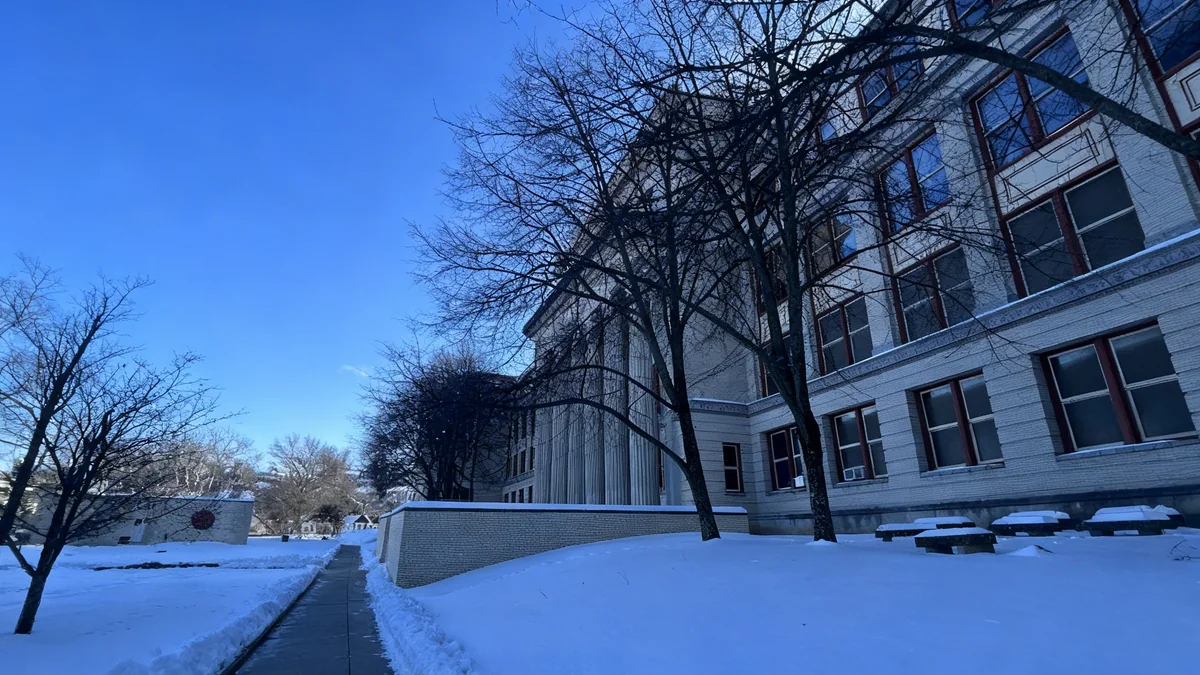
Last week at Taylor Allderdice High School in Squirrel Hill, the school community was put on high alert. A rumor that an ICE agent was on campus spread rapidly, causing widespread concern. While district officials later confirmed the rumor was false—sparked by a community member asking if ICE was present—the incident highlighted the deep-seated anxiety gripping students and staff.
The impact is not isolated. Joseph Papa, an English language development teacher at Faison K-5 in Homewood, witnessed the consequences firsthand. Following separate rumors of immigration agents in the area, he reported that about half of the students he works with were absent on a recent Friday.
"Not all families are always comfortable sharing the reason that they're keeping their child at home is because of these fears," Papa explained. He noted that parents might cite sickness as the reason for an absence to avoid disclosing their immigration concerns, making it difficult to track the true scale of the problem.
A Conflict Between Local Policy and Federal Action
In 2017, the Pittsburgh school board took a definitive stance by passing a resolution to protect its students. The policy bars ICE agents from entering school buildings unless they have clearance from both the district's superintendent and its legal department. This was intended to create a safe haven for children during the school day.
Shifting Federal Guidelines
Previously, federal policy designated schools, hospitals, and places of worship as "sensitive locations" where immigration enforcement actions were generally avoided. However, the Trump administration rescinded this guidance last year, giving agents more discretion and leading to reported encounters at or near schools in other major cities like Los Angeles and Chicago.
This federal shift has undermined the confidence local policies once provided. Attorneys representing regional school districts have advised officials to demand a judicial warrant from any agent and to immediately contact legal counsel and the superintendent. However, recent federal directives have empowered ICE agents to make more arrests without a judge's warrant, creating a direct conflict with that legal advice and leaving school staff in a difficult position.
"As a teacher, what I think about always is, if a child is in that constant state of fear and experiencing that, their ability to learn is compromised. A kid can't learn to their fullest potential when all day long they're thinking about, what would happen if I don't see my mom and dad when I go home tonight?"Joseph Papa, English Language Development Teacher
Measuring Fear Through Attendance Data
The anxiety is now showing up in the district's attendance figures. While Pittsburgh has not experienced a large-scale enforcement action like those in other parts of the country, the data reveals a troubling trend in schools with large immigrant populations.
Absenteeism on the Rise
- 1 in 10: Roughly one-tenth of Pittsburgh Public Schools' 18,000 students are English language learners.
- Up 50%: The English language learner population at Allderdice High School has grown by over 50% in the last three years.
- Up 4%: Chronic absence rates for English language learners district-wide are 4% higher than this time last year.
- Up 5%: For Latino students, the chronic absence rate has jumped by nearly 5%.
A student is considered chronically absent when they miss 10% or more of school days. Research consistently shows that chronic absenteeism is a primary indicator for whether a student will struggle with reading proficiency and high school graduation. James Fogarty of the education advocacy group A+ Schools confirmed the notable increases in absenteeism at schools with significant English language learner communities.
These numbers translate into real-world educational setbacks. When students miss school, they fall behind on lessons, and the constant fear makes it harder for them to concentrate even when they are in class. Papa emphasized that this strain affects the entire school community, not just immigrant students, as teachers work to manage a classroom environment filled with underlying tension.
Teachers and Parents Demand Proactive Protection
In response to the growing climate of fear, educators are taking matters into their own hands. At Allderdice High School, social studies teacher Traci Castro said nearly a dozen of her colleagues met to brainstorm ways to protect their students.
"I know some people are interested in doing training, like the legal training stuff," Castro said. "I know someone put up posters on the walls to say to know your rights." She expressed a sense of anger and worry shared by her colleagues, emphasizing that the district should not wait for an incident to occur before acting.
Parents and teachers have also formed networks on secure messaging apps like Signal to share alerts about suspected ICE activity and coordinate responses. This grassroots effort reflects a belief that the community must be prepared.
Castro believes the district needs to do more. "There should be more proactive stuff and [we should] not wait for ICE to come around our school because the potential exists," she urged, pointing to the diversity of the Squirrel Hill neighborhood. "I think we should be more on the lookout and reach out to the community more."
The Pennsylvania Department of Education has encouraged districts to designate a point person for interacting with immigration enforcement and to establish clear procedures for situations where a student's parent is detained. As the fear continues to empty chairs in classrooms, the call for such clear, proactive, and protective policies is growing louder throughout Pittsburgh.